Sorry, but there's really nothing to see here right now. Our server is in maintenance mode – and our
little bot is trying to sort the error messages with its last bit of energy.
Whether it was a data leak, a power outage in the cluster, or just a grumpy bit – we don't know yet.
But what we do know is:
The data drama escalated into a server meltdown. But don't worry: We're on it.
What now?
Everything is surely running smoothly over at our colleagues from inside
digital – why not stop by!
Or you could pass the time by visiting our social media channels – for example Instagram, YouTube or TikTok. At least there are no
server problems there – promised.
Thanks for your patience. Our bot is already rebooting at full speed. 🔧
NewsTabletRealme Reveals Smartphone with Interchangeable Leica Lenses
Ultra-wide angle, a primary camera, one or even several telephoto cameras: the more lenses a smartphone has, the more flexible it is when taking photos. Realme decided to up the ante by showcasing a smartphone with an interchangeable lens system at MWC 2025. Its Chinese competitor Xiaomi is also working on a similar system.
Why Feature Interchangeable Lenses in a Smartphone?
Anyone who has ever used a smartphone with a telephoto camera will be familiar with this issue: the image quality drops significantly compared to the primary camera. The main reason for this is how tiny the sensors behind the telephoto lenses are, and tiny sensors capture very little light.
Physics is to blame for the small sensors. The larger the sensor, the bulkier the lens, and telephoto lenses are generally larger than wide-angle lenses. If you don’t want your smartphone to arrive in a brick form factor, then it is unfortunate but true for this to be possible only with small sensors, and tricks like periscope lenses only help to a limited extent.
Interchangeable Lenses are the Solution
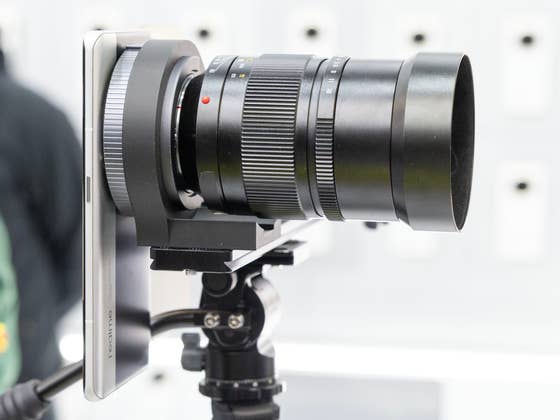
The solution from Realme looks like this: Between the “regular” smartphone cameras on the back of the concept smartphone is a naked image sensor in 1-inch format—Sony’s IMX989. Unlike classic interchangeable lens cameras, the sensor is protected by a layer of glass, so you don’t need a protective cap or anything similar if you do not mount a lens on the phone.
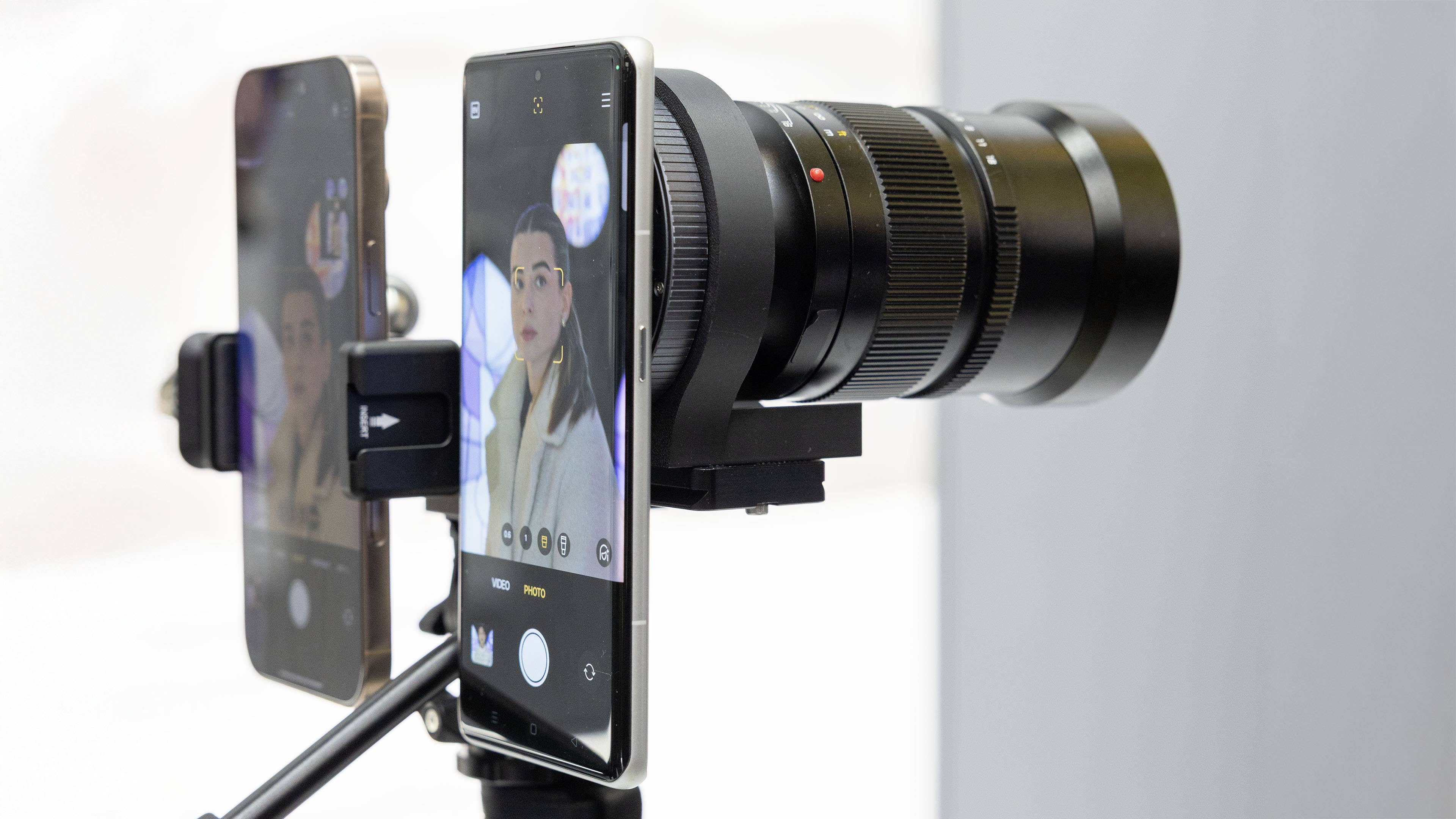
A lens mount ring is attached around the camera island behind, which can be used to attach lenses to the smartphone. Realme relies on the Leica M system here. There is a corresponding button in the camera app to switch to the mounted lens.
And yes, if you have a high-quality telephoto lens attached here, the image quality is remarkable. At MWC, the difference to the telephoto camera shot by an iPhone 16 Pro was definitely jarring. To be fair, anything else but an incredible result would be a bitter disappointment with this gigantic lens.
Unfortunately, it remains unknown when Realme will launch the concept smartphone and how much it will cost.
What is Xiaomi Planning?
At its MWC press conference, Xiaomi also announced a smartphone with interchangeable lenses known as the Xiaomi 15 Concept. However, unlike Realme, Xiaomi is not relying on an existing lens system, but on integrated sensor lens modules that can be docked onto the smartphone. The principle is reminiscent of Sony’s QX10 or QX100 or Ricoh’s GXR system.
I have been writing about technology since 2004 with a strong passion for smartphones, photography, and IoT, especially in the world of smart homes and AI ever since they debuted. I'm also an avid cook and bake pizza at least three times a week using my Ooni Koda 16. In order to compensate for all the consumed calories, I indulge in sporting activities on a daily basis while strapping on at least two fitness trackers. I am strongly convinced that you can DIY a lot of things if you put your mind to it.