Redmi Note 14 Pro Review: Is Xiaomi Running Out of Ideas?


Like clockwork, Xiaomi launches a bunch of Redmi smartphones each year, releasing models that cater from small to medium-sized budgets. The Xiaomi Redmi Note 14 Pro 5G is the second most powerful and also, the next most expensive in the range. What does the HyperOS-powered smartphone armed with a 200 MP camera and MediaTek Dimensity 7300 Ultra SoC have to offer? Find out in our review!
Good
- Beautiful display
- Great photos with the main camera
- IP68 certification
- Well built
- Decent software support
- Good battery life
Bad
- Only average performance
- Few AI features
- Lots of bloatware once again
- Secondary cameras did not impress
- No wireless charging support
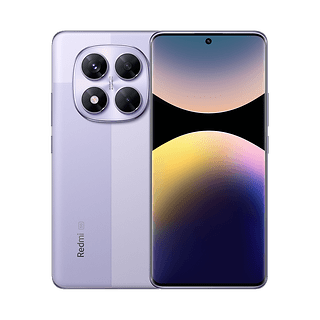
Xiaomi Redmi Note 14 Pro 5G Design & Display
Xiaomi's design and the rounded display follow the usual modus operandi: once again, there is a 6.67-inch AMOLED panel with a refresh rate of 120 Hz. The chassis is rounder overall than its predecessor, is well built as usual, and is also protected against dirt and water thanks to its IP68 certification.
Personally, I like the design of the Pro Plus version more than this model. The reason behind it is due to how I appreciate the "vegan leather" at the back more, although the matte back of the Xiaomi Redmi Note 14 Pro 5G is also a decent material. The front of the device uses Gorilla Glass Victus 2. The curved display suits my preference, but yes, I understand it is not everyone's cup of tea.
Flipping it over to the back, we see a central camera island, from which the cameras protrude separately, unlike the Plus model. The plastic cover for the sensors bothered me somewhat. I fear that dirt will accumulate quite easily but I was also concerned that the somewhat cheap plastic could be susceptible to scratches. To be fair, however, the smartphone survived the entire duration of my review by emerging unscathed.

I have a few words to say about the display: Anyone who is out and about in the Xiaomi cosmos do know what to expect here. In other words, the most important information have already been relayed above, which covers the entire range. Does that make it disappointing? No, not really. On the contrary, Xiaomi once again confirmed its level of dedication to consumers. However, I would like to see a little more choice in terms of size for a series that spans across five different devices. After all, not everyone wants these big lumpers.

We also don't want to ignore the fact that the panel has become brighter: The maximum brightness was rated at 3,000 cd/m². No surprise then, with the Always-on Display either, which is again only a "sometimes-on" panel. You have to tap the display to reveal what is shown.
The last thing I would like to mention is the fingerprint sensor, which has been integrated into the display and worked quickly and reliably. However, my huge hands would have been happy if Xiaomi had placed the sensor a little higher up.
HyperOS Still Treats AI Flippantly
Well, where are all the AI tricks? We see Android 14 and HyperOS 1.0 on the Xiaomi Redmi Note 14 Pro 5G, but the AI features that are available on the Plus model are almost completely absent here.
A look at the software is somewhat sobering. This is not even due to the abundance of bloatware. The pre-installed programs no longer surprise anyone. However, it is a shame that Android 14 is still included as the operating system version of choice here. The first year of the promised three major Android updates and the security updates for four years will already be discounted for the Android 15 update.

Initially, there wasn't really much to report in terms of AI: In contrast to the Plus model, I initially only found Google's functions, Circle to Search and Gemini Live, here. Since the January software update, however, AI Expansion and AI Erase 2.0 have also been available, although I had to install them manually on the device.
Another difference to the Redmi Note 14 Pro+: You won't find a separate item for the AI apps in the settings here. Don't get me wrong – Xiaomi's own AI features are not so incredibly indispensable. However, I was surprised that they are not being introduced in the second most expensive smartphone in the current Redmi Note series. Let's wait and see, because the Android 15 update should arrive with the HyperOS 2.0 update this spring. Perhaps the AI will look a little different than it does now then.
If you don't miss these AI functions anyway, HyperOS will provide you with the usual range of versatility and granular, customizable OS skin.
Xiaomi Redmi Note 14 Pro 5G Performance and Hardware
A MediaTek SoC powers the device underneath the hood, namely a Dimensity 7300 Ultra. The benchmark results look a little sad, but I was able to cope well with the performance in everyday use.
While the Snapdragon 7s Gen 3 was installed in the more expensive Plus version, we are dealing with MediaTek here. According to benchmark tests, the performance cannot quite keep up with the performance of the Redmi Note 14 Pro+, but the differences are rather minimal.
This smartphone will certainly not be the performance world champion, but I didn't notice any wild delays when scrolling or launching apps, nor did it lag in the usual casual games. For more demanding games, such as Genshin Impact, I recommend playing the game on medium settings at most.
| Redmi Note 14 Pro 5G (MediaTek Dimensity 7300 Ultra) |
Redmi Note 14 Pro+ 5G (Snapdragon 7s Gen 3) |
Redmi Note 13 Pro 5G (Snapdragon 7s Gen 2) |
|
|---|---|---|---|
| 3D Mark Wild Life Stress Test |
Best loop: 849 Worst loop: 844 |
Best loop: 1,049 Worst loop: 1,034 |
Best loop: 3,050 Worst loop: 2,754 |
| 3D Mark Nomad Light Stress Test | Best loop: 347 Worst loop: 343 |
Best loop: 361 Worst loop: 353 |
- |
| Geekbench 6 | Single: 1,027 Multi: 2,917 |
Single: 1,173 Multi: 3,259 |
Single: 889 Multi: 2,523 |
| AnTuTu | 675,901 | 741,190 | - |
You probably won't decide to buy the Redmi Note 14 Pro 5G because of its performance. If you're primarily looking for performance, you'll find it in Xiaomi's own catalog, such as the Poco X7, which we will soon share our review.
Our review unit comes equipped with 8 GB RAM and 256 GB internal memory. As with the Plus version, you will have to make do with the LPDDR4X and UFS 2.2 standards. You can fit two SIM cards in the SIM slot, but there is no hybrid slot, so that rules out any memory expansion. Connectivity is also identical to the Pro+ model in the series. In other words, you'll be provided with Wi-Fi 6 and Bluetooth 5.4.
Xiaomi Redmi Note 14 Pro 5G features a Decent Main Camera
200 MP for the main camera lead the camera system of the Xiaomi Redmi Note 14 Pro 5G. In contrast, the other sensors fall short as expected. For casual shutterbugs, the main camera is really decent and totally appropriate for a smartphone within this price range.
I feel like a broken record here. Once again, the expected (albeit good) display, plenty of bloatware, no wireless charging support, and yes, a triple camera configuration that laughs in our faces with a 2 MP macro sensor.
It is now 2025, and I don't understand the existence of this miserable sensor and can only think of two explanations: You included it because you can then advertise an additional camera. Either that or it is a weird kind of tradition and camera culture that I don't understand.

Despite all of my gripes, the main camera still impressed me. Don't let the 200 MP count fool you, because we're not looking at a flagship sensor. However, I did like the photos I was able to take during the day, and even at night, with the support of the Night Mode, I was able to capture some nice snapshots. At night, of course, you have to accept that you lose details you had during the day and the photos end up noisier. Nevertheless, I quite like it because the photos were not overly bright in Night Mode.
Some pictures lack color fidelity at night, but unfortunately, this also happened during the day with the 8 MP ultra wide-angle lens at times. Overall, the 8 MP camera performed exactly expected. I miss the sharpness a little, but I think the distortions at the edges were nicely concealed or corrected at least. The ultra wide-angle camera is not recommended for night shots. The results were too washed out, and contained too little detail while often exhibiting a yellowish hue spoil the photo fun.
Overall, not much has changed compared to last year's Redmi Note 13 Pro 5G (review). Only the front camera has been updated from 16 MP to 20 MP. Just take a look at our gallery to get your impression of the sensors. Don't be too disappointed if you don't find any pictures of the irrelevant 2 MP macro camera.































Yes, the Battery Life is Good!
The battery has increased by an ;astounding' 10 (!) mAh to 5,110 mAh. Okay, so the capacity has not increased, but the battery life is very decent. Charging takes place at 45 W, with wireless charging unsupported yet again.
The other models in the Redmi Note range also feature the same battery. Here, too, we find 5,110 mAh in the Plus model. The PCMark battery test gives us a battery life of 12 hours and 44 minutes when using the 120 Hz mode. This is better than the Plus model (just over 11 hours) and also better than its predecessor (12 hours, 20 minutes).
That's really decent and the Xiaomi Redmi Note 14 Pro 5G proved to be a real endurance runner in everyday use. On average, you should be able get through two full days before you have to rush to the nearest power socket.

It's also understandable that this device doesn't have the option of wireless charging. What I found more disappointing was how the charging speed has been reduced from 67 W to 45 W compared to its predecessor. It didn't bother me too much, but it's still incomprehensible to me. Be that as it may, you can fully recharge the handset to 100 percent from zero in about an hour.
That is, assuming you also have a charger. The charger was included with my review unit but according to Xiaomi, it will no longer include the charger as standard practice.
Xiaomi Redmi Note 14 Pro 5G technical specifications
| Editor's Recommendation | |
|---|---|
| Device | |
| Image |

|
| Price (RRP) |
|
| Display |
|
| SoC |
|
| Memory |
|
| OS |
|
| Camera |
|
| Selfie camera |
|
| Battery capacity |
|
| Connectivity |
|
| IP certification |
|
| Dimensions and weight |
|
Is the Xiaomi Redmi Note 14 Pro 5G Worth Buying?
Do we recommend the Xiaomi Redmi Note 14 Pro 5G? Yes, in a way. Based on a quick price search, the slightly better Redmi Note 14 Pro+ costs at least $80 more than the $315 14 Pro 5G. The direct predecessor even has a slightly higher street price, so you can obtain the current model for the same price.
Overall, however, I think it wouldn't hurt to take a look at our 'Best Of' lists (Best sub-$200 smartphones and Best $300 smartphones). There, you will find many smartphones that will most probably feature one or two more functions that make them an exciting alternative for you.
You know, I can't mention too many negative things about this handset, since the handset is clearly not the newest kid on the block by now and would have had experienced its fair share of price drops. I like the great display, the good battery life, and the above-average main camera at this price point. Even the performance is good enough to handle everyday tasks with ease.
However, why am I still unenthusiastic? This is because nothing really screams "Buy me!". Android 14, missing out on selected AI features that Xiaomi already offers elsewhere, hardly any noticeable improvements compared to last year's model, there's no room for euphoria.
The good thing about my ambivalence is that the device is so mediocre until one cannot stray too far away with its purchase. It can do pretty much what the slew of other mid-range smartphones can do. Hence, if you are able to pick up this handset for a bargain as part of a contract extension, or if the price drops significantly to the sub-$250 mark, you'll end up with a really useful smartphone that offers up to four years of software support.
Where to Buy the Redmi Note 14 Pro
Hovering around $315, this Redmi Note 14 Pro is approximately $80 more affordable than the flagship model in this range, the Redmi Note 14 Pro+ (review).
At this price point, Xiaomi combines 8 GB of RAM with 256 GB of internal storage, which cannot be expanded via a microSD memory card. Bear in mind that the street price for the entry-level model has already reached the $300 mark, so do keep your eyes peeled for other offers.