


Contents
Pros of the Apple iPhone 16e
- Powerful A18 chip with high efficiency
- Excellent battery life
- Super Retina XDR display with high contrast
- Powerful 48 MP camera for stunning detail
- Apple Intelligence adds smart features
Cons of the Apple iPhone 16e
- No Always-On display
- Only one camera
- No ProMotion technology (120Hz missing)
- No MagSafe support
Jump directly to:
- iPhone 16e Design and Display
- iPhone 16e Software and UI
- Apple A18 Performance
- Apple iPhone 16e Camera
- iPhone 16e Battery Life and Charging
- Is the iPhone 16e Worth Buying?
- Where to Buy the iPhone 16e?
iPhone 16e Design and Display
| Design and Display | |
|---|---|
| Display |
|
| Dimensions and weight |
|
| Protection class |
|
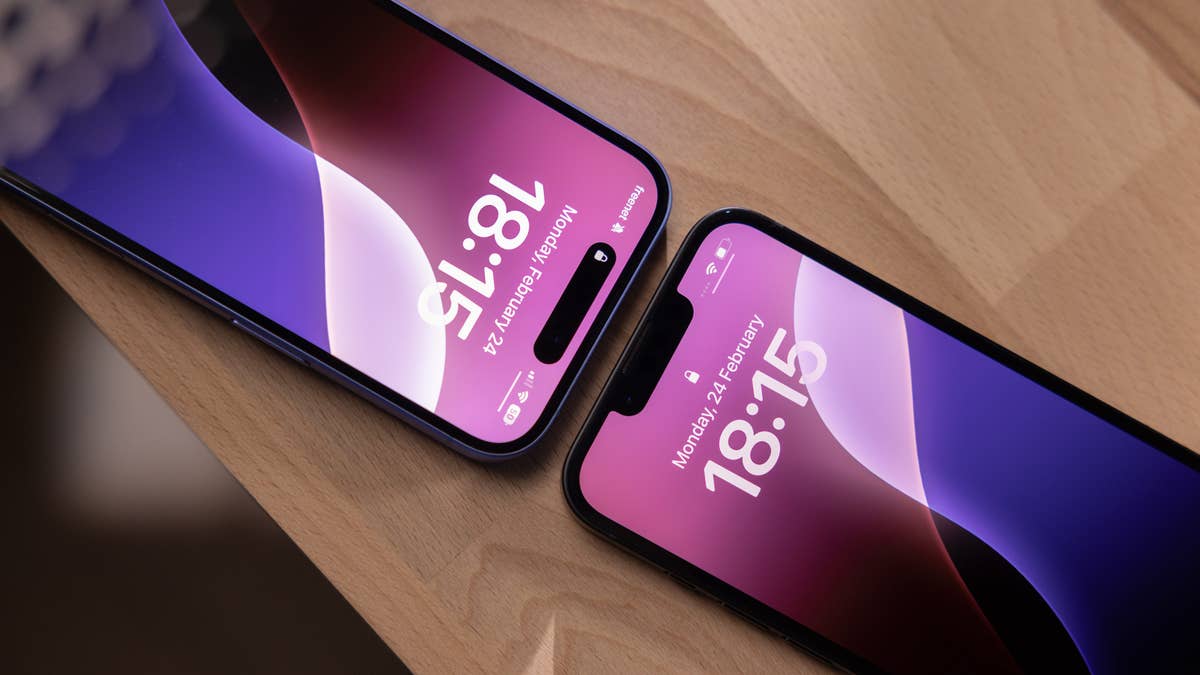
With the iPhone 16e, Apple is breaking with an old tradition: while previous entry-level models such as the iPhone SE came with smaller displays, the iPhone 16e uses a 6.1-inch OLED display-just like the iPhone 16 (review) and even the iPhone 16 Pro (review). The device therefore offers a modern screen size, but still differs from its more expensive siblings in a few key ways.
The Super Retina XDR display of the iPhone 16e delivers crisp colors and high contrasts, but has to admit defeat to the other models in terms of brightness: While the iPhone 16 achieves a typical brightness of 1,000 nits and up to 1,600 nits in HDR peaks, the iPhone 16e comes in at 800 nits (SDR) and 1,200 nits (HDR). The difference is particularly noticeable in direct sunlight, as the iPhone 16 can even boost up to 2,000 nits in outdoor situations.
There is also a noticeable difference at the edges of the display: The bezels of the iPhone 16e are visibly thicker than on the iPhone 16, which gives the device a slightly chunkier look. This is particularly noticeable without a case if you are already used to the narrower bezels of newer iPhones. It’s not the end of the world, but in direct comparison, the 16e looks a little less modern.
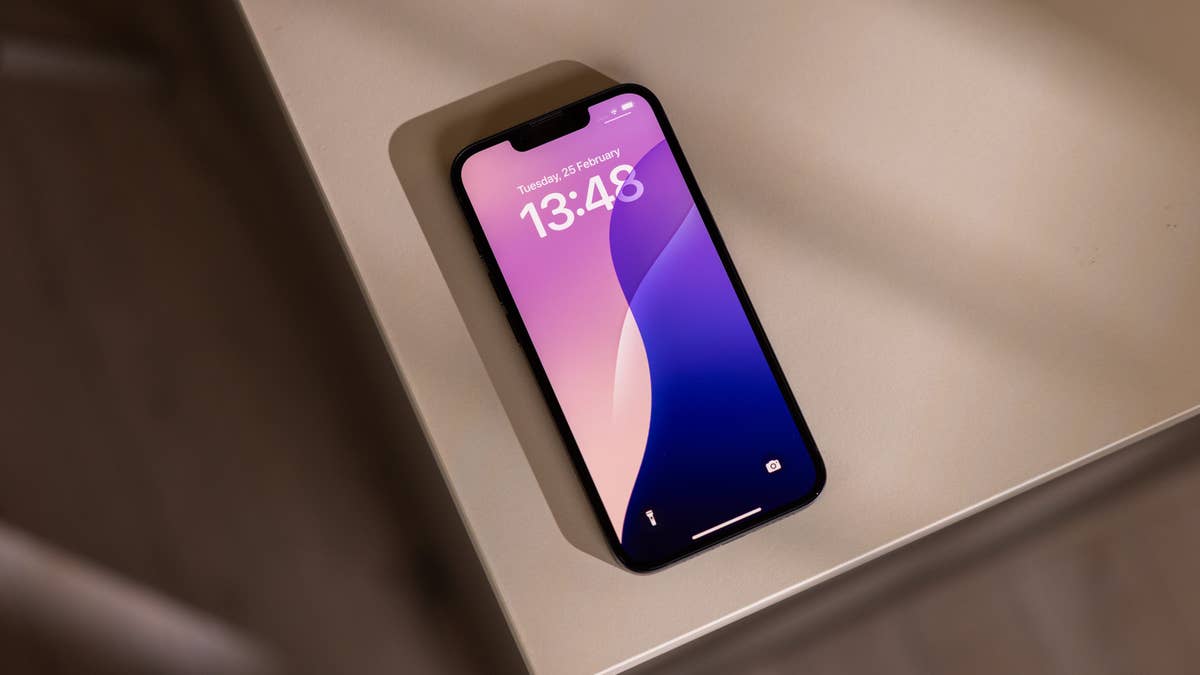
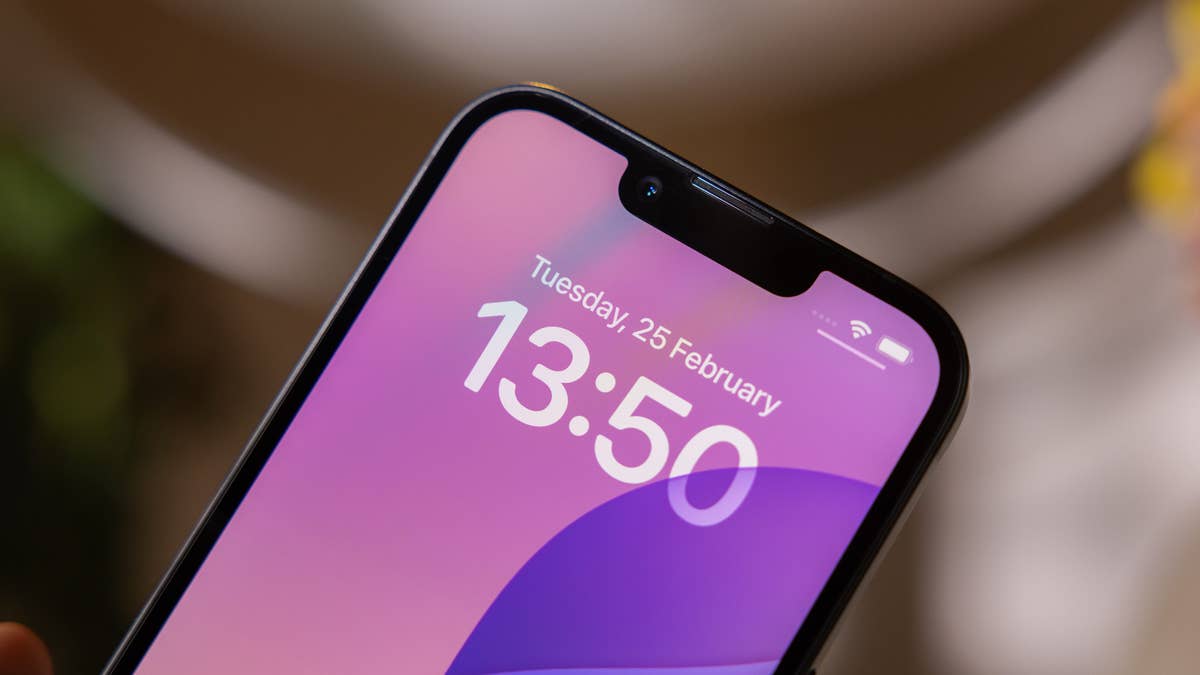
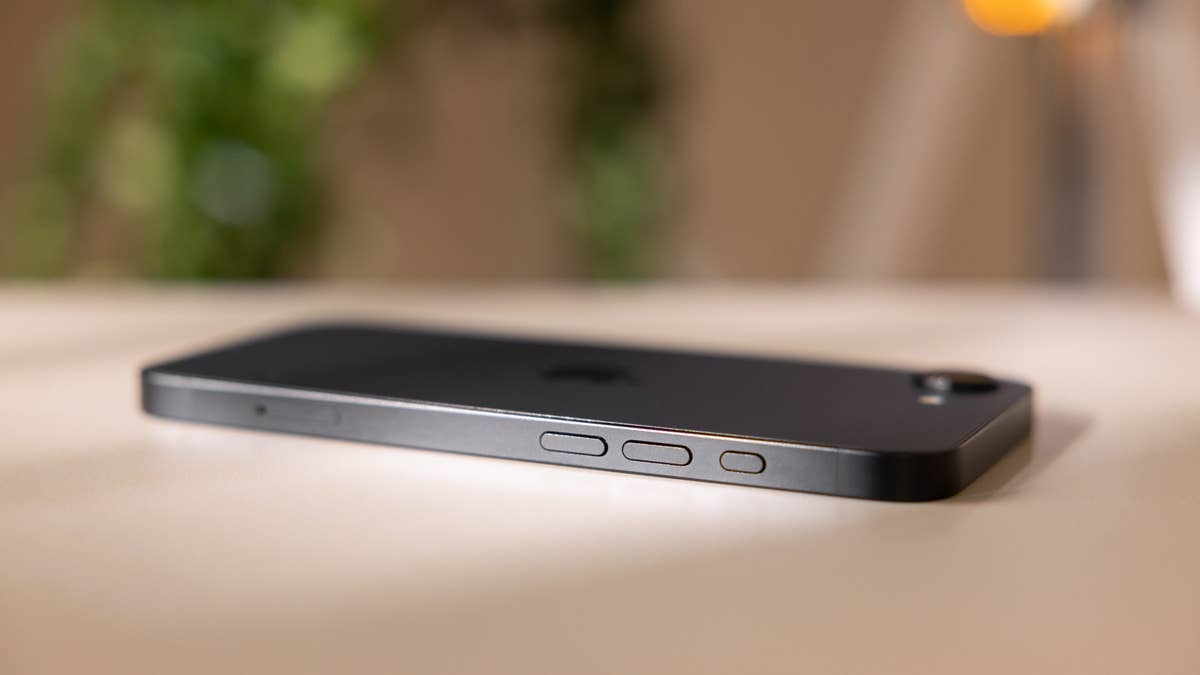
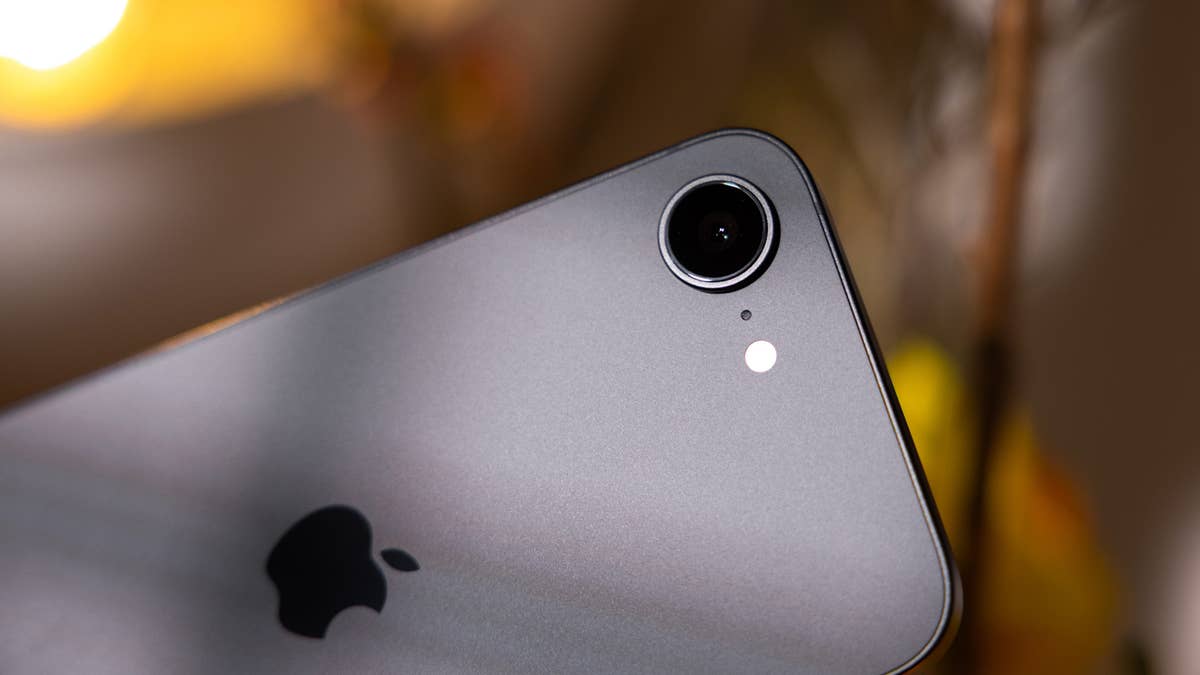

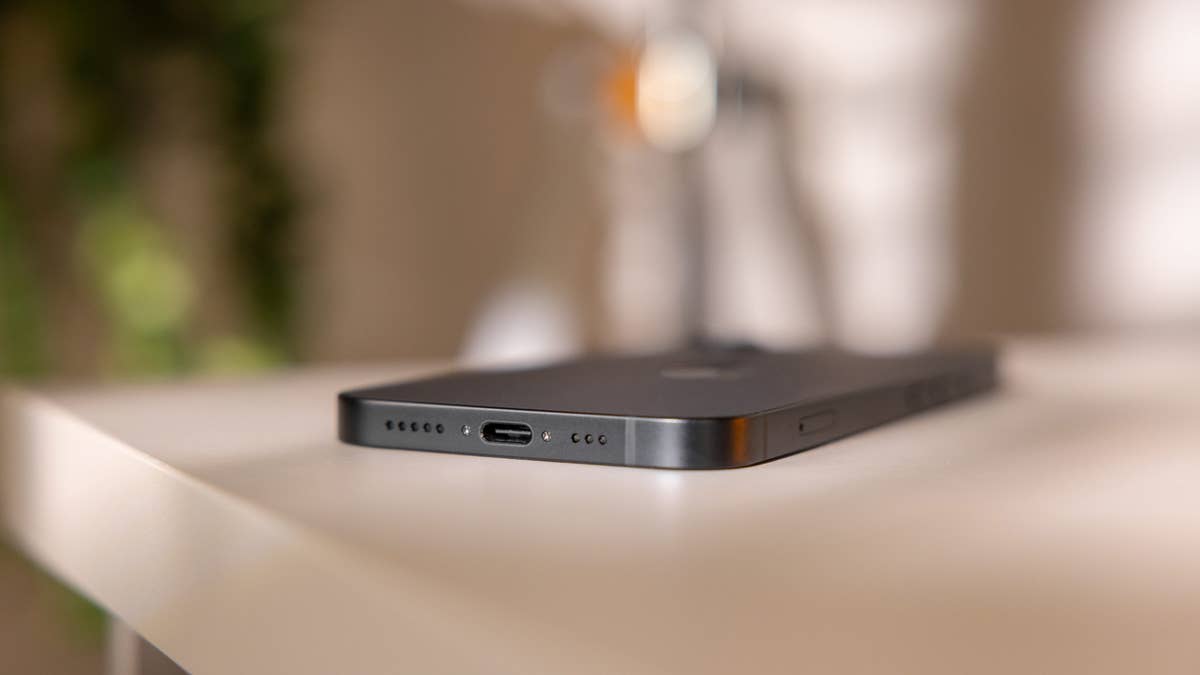
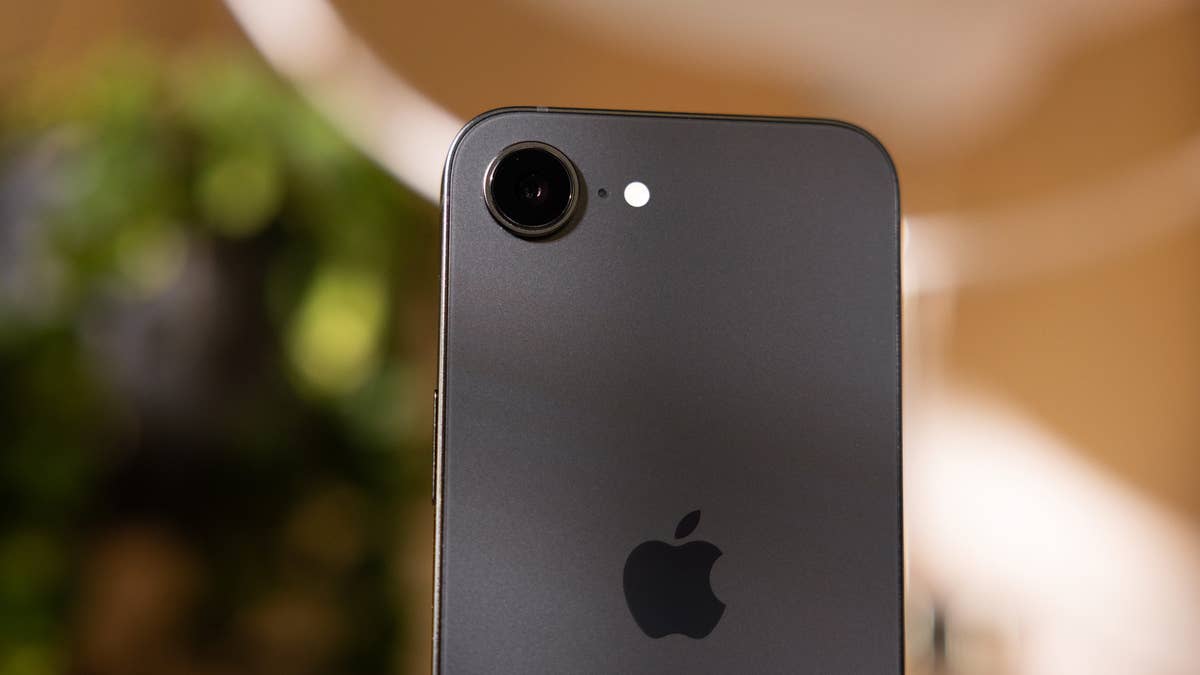
There is also a clear distinction in terms of display technology: the iPhone 16e uses the classic notch, while the more expensive models use Dynamic Island. It also remains at 60 Hz—once you get used to the 120 Hz of ProMotion, you will notice the difference.
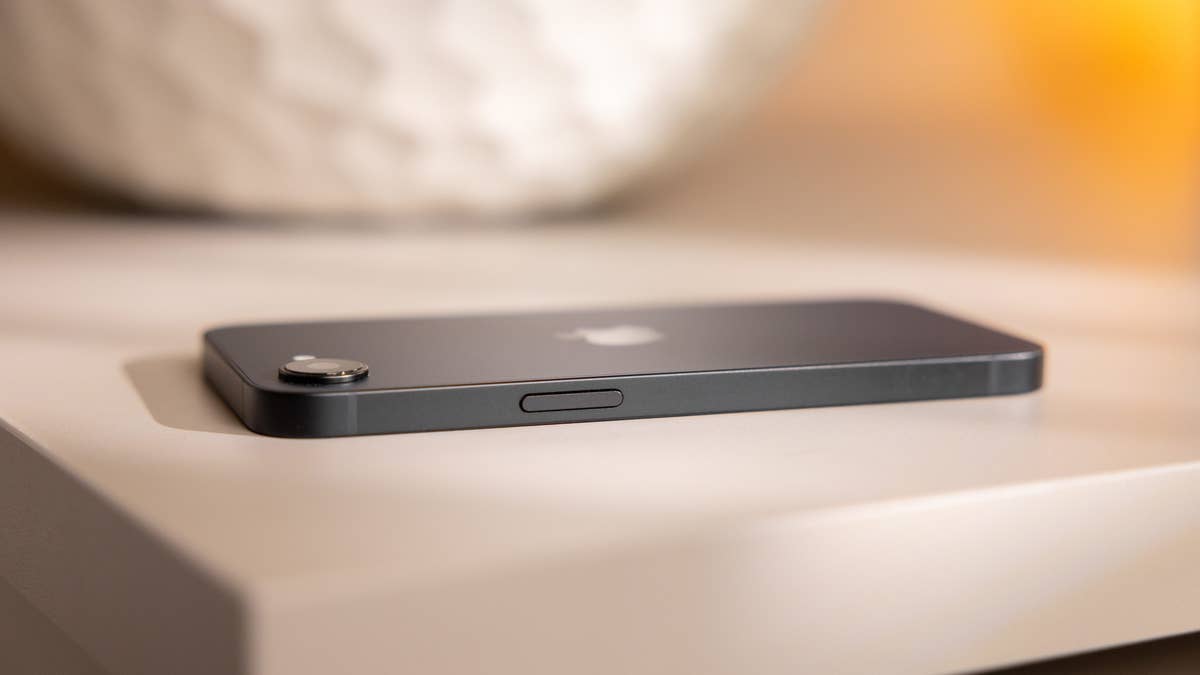
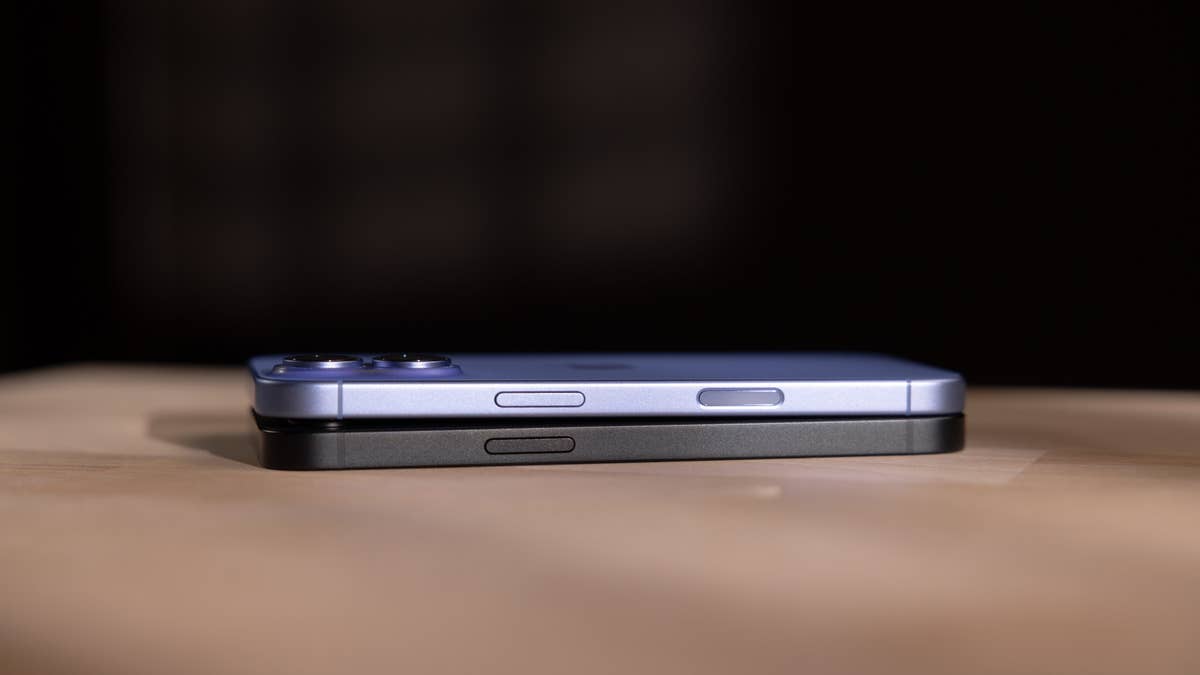
One interesting detail is the new action button, which replaces the classic silent slide switch. It can be used to assign various functions such as camera start or quick access to apps—a practical innovation that was previously only available on the Pro models and the iPhone 16.
In terms of workmanship, Apple remains true to its high-quality standards: the iPhone 16e has an aluminum housing with a glass back, which Apple claims is the “hardest glass in a smartphone”. Thanks to IP68 certification, the device is protected against dust and water—theoretically, it can withstand up to 30 minutes in a water depth of 6 meters.
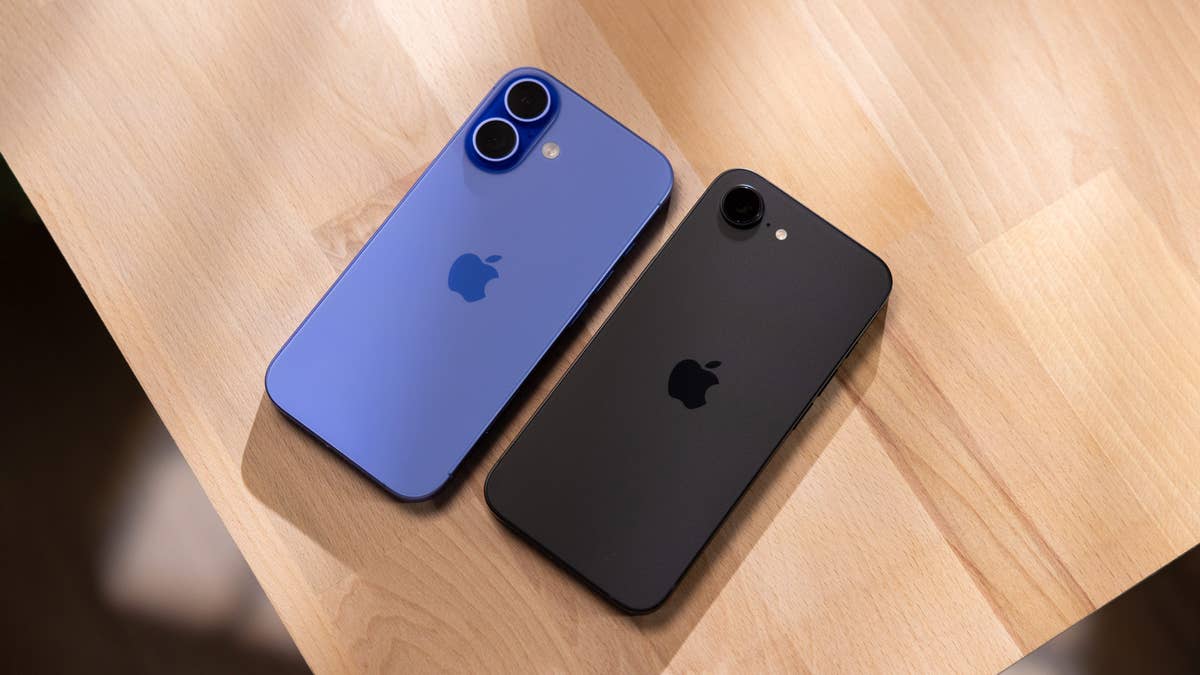
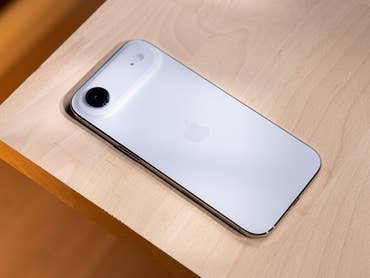
A small advantage over the regular iPhone 16: the iPhone 16e is slightly lighter, which makes it more comfortable to hold. However, there are only two color options: Black and white. So if you want more variety, you’ll have to resort to a case—but beware: MagSafe is not available here, which limits the choice of accessories.

iPhone 16e Software and UI
| Software | |
|---|---|
| Operating system |
|
The iPhone 16e runs iOS 18, which comes with some exciting new features—first and foremost Apple Intelligence. Even though many of the new AI functions are initially only available on the Pro models, Apple is clearly showing the way forward here: intelligent features that are deeply integrated into the system and are designed to make everyday life easier. Anyone who buys an iPhone 16e can rest assured that the device is future-proof and will continue to benefit from new iOS features and Apple Intelligence in the coming years.
However, Apple Intelligence is still in its infancy. Many new AI functions are still clearly inferior to the competition—so far, Apple has delivered good approaches rather than groundbreaking features. It remains to be seen if and when Apple will catch up.
Another major topic: data protection. Apple has been emphasizing for years that privacy is a central component of its software—and with Apple Intelligence, the company is taking a particularly cautious approach here. Most AI functions run directly on the device without sensitive data leaving the iPhone. If larger models from the cloud are required, Apple relies on “Private Cloud Compute”—servers with specially secured Apple Silicon, which, according to Apple, guarantee data protection at iPhone level.
However, this only applies to Apple Intelligence. As soon as third-party providers such as ChatGPT or other AI tools come into play, the data protection regulations of the respective providers apply—and then Apple’s high security standards no longer apply.
And then there is the question of software updates: unlike some Android manufacturers, Apple does not provide an official guarantee for a certain number of years. However, practice shows that iPhones are usually supplied with updates for significantly longer than five years. Anyone who buys an iPhone 16e can therefore assume that the device will be supplied with new iOS versions until at least the end of the decade—a clear advantage over many Android smartphones in this price range.
Apple A18 Performance
| Performance | |
|---|---|
| Processor |
|
| Memory |
|
| Connectivity |
|
The iPhone 16e contains the A18 chip, Apple’s latest generation of smartphone processors. However, it is not exactly the same A18 as in the regular iPhone 16—it lacks a GPU core. This raises the question: Is Apple using A18 chips here that were not good enough for the iPhone 16? Of course, Apple is not officially communicating this, but it would not be the first time that weaker chips from production have ended up in cheaper devices.
Nevertheless, the performance remains at a really high level: the 6-core CPU and the 4-core GPU provide enough power for everyday tasks, photo editing and current mobile games such as Genshin Impact or Call of Duty: Mobile. However, it is noticeable that, in contrast to the more expensive models, Apple does not mention anything about Resident Evil 4 Remake or Death Stranding—two titles that have been announced for the Pro models. This could be an indication that the iPhone 16e is reaching its limits here.
| Apple iPhone 16 (A18 Bionic) |
Apple iPhone 16e (A18 Bionic) |
Apple iPhone 15 (A16 Bionic) |
|
|---|---|---|---|
| AnTuTu | 1.701.457 | 1.378.592 | – |
| 3D Mark Wild Life Extreme | 3.911 | 3.052 | 3.036 |
| 3D Mark Wild Life Extreme Stress Test | Best loop: 3,643 Worst loop: 2,082 |
Best loop: 3,642 Worst loop: 2,420 |
Best loop: 3,171 Worst loop: 2,378 |
There are also differences to its big brothers in terms of connectivity:
No ultra-wideband (UWB)—UWB has been standard since the iPhone 11, but it’s missing on the 16e. This means: precise location search for AirTags, the targeted location of an iPhone via Apple Watch and other UWB functions are no longer available.
5G, but not the full package—The iPhone 16e uses Apple’s first own cellular chip, the C1 modem. Although it supports sub-6 GHz 5G, it does not support ultra-wideband mWave. In the USA it could be a downgrade for high-speed 5G fans.
Only Wi-Fi 6 instead of Wi-Fi 7—While the iPhone 16 relies on Wi-Fi 7, the iPhone 16e is stuck with the older Wi-Fi 6 standard. For most users, this will hardly matter, but anyone running a high-speed network with the latest technology will notice the difference.
No support for Thread—In recent years, Apple has increasingly relied on the Thread standard to better connect smart home devices. Thread is an energy-efficient mesh network that optimizes itself and remains stable even if an individual device fails. It is used for Matter-compatible smart home devices, such as smart lamps, thermostats and door locks. However, the iPhone 16e does not have an integrated Thread router, which means it cannot take on a central role in a smart home network.
Satellite communication remains a plus point: like all new iPhones, the iPhone 16e supports emergency SOS via satellite, the satellite messaging function and even Roadside Assistance in the USA and UK—practical for anyone who likes to travel off-grid.
Apple iPhone 16e Camera
| Camera | |
|---|---|
| Main camera |
|
| Ultra wide angle |
|
| Telephoto camera |
|
| Selfie camera |
|
| Max. Video resolution |
|
In daylight, the iPhone 16e delivers almost the same image quality as the regular iPhone 16. The 48 MP main camera impresses with vivid colors, good exposure and a fast shutter lag. If you mainly take photos in good lighting conditions, you will hardly notice any differences.
However, the biggest difference becomes apparent in the dark: The iPhone 16e does not have an optical image stabilizer (OIS), which is particularly noticeable with longer exposure times. Sharpness suffers with decreasing light conditions—and the iPhone 16e ultimately falls noticeably behind the iPhone 16 even when zoomed out.
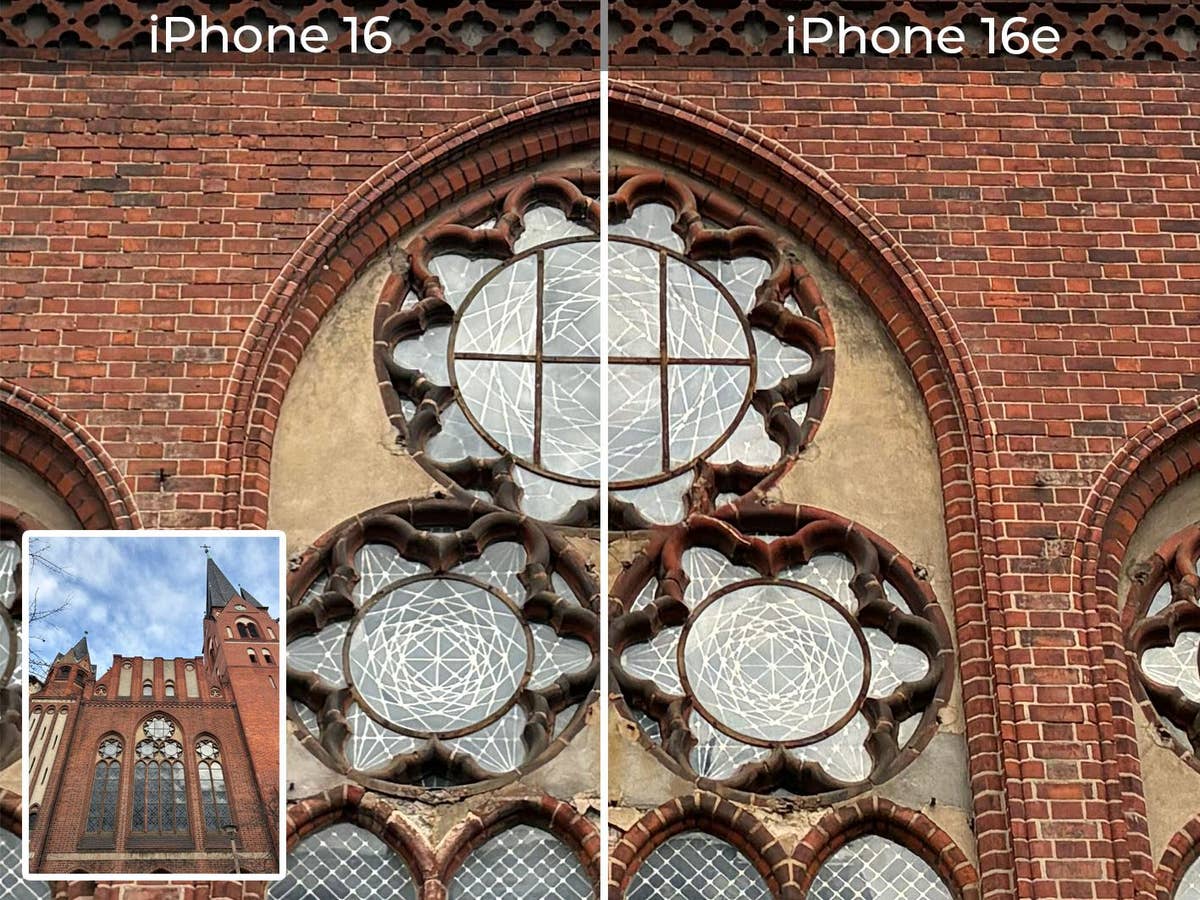
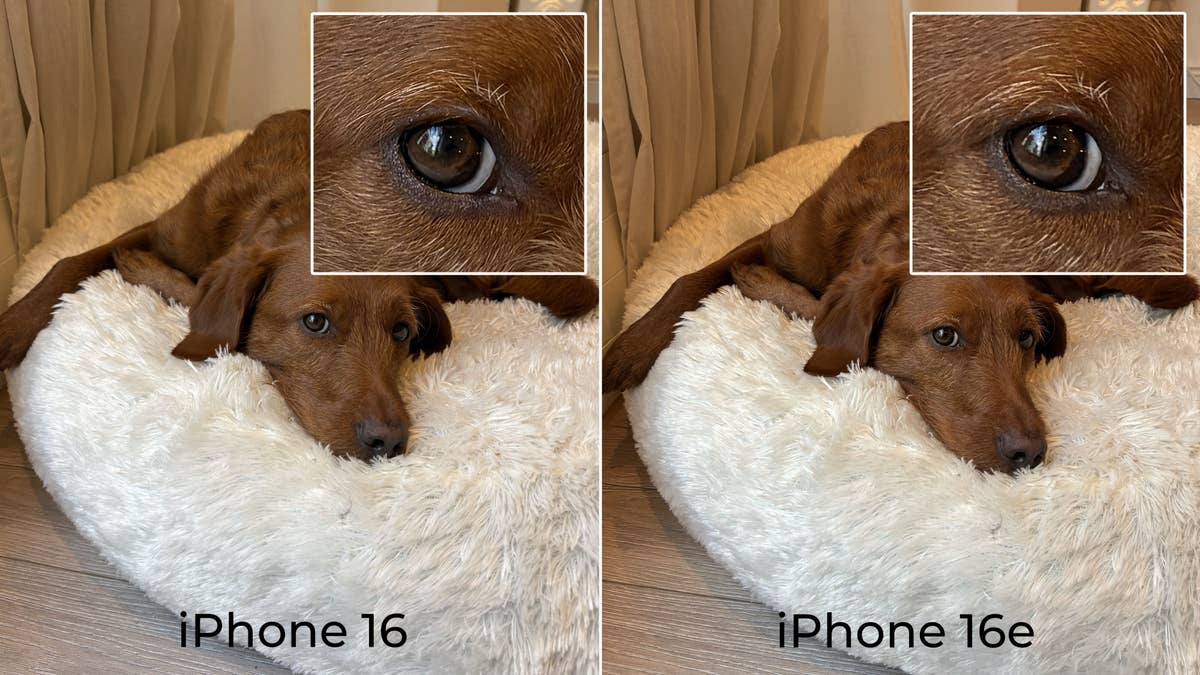
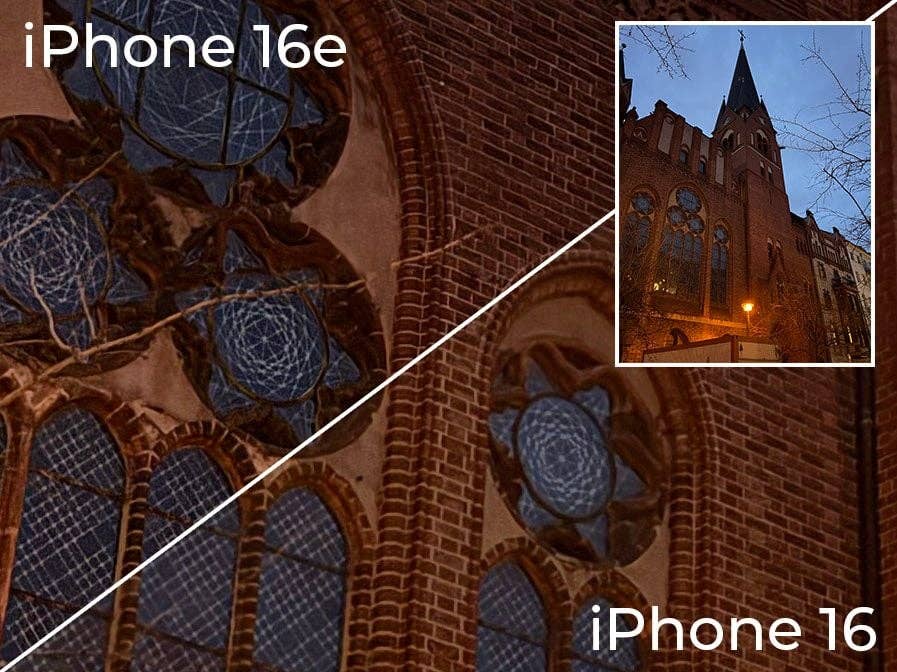
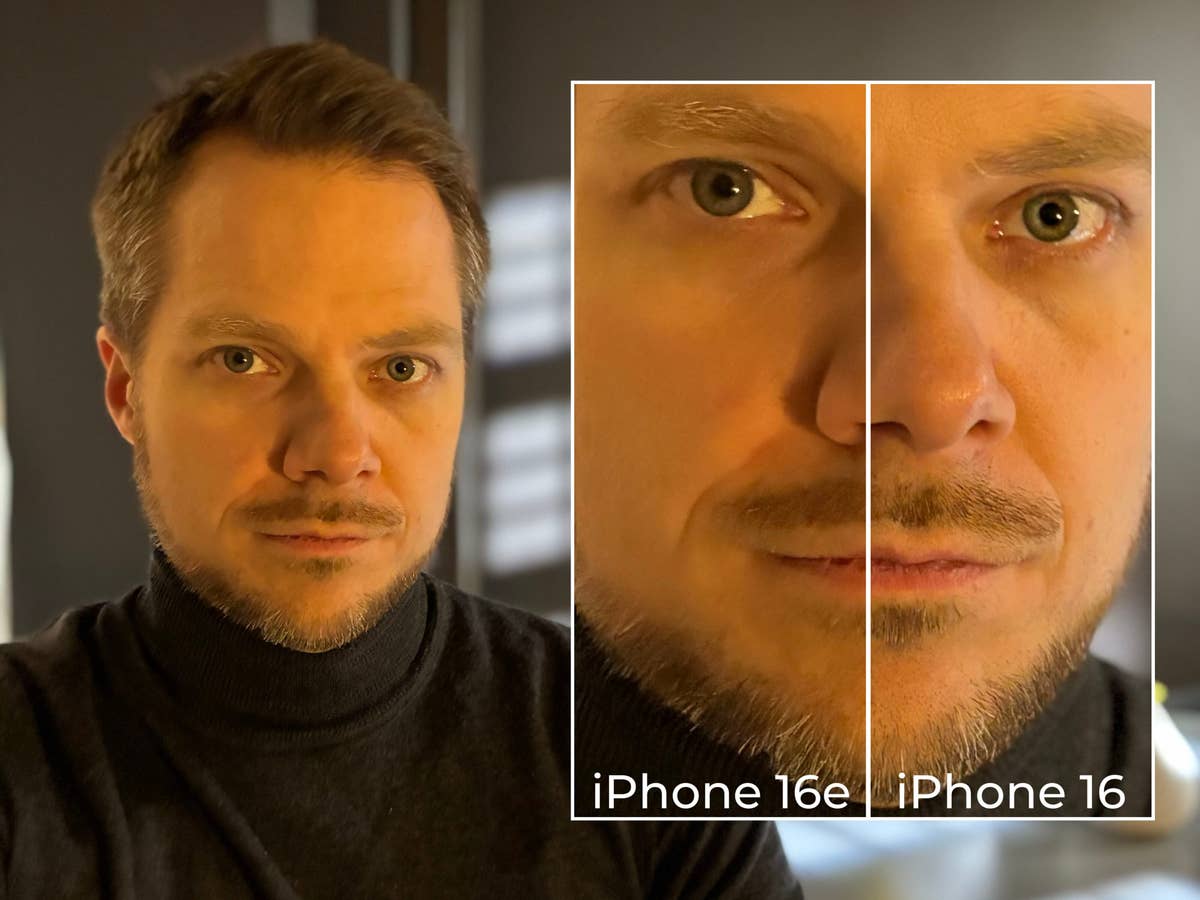

At least: Compared to the iPhone SE 3, there is a night mode here, which significantly improves low-light photography. And there is also a surprise here: when it gets so dark that night mode is used, the iPhone 16e is suddenly ahead again. The only plausible explanation for us is that Apple must have improved the night mode in iOS 18.4 compared to iOS 18.3.1 on our iPhone 16.
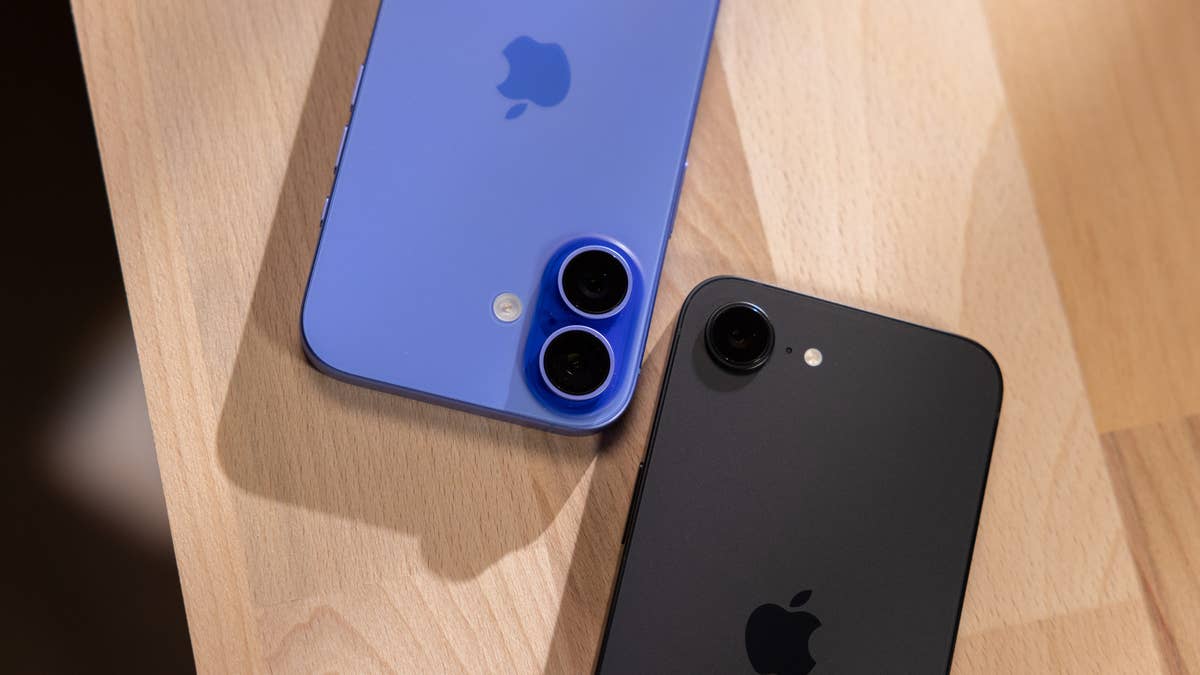
One major drawback is the lack of an ultra-wide-angle lens. Anyone who frequently takes group photos in confined spaces or expansive panoramas will miss this lens. The iPhone 16e also lacks features such as Spatial Video and Cinematic Video—as well as the latest version of Photographic Styles, which allow you to adjust the look of the image before taking the photo.
Portrait mode, on the other hand, performs surprisingly well. Despite the limitations of the single-camera setup, the subject and background are cropped with astonishing precision, which is a major improvement over the iPhone SE 2022 (review).





















iPhone 16e Battery Life and Charging
| Battery | |
|---|---|
| Battery capacity |
|
| Charging speed (wired) |
|
| Charging speed (wireless) |
|
Apple promises the best battery life in a 6.1-inch iPhone for the iPhone 16e – and after my tests, I can confirm this. In everyday use, the device easily lasts a whole day, often even longer. The difference is particularly noticeable when compared to older iPhones such as the iPhone 11 or SE (2022).
The official Apple battery life figures show that the iPhone 16e lasts even longer than the regular iPhone 16:
- iPhone 16e: 26 hours
- iPhone 16: 22 hours
- iPhone 16 Plus: 27 hours
One reason for the long battery life is the new Apple C1 modem, which is Apple’s own cellular modem for the first time. Apple advertises it as the “most energy-efficient modem ever in an iPhone”. The battery itself is also larger than in the iPhone 16, which also ensures a longer battery life. However, the C1 modem is probably also responsible for the lack of UWB and threads (see above) as well as other connectivity services that we have grown fond of in other Apple models.
The charging speed is at the typical Apple level: With a 20 W USB-C power supply, the iPhone 16e charges to 55% in 30 minutes and reaches full charge after 87 minutes. The detailed values are listed here:
| Charging speed (wired) | |
|---|---|
| 0 min |
|
| 10 min |
|
| 20 min |
|
| 30 min |
|
| 40 min |
|
| 50 min |
|
| 60 min |
|
| 70 min |
|
| 80 min |
|
| 87 min |
|
The biggest drawback for me remains the lack of MagSafe. The iPhone 16e is the first iPhone since the iPhone 12 to come without MagSafe. Wireless charging is possible via Qi with 7.5W, but without magnets the experience is less convenient. Anyone like me who uses MagSafe accessories such as wallets, car mounts or magnetic charging pucks will have to look for alternatives – or go straight for another iPhone.
Is the iPhone 16e Worth Buying?
The iPhone 16e is a really good entry-level iPhone for anyone who is new to the Apple ecosystem or wants to upgrade from an older iPhone model (iPhone 14 or older). It comes with Apple Intelligence, an incredibly long battery life and the A18 chip—making it a future-proof iPhone for the coming years.
However, there are also compromises: The lack of MagSafe restricts the use of accessories, the lack of an ultra-wide-angle lens is noticeable in the camera, and savings were made on features such as UWB and Wi-Fi 7. It’s also worth taking a look at the iPhone 15, which is often cheaper and doesn’t make any compromises in some areas (e.g. display)—but then comes without Apple Intelligence on board.
However, if you want the latest Apple features and top battery life, the iPhone 16e is a smart choice—even if you have to make compromises here and there.
Where to Buy the iPhone 16e?
You’ll have to shell out at least $599 for the new iPhone 16e—$170 more than the previous entry-level iPhone, the iPhone SE (2022). This model has recently disappeared from Apple’s lineup, making the 16e the new “budget” option. The pricing structure remains typical for Apple: in the largest storage variant with 512 GB, you pay $899—the same price as a regular iPhone 16 with 256 GB.
| 128 GB | 256 GB | 512 GB | |
|---|---|---|---|
| iPhone 16e |
|
|
|
| iPhone 15 |
|
|
|
| iPhone 16 |
|
|
|
A look at market prices makes the comparison more complicated: the regular iPhone 15 is often available for less than $700, and the iPhone 16 also falls below $800 from time to time. However, the decisive difference is not just the price but also the features:
The iPhone 16e comes with Apple Intelligence and offers outstanding battery life, even surpassing some Pro models. If you want to take advantage of these features, there’s no alternative to the 16e in this price range.
Apple’s color selection is minimalist this time: black or white—that’s it. If you prefer a more colorful look, a case is the way to go. Just one tip: make sure your case is MagSafe-compatible, as the cheapest iPhone lacks integrated magnets, but you can still use MagSafe accessories with a compatible case.
We mark partner links with this symbol. If you click on one of these links or buttons–or make a purchase through them–we may receive a small commission from the retailer. This doesn’t affect the price you pay, but it helps us keep nextpit free for everyone. Thanks for your support!


0 comments