Hitting your 10k steps a day? What if your fitness tracker is lying to you?
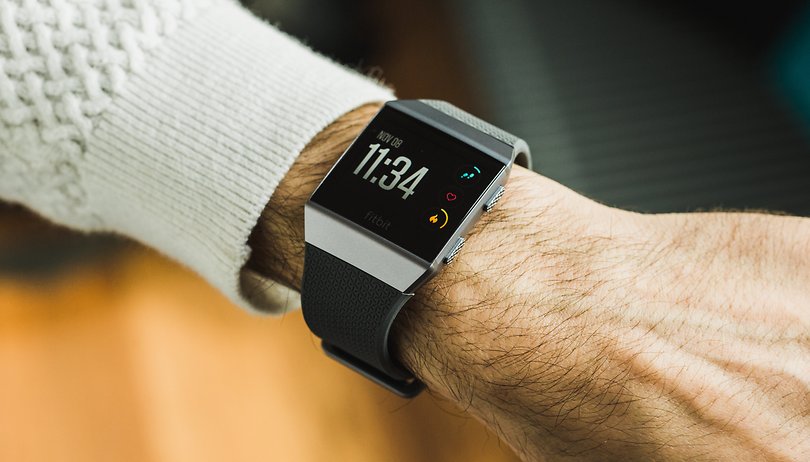

There seems to be no stopping the rapid rise of smart fitness trackers. People everywhere are walking around with these devices on their wrists, chasing the magical target of 10,000 steps a day. But are your efforts futile? New research suggests so.
Back in May 2013, when Fitbit released the Fitbit Flex, the first Fitbit tracker worn on the wrist, few people knew (or cared) how many steps a day they took. Today, it feels as though everyone is tracking how much they move around. “How was your day?” “Great, I took 12,429 steps!” Give me a break.
It is estimated that by 2020 there will be 500 million wearables attached to the bodies of people worldwide. But where does the figure of 10,000 steps come from? And what if, heaven forbid, our fitness trackers have been lying to us about how ‘healthy’ we are.
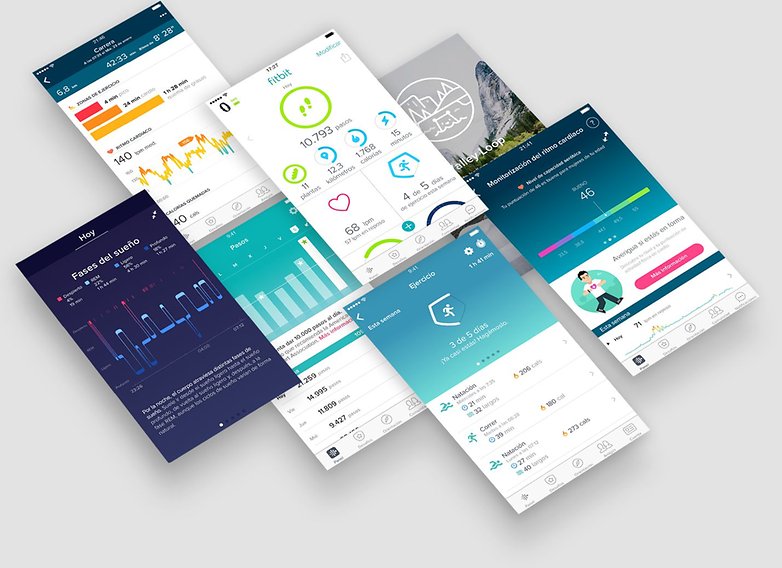
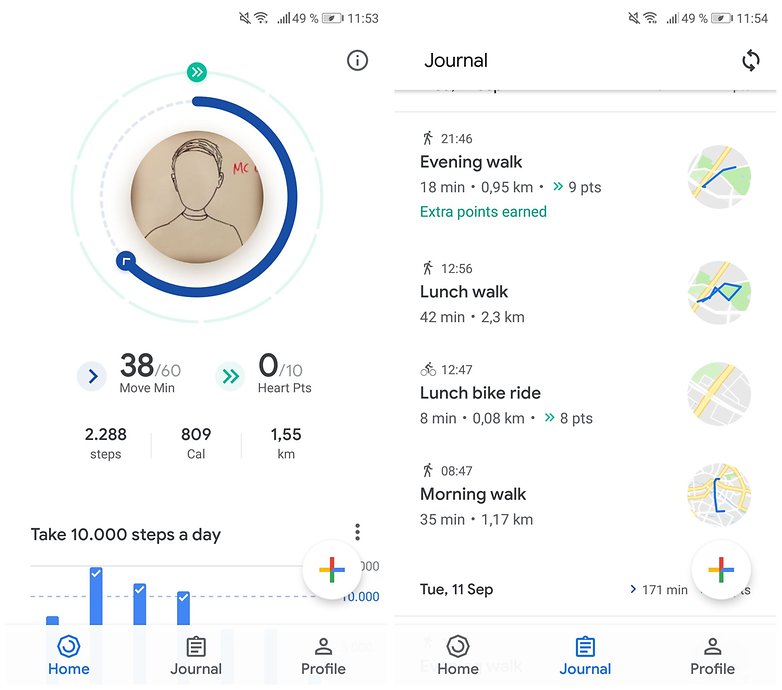
I’ll admit, I have always viewed Fitbit and other fitness trackers with a raised eyebrow. So you walked 10,000 steps today, but how many of them were to and from the bar? I got sucked in myself when I got a new phone that tracked my steps and pushed notifications at me by default. When you live in a big city and don’t own a car, taking 10,000 steps in a day seemed difficult not to do. The only difference was that it made me feel less guilty about getting that kebab on the way home.
And here lies the problem. An entire industry has been built around this magical number. We have seen this before with recommended alcohol intake (21 units a week in the UK) or the five fruit and vegetables a day initiative. The issue with binary goals like this is that they encourage a black and white mentality: drinking 21 units of alcohol is healthy, drinking 22 is not. After all, the tech says I've earned it.
The 10,000 steps goal originates from a Japanese marketing campaign in the 60s. After the Tokyo Olympics in 1964, a company called Yamasa designed a wearable pedometer called the Manpo-meter - which roughly translates to “10,000 step meter” - to cash in on an increased interest it a fit and active lifestyle. The number was completely arbitrary. It was chosen as a play on words. The Japanese word to take a stroll is 'sanpo'. The word for 10,000 is 'man'. Thus, 'manpo' became a thing.

Mike Brannan, national lead for physical activity at Public Health England said last year: “There’s no health guidance that exists to back it.” In the US, Dr Greg Hager, from Johns Hopkins University, told the American Association for the Advancement of Science last year that fitness trackers need to allow for individual capabilities to be useful.
“Some of you might wear Fitbits or something equivalent, and I bet every now and then it gives you that cool little message ‘you did 10,000 steps today.’ But is that the right number for any of you in this room? Who knows? It’s just a number that’s now built into the apps.”
But even if 10,000 steps is based on a Japanese pun, what if your fitness tracker was lying to you, and you weren’t taking as many steps as you thought you were? That second helping of dinner wouldn’t be so guilt-free if your 10,000 steps was more like 7,500, would it?
Well guess what, it’s happening. According to research by the University of British Columbia, Fitbit devices and other pedometer-based fitness trackers routinely overestimate the number of steps you’ve taken by as much as 25%. In addition, the study found consistent evidence indicated that Fitbit devices were only likely to meet acceptable accuracy for step count approximately half the time - the other 50% of the time the data is nonsense.
The study, authored by Lynne M Feehan PhD from the Department of Physical Therapy, concluded that “discretion should be used when considering the use of Fitbit device to inform health care decisions”.
The problem, then, appears to be two-fold. Not only are we chasing an arbitrary fitness goal, but we are using bad data to measure our success and failure. Fitbit is now a $4 billion company. Not bad for selling a primary idea that is essentially worthless.
Do you use a fitness tracker to count the number of steps you take? Let us know in the comments.










I wear a Nokia Steel. I'm less concerned about the actual number of steps - watching my progress makes me more likely to get up and take a walk, which is much better than sitting in front of the TV. If I am moving more because of the device, my goal has been met.
As others have mentioned, I am not worried about the accuracy but use it to gauge the trend. I also use Fitbit to measure sleep, calories. It has helped me bring down my BMI from overweight to normal. Yes, we can debate if BMI is accurate or not. If it helps me reduce 2 sizes then I think it is beneficial. Decice can only help monitor, It is up to the consumer on how it is used.
It is pretty obvious that there is a huge bias against the Fitbit company. It is the only tracker sited by name. Also, random quotes from here and there? Fitbit themselves tell you that their devices have varying degrees of accuracy. The important point of a fitness device is NOT the number of steps but the idea of gathering the information on what you are doing so you can see how your step count varies from day to day. They give you a concrete goal and help to motivate you to walk more on those days when your step count is lacking. The 10,000 step goal IS just an arbitrary number but does anyone think that walking 10k steps a day will make the average person LESS healthy?
"Fitbit is now a $4 billion company. Not bad for selling a primary idea that is essentially worthless." Again you single out ONE company, what is your agenda? "A primary idea that is essentially worthles", really, your reading has led you to believe that getting people to get out and walk more each day is "worthless"? What is worthless here is your advice to people trying to improve their lifestyle to just quit.
Boo to you sir and Boo to android pit for publishing such trash!
No bias or agenda against Fitbit. The research published was a study into the accuracy of Fitbit devices. My opinion is formed on the data I have. I cannot call out other companies without reliable data. I only have that for Fitbit.
My argument is not that walking 10k steps a day will make the average person less healthy, as you allude to. I am simply making the point that, if you don't need the 10k goal (because it's arbitrary) then you don't need the device that inaccurately tracks your progress towards that goal.
If Fitbit makes you exercise more than you normally would, that's great.
There is truth to this as I have compared two different vendors and I have documented the difference to their engineering teams. How? I counted my steps and used a roller wheel measure to measure steps and distance. For what it is worth though Fitbit is reasonably accurate and if you are doing 10-15k steps the accuracy issues are minimal.
10k steps for most people is around 5 miles but could go up to 6 for some and 4 for others. So if you are concerned measure 200-400 feet of stepway and walk normal and then do a quick Sprint and count your steps.
If you do distance make note of an address 1/2 way into the route and Google map it and if you want to be extra anal ... Drive it and average it out.
The important thing is to measure consistently and realize you want to improve the distance and time and just do it .....
The whole step premise is bogus and distracts from getting real exercise. On the other hand, my sister-in-law's company credits Fitbit results toward an annual merit pay assessment - interesting to consider if Fitbit is legally liable to businesses that are paying employees to use inflated results.
I agree.
I recently bought a Garmin vivofit4! Smart design & easy to use. On my trouble is I am forever hitting 10,000 a day step count, sometimes it's way over that. The blooming thing also clocks my movement when I am out on my motorbike!!!
As the previous poster wrote, this is an unnecessarily alarming article. Is anything like a wearable going to be perfect? No. But I would also bet that the majority of owners have not fully followed the instructions and calibrated their devices. Additionally, you get many more useful statistics, combined with others to to help you track your fitness goals (e.g.; calories eaten). Fitbit probably sets the default goal based upon the raw numbers of what people set as their goal. That's a basic design success. Just because people choose the wrong goal on average, doesn't mean Fitbit is to blame. (I use Fitbit for simplicity) Many people have used these devices to increase their fitness, health, or just have more information about their activities without spending a ton of their time recording and calculating. That's what technology is all about; allowing us to have quicker and more access to information. It's still our responsibility to use it correctly.
Easy answer to this unnecessarily alarming article. Increase your step goal to 15000, don't eat the kebab, don't drink the alcohol (it's just sugar), eat a lot more than 5 fruit & veg, use your brain!