Sorry, but there's really nothing to see here right now. Our server is in maintenance mode – and our
little bot is trying to sort the error messages with its last bit of energy.
Whether it was a data leak, a power outage in the cluster, or just a grumpy bit – we don't know yet.
But what we do know is:
The data drama escalated into a server meltdown. But don't worry: We're on it.
What now?
Everything is surely running smoothly over at our colleagues from inside
digital – why not stop by!
Or you could pass the time by visiting our social media channels – for example Instagram, YouTube or TikTok. At least there are no
server problems there – promised.
Thanks for your patience. Our bot is already rebooting at full speed. 🔧
NewsTabletXiaomi 13 Ultra’s Variable Aperture: More than Just an Iris Gimmick
Does a smartphone really need a variable aperture, or is that feature integrated with tiny lenses just the latest marketing gimmick being trumpeted to consumers? NextPit already reviewed the Xiaomi 13 Ultra and is here to explain why the variable iris in the Xiaomi 13 Ultra with its 1-inch sensor makes a whole lot of sense.
Read more: How the Xiaomi 13 Ultra fared in its hands-on.
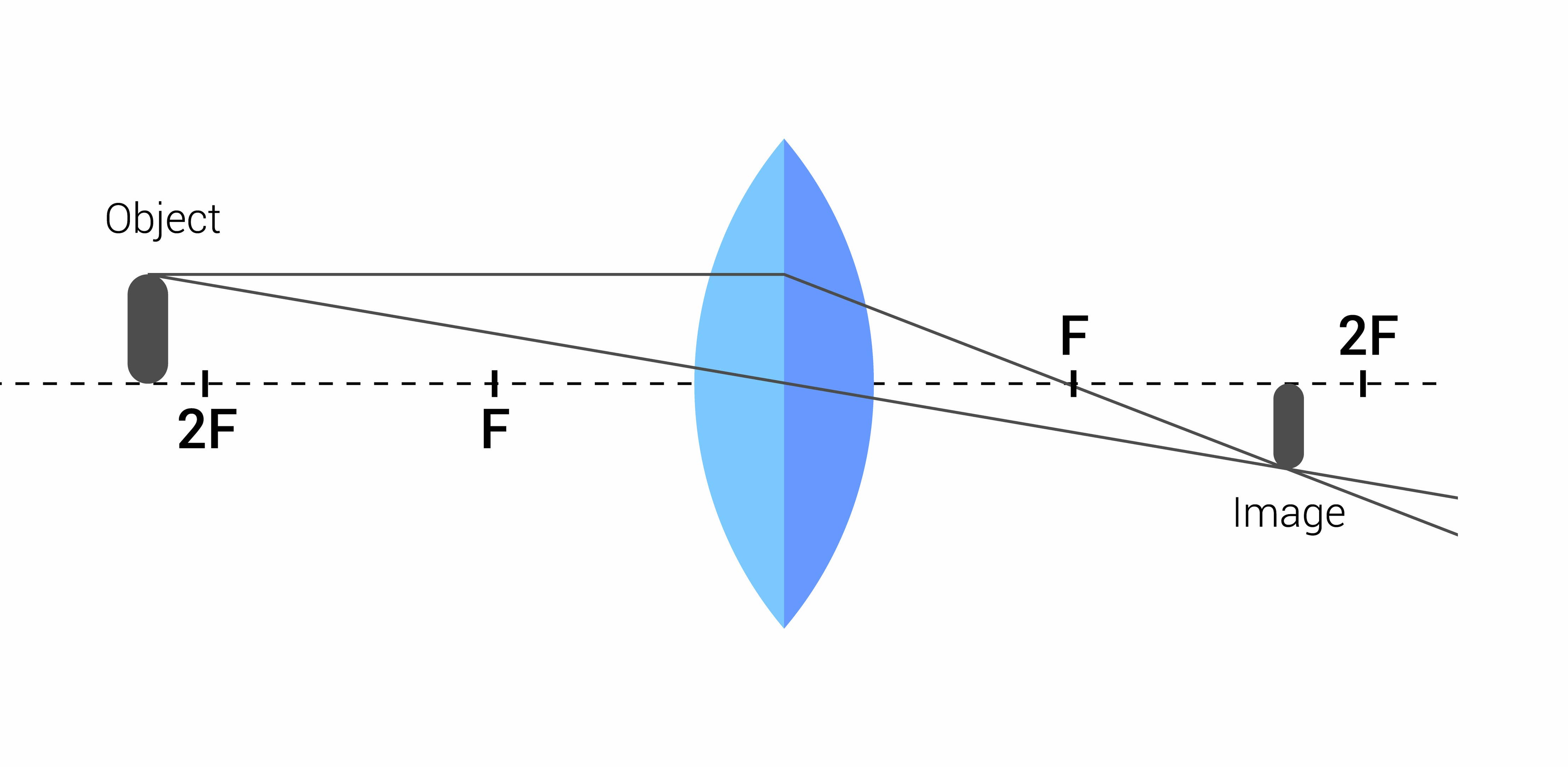
The variable aperture in the lens shrinks the lens from the edge and thus effectively reduces the lens diameter that is used for light. While doing so allows less light to enter the lens, it also shields the outer areas of the lens where the light experiences greater refraction. See the diagram below for a more in-depth explanation.
If there is a higher refraction by the lens, this results in two important effects: The depth of field of the resulting photos becomes shallower, while the imaging performance of the lens is improved.
The influence of aperture on depth of field
All light that hits the lens of the camera from a certain object is thrown in a cone shape onto the sensor behind it, where it forms a circle—the so-called circle of confusion. If such a circle is larger than a pixel, it is out of focus.
The stronger the refraction at the edge of the lens, the duller these light cones become; and the more precise the focus point must be so that the sensor plane lies exactly where the tip of the cone is smaller than a single pixel. So: A large or open aperture means a shallow depth of field.
The second but no less important influence of the aperture is the imaging performance of the lens. Light experiences greater refraction at the edge of the lens. Now, the refractive index depends on the wavelength of the light, and therefore, with greater refraction, short-wave and long-wave light is also refracted to different degrees. You can see this effect by looking at rainbows and prisms.
In photography, this effect causes so-called chromatic aberrations. These are usually denoted by green or violet color fringes at transitions with high differences in brightness. These optical artifacts are normally reduced with complex corrective lenses or software tricks. However, it is easier to do so by adjusting the optical aperture.
Extremely fast lenses in particular benefit from a variable aperture, since the light has to experience greater refraction at the large lens edges than with slower lenses. During the day, the aperture can therefore cover the lens edge in favor of better image quality. At night, on the other hand, a completely open lens collects more light.
Fine detail: Iris aperture instead of “just” an iris diaphragm
Android veterans may remember: Variable aperture was once also available in Samsung’s Galaxy S9 (dedicated camera review). Back then, however, the lens was reduced by two small templates all around that were simply pushed between the sensor and the front lens. The aperture also works in the same manner on the Xiaomi 13 Ultra.
The Huawei Mate 50 Pro NextPit reviewed in the beginning of 2023, on the other hand, has a real iris diaphragm and thus allows not only two settings (open and closed) but four settings in total. In my opinion, only two well-chosen aperture settings really make sense in smartphones: a maximum open value and a value that is as close as possible to the so-called “critical aperture” of the optics. After all, the critical aperture is the value where a camera system offers the best possible imaging performance.
The bottom line for me is how Xiaomi has found a sensible way to optimize the image quality under different lighting conditions in the 13 Ultra. The best thing is, everything runs automatically in standard mode. However, you can also switch between F1.9 and F4.0 manually.
I have been writing about technology since 2004 with a strong passion for smartphones, photography, and IoT, especially in the world of smart homes and AI ever since they debuted. I'm also an avid cook and bake pizza at least three times a week using my Ooni Koda 16. In order to compensate for all the consumed calories, I indulge in sporting activities on a daily basis while strapping on at least two fitness trackers. I am strongly convinced that you can DIY a lot of things if you put your mind to it - including a photovoltaic system and power station.










0 comments