Huawei P20 hands-on: New look and AI for the P series
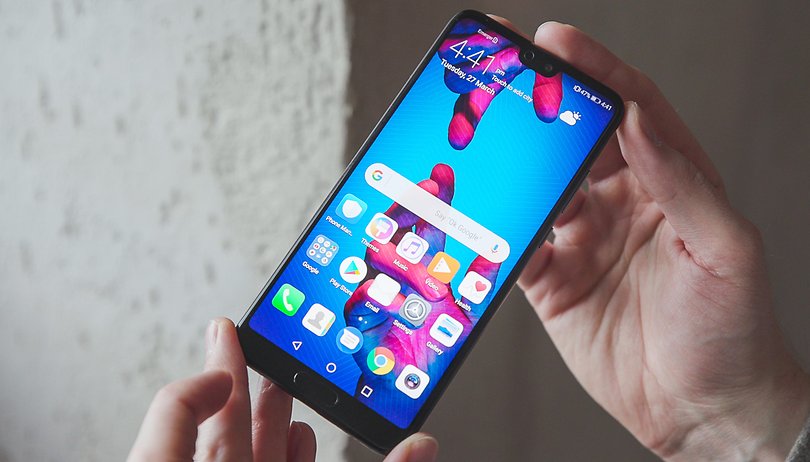

Many people are awaiting Huawei’s press event in Paris. Instead of releasing the new device at the Mobile World Congress, the P20 decided to wait an extra month before making its appearance on the red carpet in France’s capital, accompanied by another new member of the Huawei family, the P20 Pro. Will the new smartphone be able to meet expectations?
Huawei P20 design and build quality
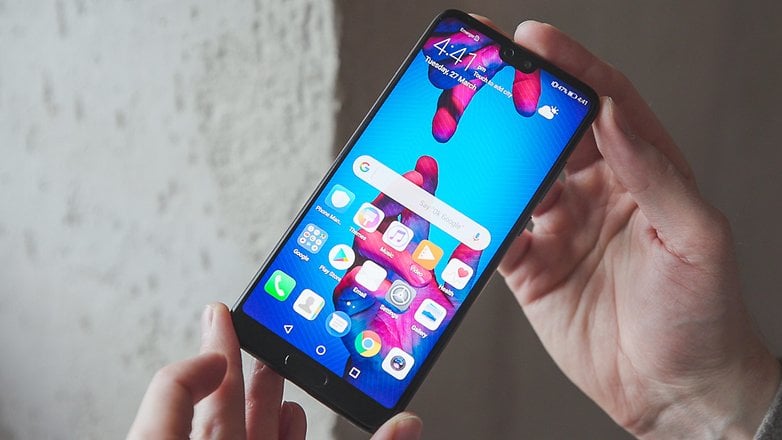
More space for the display and notch
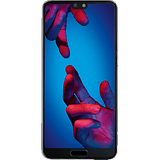
The design is not the main draw of the Huawei P20, since the smartphone series is not particularly innovative. The body, on the front, is reminiscent of the Honor View 10, but with a notch. The differences between the P10 and P20 are immediately visible, however, because the new generation has adopted a Full View display that almost completely frees up the side edges; we saw this already on the Mate 10 Pro.
The Huawei P20 gets a fresh new look that introduces a notch on the front panel.
The TFT IPS screen, which replaces the AMOLED display we saw in the Pro version, arrives at 5.8 inches, so it's quite a bit larger than the 5.1-inch display on the P10. The screen has an 18.7:9 format and a resolution of 2244x1080 pixels in FHD+.
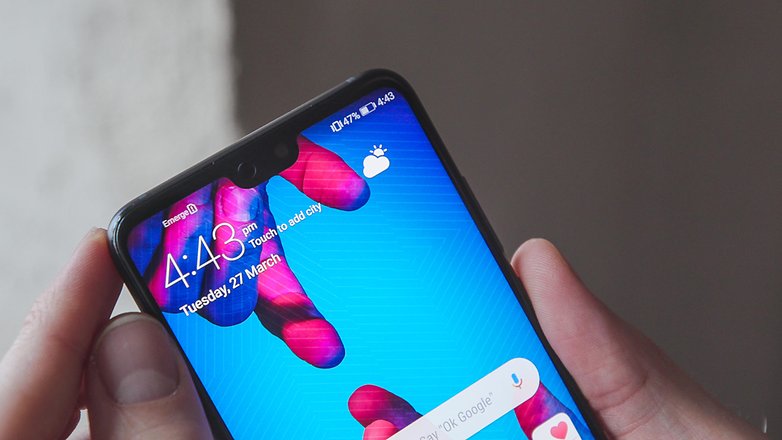
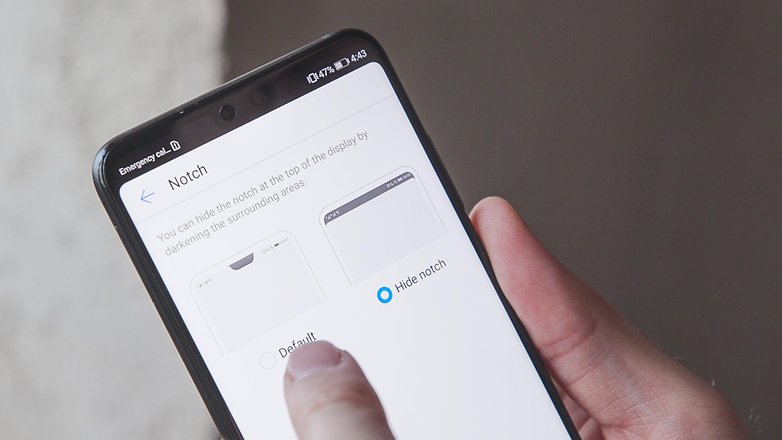
The upper bezel has also been made thinner and houses the notch, a feature introduced in the iPhone X that has already been adopted by several brands. This is the hottest trend of the moment, and Huawei doesn’t want to miss out on offering it to its fans, while at the same time perhaps also attract the attention of Apple users. The Lite version also comes with a notch. If want to do without it, you can deactivate it from the settings menu in the section dedicated to the display.
New features on the frame
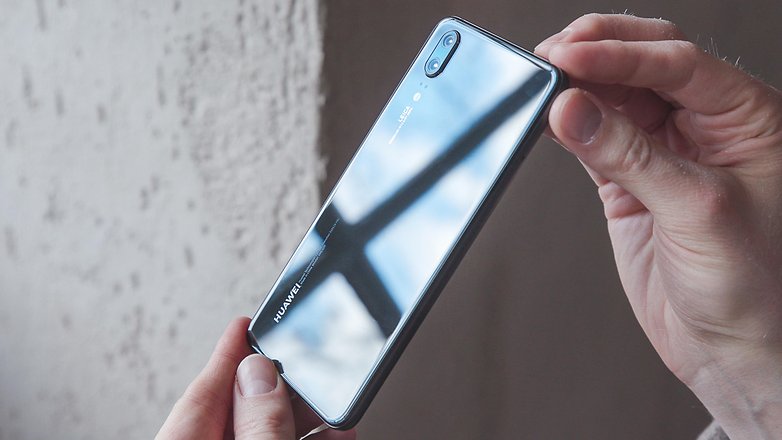
The P20 has abandoned its predecessor’s opaque aluminum frame and now carries a premium design. The rear panel is made of glass, which is undoubtedly elegant, but at the same time more fragile. The body has an affinity for fingerprints, but as far as style is concerned, it leaves nothing to be desired.
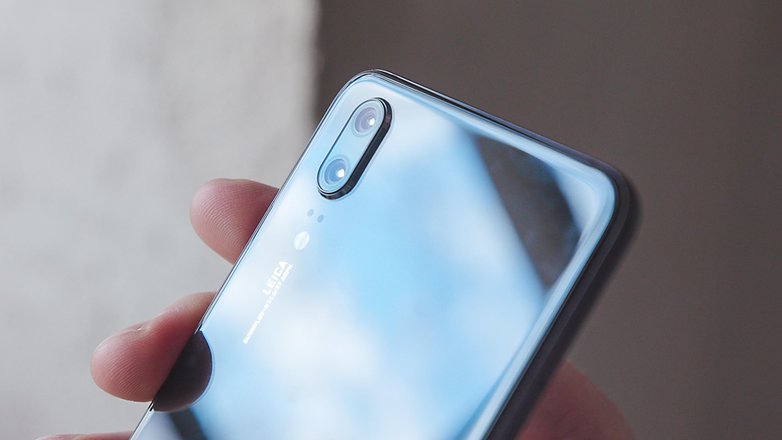
A glass frame and the photographic compartment is repositioned vertically on the left.
Since the brand has decided to reorganize the device, the camera features have been moved to the left side. The two cameras, which slightly protrude from the smartphone’s body, are arranged vertically followed by the flash and then the Huawei logo below. The projection is fortunately less pronounced than in the View 10.
Two – not three – cameras on the back
Huawei always tries to optimize the photographic experience. In this case, the Pro version offers the most interesting new features, with three camera sensors on the back. The P20 upholds the tradition of the dual chamber, consisting of a 20MP monochrome lens and a 12MP RGB lens with apertures of f/1.6 and f/1.8. The P20 is therefore configured in the same way and their cooperation with Leica has already been confirmed.
Huawei also offers Super Slow Motion on the P20. This feature allows you to record Super Slow Motion videos at 960 fps on both models. It takes 2.25 seconds to record a slow motion video, and you need to add 1 second at the beginning and end of the recording at 30 fps. The final result will be a 10 second clip; when you play it, the .25 seconds between the opening and closing clips are slowed down to 8 seconds. The P20 doesn’t come with OIS, which is only available on the Pro version.
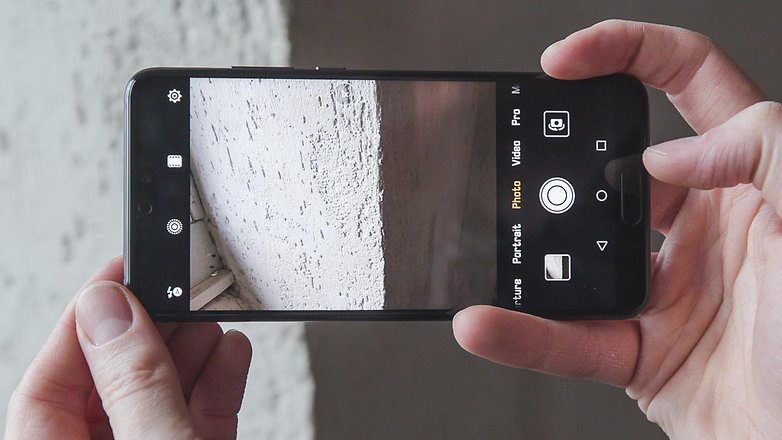
You’ll have to use the front lens with 24MP and a f/2.0 aperture for selfies. When you test out the selfie camera you can really see the considerable leap Huawei has made since the P10, which has an 8MP lens.
The Huawei P20 features Super Slow Motion
Artificial intelligence also arrives on the P
The Huawei P20 also improves on the previous generation by housing a Kirin 970 octa-core processor, much like the one under the body of the Mate 10 Pro. This means that the NPU dedicated to artificial intelligence is also in there, speeding up the system and always learning to optimize the user experience.
The processor is supported by 4 GB of RAM and 128 GB of internal memory: there is therefore more RAM than was offered on the device’s predecessor as well as on the Mate 10 Pro. The Huawei P20 also offers the following support in terms of connectivity: 4*4 MIMO CAt 18, up to 1.2 Gbps, BT4.2, WLAN 802.11 a/b/g/n/ac.
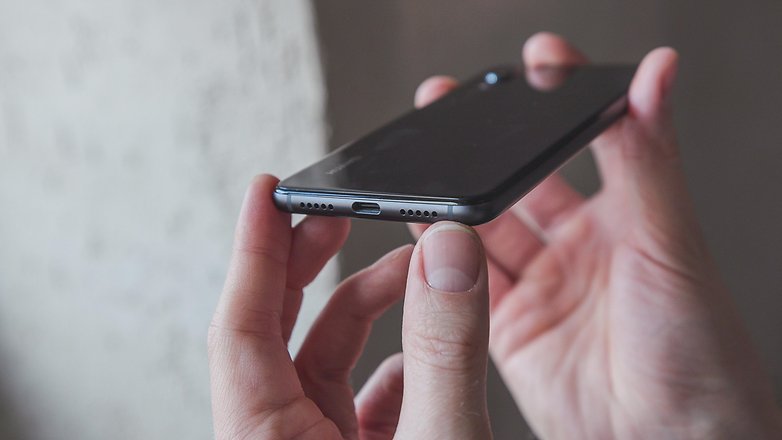
The P20 doesn’t have waterproofing or stereo sound
In contrast to most of the new flagships available on the market, the Huawei P20 doesn’t offer IP67 or IP68 certification. The P10 can’t be immersed in water either, and considering that the Mate 10 Pro is IP67 certified, we expect the P20 to be as well.
No IP67 certification and no stereo sound
Despite having support for Dolby Atmos, the P20 doesn’t offer stereo sound. In this case as well, the Pro variant offers an optimized audio experience.
The unlocking feature
The lower bezel of the front panel has a fingerprint reader that is longer and thinner than on the P10. For now, no fingerprint reader is integrated under the display. The P20 also has a face unlock, which is possible through the sensors located in the notch. It probably works in the same way as on the View 10, but we’ll test it as soon as we receive the device in our editorial office.
Huawei P20 technical specifications
Early Verdict
At first glance, the Huawei P20 immediately shows the design differences it has with the P10. It’s a more elegant and premium look in step with current trends. The notch is there, as well as a display almost devoid of bezels, and it is unlocked through face recognition.
To complete the package, Huawei has included artificial intelligence and optimized camera capabilities, especially when it comes to the front sensor. The latest Kirin chip, along with 4 GB of RAM and the generous 128 GB of internal memory all promise good performance. Only once we properly get the chance to test the P20 it will be possible to see how the camera handles low lighting conditions, slow motion, and other new features.
The price in the European market has already been announced at 649 euros, which is around $800. But will this allow the P20 to challenge the Samsung Galaxy S9? Or will the real challenge between Samsung and Huawei play out between the P20 Pro and S9+? From the earliest news on the release, it’s clear that the Chinese manufacturer isn’t afraid of arriving with a chip from last year, even though it’s running Android 8.1 and EMUI 8.1.
Are you excited for the P20's release today? What are its chances of competing with Samsung? Let us know what you think in the comments section!








Why they are using LCD display!
Choosing one of Huawei's recently launched P20, P20 Lite and P20 Pro models is hard to take, as the price factor is no longer so important. The performance is incredibly good, the high quality of the photos is due to Leica's high quality objectives.
We will know how prices will fluctuate!
Except for glass backs, protruding camera parts, and no IP67~68 rating, it has potential to be a screamer, after its modded. I worry about the price, since some phones come with at least 2 of what's missing previously in my post. I can't see the reason for the camera lenses not being flush with the back, though, they can do better, and have, too, maybe the designer doesn't care, too bad. That price for a non-water resistant phone is ridiculous in 2018. The little niceties make a big difference, huawei needs to know that. Samsung will toss the extras in . If they want to go to the next level, and truly compete, little stuff needs to be there, not just on the Porsche p20.
When will phone produces realise the use of glass on the Front & Back just add more to the price of there phones and puts more pressure on the person buying the phone,Huawei might have made the backs different on the P20 models But with the camera humps sticking out,consumers will not be able to lay there phones down on flat surfaces,so a back cover will be required to be able to cover the back and protect both the cameras and glass back,but the phone makers do not realise this,so a more cheaper material could have been used on the back that does not break easy and cuts the cost of the phone down,just how many people you see now with glass fronts and backs is just amazing
Huawei as put more pressure on Samsung & Apple with the P20 models,that are not to over priced,been missing the home button on Samsung phones so the P20 might attract me to switch away from Samsung after they also over priced the S9 models,just can"t to read full reviews about the P20 before making the switch
I look forward to seeing the quality of the P20 photos, because I understand that they have a very good quality.
wow, Great
i suppose this is the point where samsung taps the US gov't on the shoulder and they get back to slandering huawei with propaganda. keep going, huawei! beat sammy to death!
Don't forget Apple....I'm convinced both Apple/Samsung are dolling out $$$$ to government officials, to get them to protect their almost duopoly in the USA, since consumers are for whatever reason, compelled to buy phones in CARRIER stores at overpriced rates. Since the majority do that, carrier branding is important, and, the carrier stores push Apple & Samsung.
all the more reason for me to show off my Mate10. my last carrier-bought device was the LG V30. out of the 30+ devices i've owned, ranging from $30-$1000, the V30 was by far the worst. i won't be making that mistake again until they allow Huawei back on the shelves.