Sorry, but there's really nothing to see here right now. Our server is in maintenance mode – and our
little bot is trying to sort the error messages with its last bit of energy.
Whether it was a data leak, a power outage in the cluster, or just a grumpy bit – we don't know yet.
But what we do know is:
The data drama escalated into a server meltdown. But don't worry: We're on it.
What now?
Everything is surely running smoothly over at our colleagues from inside
digital – why not stop by!
Or you could pass the time by visiting our social media channels – for example Instagram, YouTube or TikTok. At least there are no
server problems there – promised.
Thanks for your patience. Our bot is already rebooting at full speed. 🔧
OpinionsTabletBig lenses on smartphones: Stupid idea or a stroke of genius?
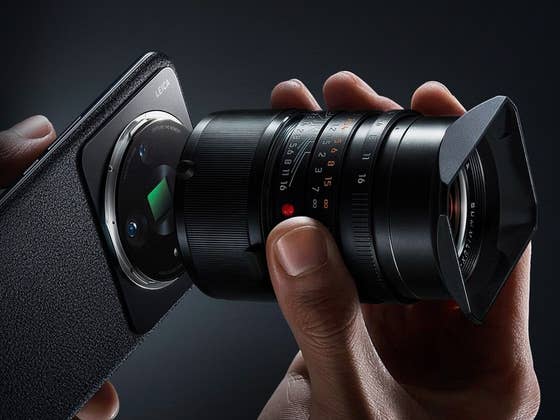
Out of the blue, Xiaomi presented a prototype version of its flagship 12S Ultra smartphone with an outlandish M-Mount fitted to a $,6000 Leica lens. The Chinese brand is not the first to try the concept, which seems like a great idea at first, but failed on more than one occasion as we will seein this article.
Eureka moment (or not)
Back when smartphones were still kinda new, and most smartphones still had sub-10 megapixels sensors—and very small ones at that—without all the AI that we find nowadays. A couple of camera brands decided that the best way to improve mobile photography was to slap a regular camera system lens into a smartphone.
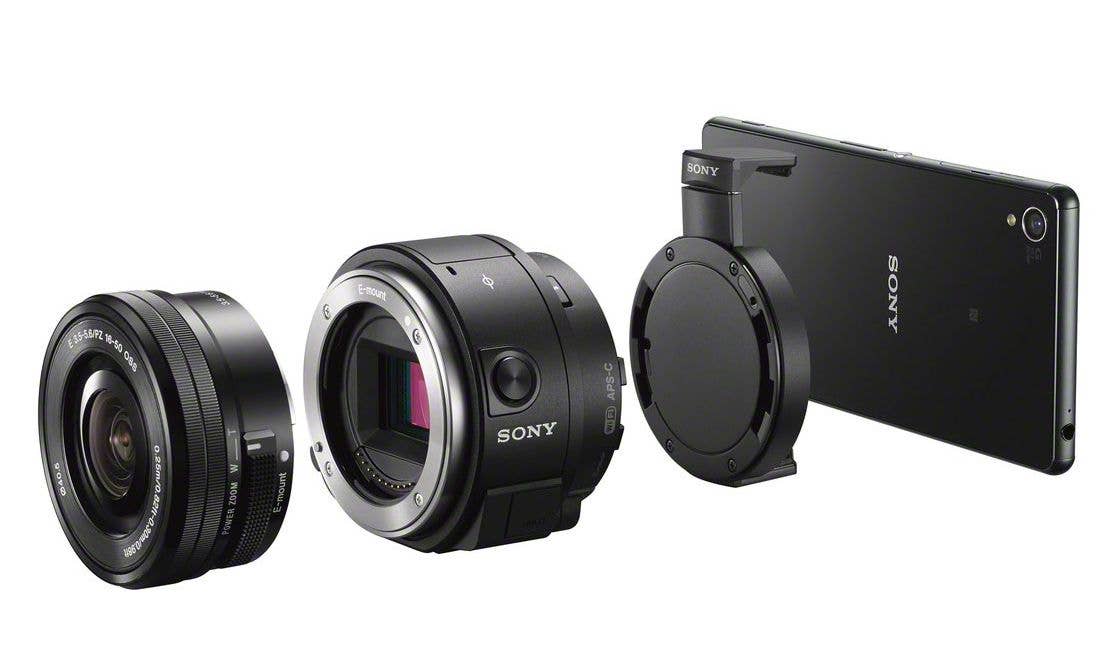
Although it is (VERY) niche, probably the best-known example of this brief fad was the Sony Alpha QX1. As the name implied, it was part of the Japanese brand Alpha line of cameras with interchangeable lenses. In QX1’s case, it was the E-mount system, still used today on both APS-C and full-frame camera bodies.
In fact, the QX1 camera could even be used with old A-mount (Minolta) lenses with an adapter, and probably could use a huge assortment of other lenses with unofficial adapters. For those without a compatible lens, Sony offered a kit with the SELP1650 compact power zoom lens, still sold with some cameras these days.
Released in September 2014, the ILCE-QX1 could be potentially used as a stand-alone camera, as it included a battery (the same NP-FW50 model used in dozens of Sony cameras), shutter button, memory card slot (microSD and Memory Stick Micro compatible), and tripod thread.
Empfohlener redaktioneller Inhalt
Dieser externe Inhalt von YouTube wurde von der nextpit Redaktion ausgewählt und ergänzt den Artikel. Du hast die Wahl, ob du diesen Inhalt laden möchtest.
Externen Inhalt erlauben
Ich bin damit einverstanden, dass externer Inhalt geladen wird. Personenbezogene Daten werden womöglich an Drittplattformen übermittelt. Nähere Informationen enthält die Datenschutzerklärung.
Since it didn’t feature a screen, however, users would use the included clip-on accessory to mount the QX1 to an iPhone or Android device and control it using the PlayMemories/Imaging Edge app. Communication duties were handled by a Wi-Fi connection that could be established using NFC.
Anyone who has used Imaging Edge with any supported Sony camera may already see why it didn’t survive for too long, despite initial sales surpassing expectations. The pairing process is not always seamless, and the connection was still unreliable. Even so, the fixed-lens models DSC-QX managed to last a while longer in the market.
Sony’s main rival in the early mirrorless cameras days, Olympus, did not wait to see if the QX concept would catch and soon released its Air 01. Launched in February 2015, Olympus clip-on camera followed the same overall design as the Sony Alpha camera lens, with a battery, microSD slot, shutter, and tripod thread.
The main differences between the Air 01 and the QX1 are how the Olympus model uses the micro four-thirds lens system—at the time with a bigger variety of lenses— instead of the E-mount, and that it also included Bluetooth for quicker pairing.
Back to the similarities, just like the Sony QX1, the Olympus Air line didn’t see a second model. But the Japanese companies’ lack of success didn’t stop other companies from toying with the idea.
The attack of the living dead
A couple of other similar models were announced but apparently stayed in the vaporware category. One was the Yongnuo YN43, which as the name suggests, has a four-thirds-sized sensor, but paired to what looks like to be a Canon SLR mount.
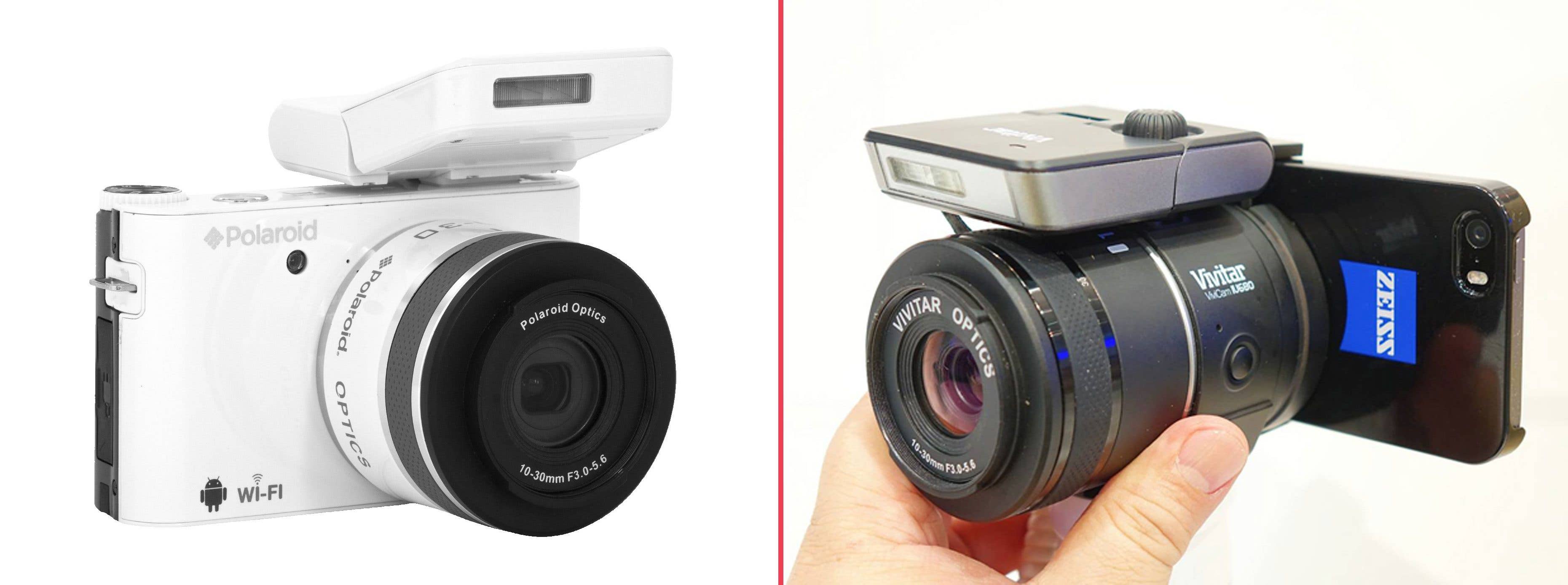
The other one was a vaporware combo from Sakar International, which involved not one, but two historical “zombie brands”. After failing to launch the proprietary mount iM1836 camera under the Polaroid brand due to striking similarities to the Nikon 1 J1 model which led to a lawsuit, the company announced the IU680 clip-on camera system under the Vivitar brand using the same lens mount (and flash module).
As with the Polaroid camera, the Vivicam IU680 quietly disappeared after being shown off at trade conferences…
A new hope
In 2020, a British startup decided that it was time to revamp the formula. Although using a tried and true micro four-thirds mount, the Alice Camera tried to bring something new to the table: AI & computational photography features. Originally planned for October 2021, the Alice Camera—like all optimistic crowdfunded projects—is late.
Overall, the accessory works in a similar way to the clip-on cameras from Sony and Olympus, but with a beefier hand grip which should help with ergonomics while losing some of the creative possibilities by having to clip the camera to the smartphone.
Empfohlener redaktioneller Inhalt
Dieser externe Inhalt von YouTube wurde von der nextpit Redaktion ausgewählt und ergänzt den Artikel. Du hast die Wahl, ob du diesen Inhalt laden möchtest.
Externen Inhalt erlauben
Ich bin damit einverstanden, dass externer Inhalt geladen wird. Personenbezogene Daten werden womöglich an Drittplattformen übermittelt. Nähere Informationen enthält die Datenschutzerklärung.
As with all crowdfunded projects filled with buzzwords, it is probably best to wait for reviews and the first production batch to roll out before placing a pre-order for one…
Even though Xiaomi presented its model as a concept phone, the prototype Xiaomi 12S Ultra would face similar challenges to the ones faced by Sony and Olympus—and even other exotic models like the Panasonic DMC-GM1, the Samsung Galaxy Camera, or the Hasselblad module for the Moto G line.
The first one is the ergonomics, with enthusiasts (especially those with M-mount lenses) that probably value things found in rangefinder cameras such as the 2-stage shutter button, dials, and that sweet sweet red dot that (for them) is worth more than any bitten fruit.
The second one is the weight, even if M-mount lenses are compact by default, having to use an adapter for the flange focal distance (FFD) adds bulk to the system, despite having to cover a smaller sensor area instead of the original full frame/35mm the lenses were designed for. And that exacerbates the ergonomics issue.
The QX cameras, the Air 01, and even the fixed-lens Kodak Pixpro SL line had tripod threads to make it easier to reach (non-tactile) buttons, something that the M-mount adapter doesn’t seem to offer.
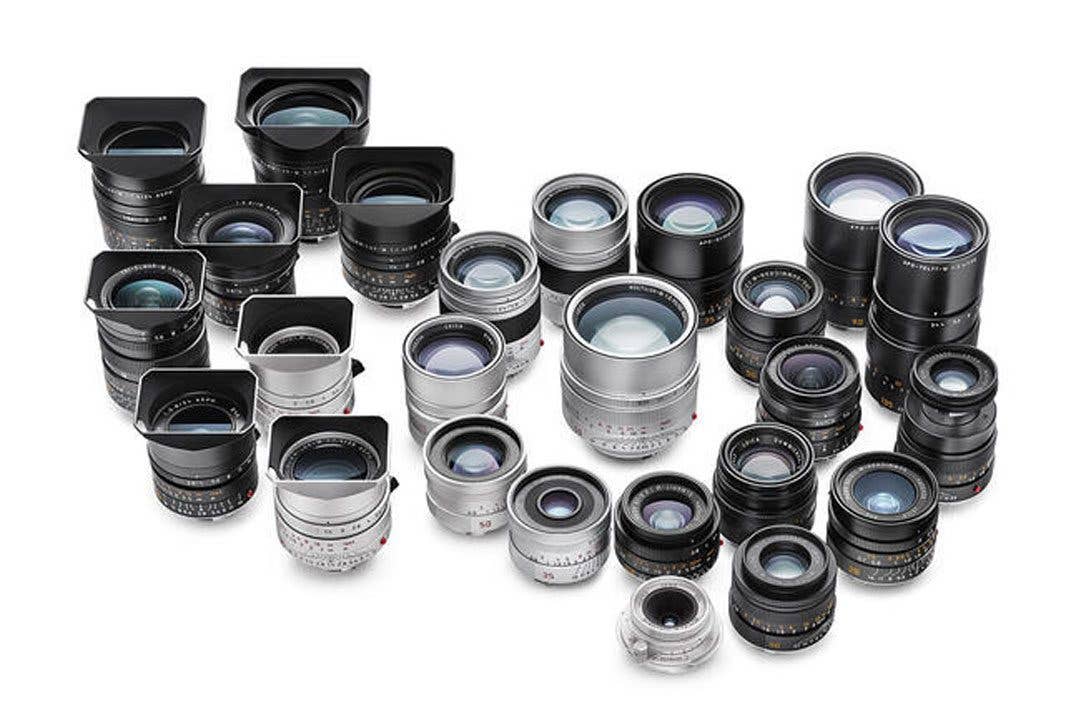
And worse, if it came to shelves, the Xiaomi 12S Ultra would face an even more niche market, working with a smaller selection of much more expensive lenses than the ones found in the micro four-thirds and E mounts.
Anyway, despite all this pessimism, it is great to see smartphone companies still thinking outside the box. especially when we are seeing fewer and fewer innovations each year. And with the current alternatives being restricted to low-quality lenses mounted on top of the regular cameras found in our mobiles.
What about you? Are you satisfied with the current progress in computational photography or also get excited when an outlandish prototype is revealed? Share your favorite concepts and models in the comments below!
We mark partner links with this symbol. If you click on one of these links or buttons–or make a purchase through them–we may receive a small commission from the retailer. This doesn’t affect the price you pay, but it helps us keep nextpit free for everyone. Thanks for your support!
Seit 2008 schreibe ich für verschiedene Websites in Brasilien, Spanien, Dänemark und Deutschland über Technologie und habe mich auf mobile Ökosysteme spezialisiert. Dabei dreht sich bei mir alles um die interessantesten Modelle, ihre Komponenten und natürlich die ganze Welt der Apps. Dabei lege ich nicht nur Wert auf Leistung und Spezifikationen, sondern auch auf Aspekte wie Reparaturfähigkeit, Haltbarkeit und Herstellersupport.
I would spring for a lens, especially for zoom. I just want a standard that most phones would adopt for the cross compatibility.
Log in to Reply
Considering the price of Leica lenses and how unstable these would be at zoom length, you’d be better off with a traditional camera. Yeah, the best camera you have, is the one you have with you, but, if I’m going out to take photos, I’d rather grab my backpack that has my d-slr, lenses, filters, flash etc, than a screw on lens attached to my phone.








I would spring for a lens, especially for zoom. I just want a standard that most phones would adopt for the cross compatibility.
Considering the price of Leica lenses and how unstable these would be at zoom length, you’d be better off with a traditional camera. Yeah, the best camera you have, is the one you have with you, but, if I’m going out to take photos, I’d rather grab my backpack that has my d-slr, lenses, filters, flash etc, than a screw on lens attached to my phone.