Sorry, but there's really nothing to see here right now. Our server is in maintenance mode – and our
little bot is trying to sort the error messages with its last bit of energy.
Whether it was a data leak, a power outage in the cluster, or just a grumpy bit – we don't know yet.
But what we do know is:
The data drama escalated into a server meltdown. But don't worry: We're on it.
What now?
Everything is surely running smoothly over at our colleagues from inside
digital – why not stop by!
Or you could pass the time by visiting our social media channels – for example Instagram, YouTube or TikTok. At least there are no
server problems there – promised.
Thanks for your patience. Our bot is already rebooting at full speed. 🔧
ComparisonsTabletSnapdragon 810 vs 820 comparison: heated competition
With Qualcomm’s recent announcement of its Snapdragon 820 chip, we have an idea of what next year’s flagship phones will be capable of. So how does it compare to this year’s Snapdragon 810? With controversy surrounding the 810 and its overheating issues, let’s find out what the differences are in this Snapdragon 810 vs 820 comparison.
Snapdragon 820: everything you need to know
Snapdragon 810 vs 808
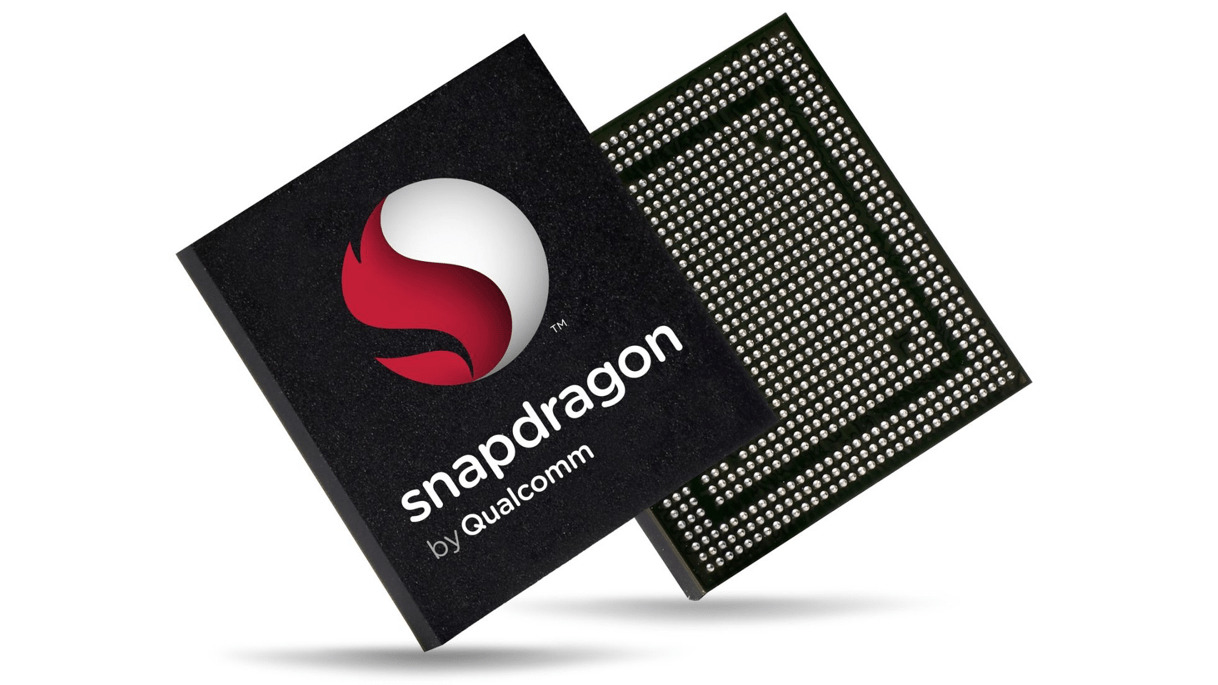
Qualcomm has touted that the Snapdragon 820 contains a redesigned processor named ‘Kryo’. Qualcomm says it will run without overheating, the issue that the 810 suffered. It will be a custom-designed 64-bit quad-core CPU, a first for Qualcomm.
It’ll be integrated with the Adreno 530 GPU and Hexagon 680 DSP and will reportedly be twice as fast as the 810. The 810 has two 64-bit quad-core CPUs (Cortex-A57 and Cortex-A53) and was marketed as supporting native 4K video. The Kryo is a new generation of processor that will hopefully avoid the overheating issues the 810 had.
The Snapdragon 820 houses a new GPU, the Adreno 530. The Snapdragon 810 had the Adreno 430 GPU, which was an incremental jump over the Snapdragon 805’s Adreno 420. The Adreno 530 has been assembled using a more efficient 14nm FinFET process that is more precise that Qualcomm’s previous GPUs.
What does this mean for you? Better gaming and more reliable graphical rendering across Android. Qualcomm says the Adreno 530 is 40 faster and consumes 40 less energy than the Adreno 430, so, if these numbers are genuine, you can expect to see significant power savings.
According to Qualcomm, the Snapdragon 820 will use a whopping 30 percent less power than the Snapdragon 810. How does it do this? The only reliable information we have so far is that the new chip is built with a more efficient 14nm FinFET process, rather than the Snapdragon 810’s 20nm process. How this translates into a real world scenario, we’ll have to wait for a hands-on test to see.
The Snapdragon 820 uses Qualcomm’s X12 LTE modem. What does this mean? It supports warp-speed Cat.12 LTE speeds. That means, and this isn’t a likely scenario for the average smartphone user, that you could experience network speeds of up to 600 Mbps downlink and 150Mbps uplink. At the very least this is an indication of where mobile tech is headed.
So, how does the X12 shape up against the X10 LTE modem used in the Snapdragon 810? Well, the X10 offered maximum download speeds of 450Mbps. That’s still fast, of course, but not as fast. Qualcomm says its new modem will provide a 33 percent speed improvement. Let’s wait and see how fast it actually is.
The Snapdragon 820 has a lot to live up to, but a lot to answer for. Before we’ve even used it in any new smartphones, we’re wondering if it can right the wrongs of the Snapdragon 810. With the 810’s numerous overheating problems being a serious issue for many new smartphone buyers in 2015, Qualcomm has a lot to make up for in 2016.
With some impressive numbers and the promise of the new Kryo processor, there is a good chance that Qualcomm can change the perception that its flagship processor doesn’t work. We’re looking forward to getting our hands on devices running the Snapdragon 820 to find out for sure.
What do you think of Qualcomm’s Snapdragon problems? Are you excited for the 820? Let us know in the comments.
Correction, 13/11/2015: This article originally stated that the Kryo would be the next-generation processor to follow the Krait.
At 600Mbps you could burn through a 5GB data cap in 1.05964 minutes.
Log in to Reply
Krait was NOT in the SD810! The SD810 used reference ARM Cortex A53 and A57 cores, which was half the problem.
Qualcomm’s custom 32-bit Krait was used in the fantastic 800, 801, 805, etc.
Need to get your facts straight before you start slating an architecture…
Log in to Reply
This article has been updated, with a correction at the bottom.
Log in to Reply
Out of curiosity, can you explain how the single quad core CPU is better than the 2 quad cores found in the 810?
Log in to Reply
Just look at Intel and AMD
Log in to Reply
it is all about architecture
Log in to Reply
CPU architecture improvements… Smaller manufacturing process so less heat to begin with also means the CPU can stay clocked higher for longer than the 810






At 600Mbps you could burn through a 5GB data cap in 1.05964 minutes.
Krait was NOT in the SD810! The SD810 used reference ARM Cortex A53 and A57 cores, which was half the problem.
Qualcomm’s custom 32-bit Krait was used in the fantastic 800, 801, 805, etc.
Need to get your facts straight before you start slating an architecture…
This article has been updated, with a correction at the bottom.
Out of curiosity, can you explain how the single quad core CPU is better than the 2 quad cores found in the 810?
Just look at Intel and AMD
it is all about architecture
CPU architecture improvements… Smaller manufacturing process so less heat to begin with also means the CPU can stay clocked higher for longer than the 810