Snapdragon 810 vs 808: are 8 cores really better than 6?
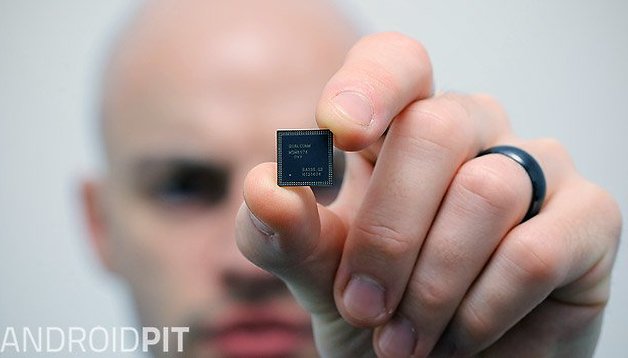

When the LG G4 was released, some questioned LG's decision to use a hexa-core Snapdragon 808 chipset, which - on paper at least - is weaker than the octa-core Snapdragon 810. We put this to the test by putting the 808-based LG G4 against the 810-based HTC One M9 through some rigorous benchmarking and multitasking. Read on for our Snapdragon 810 vs 808 comparison.
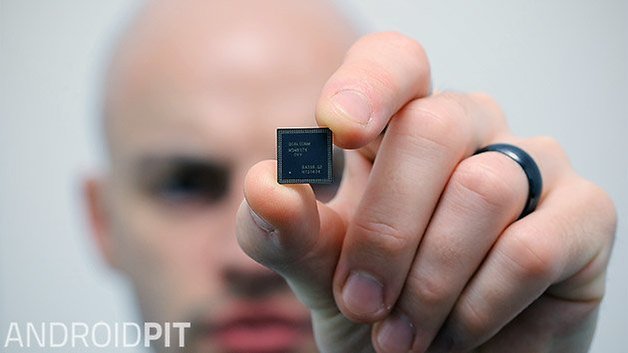
Reported problems with the Snapdragon 810
LG's argument for using a Snapdragon 808 chipset was that the Snapdragon 810 has battery problems, which is a big admission from a company that uses the 810 in its relatively new LG G Flex 2. The Snapdragon 810 is also said to have overheating problems. This means that when the 810 reaches its maximum clock speeds, it doesn't stay there because thermal throttling (slowing down the CPU to cool it down) kicks in and slows processor down. LG has denied this particular problem, and our time with devices such as the G Flex 2 and HTC One M9 have not faced it, so we've decided to
Snapdragon 810 vs 808 graphics test
For this test, we used the graphics benchmarking tool, GFXBench. This runs a series of graphics tests that are effectively cut-scenes from videogames. The tests vary in intensity, and give a good idea of the graphical performance of a device, as well as the temperatures it runs at.

The Adreno 430 GPU on the Snapdragon 810 is the more powerful than the Snapdragon 808's Adreno 418 GPU on paper, but what happened when we ran them through GFXBench?
At first glance, the results seemed heavily in the Adreno 430's favor. It ran the most demanding test - Manhattan ES 3.1 - at a commendable 18.1 fps, while the Adreno 418 aboard the LG G4 struggled at a lowly 5.8 fps. It's worth taking into account that the Adreno 418 had to run at the strenuous QHD resolution of the LG G4 screen, while the Adreno 430 was dealing with a mere 1920 x 1080 pixel resolution. Despite that, he same scene at 1080p resolutions on both devices ran at 17 fps on the Snapdragon 810, and 10fps on the Snapdragon 808 - a large difference at such low frame-rates.
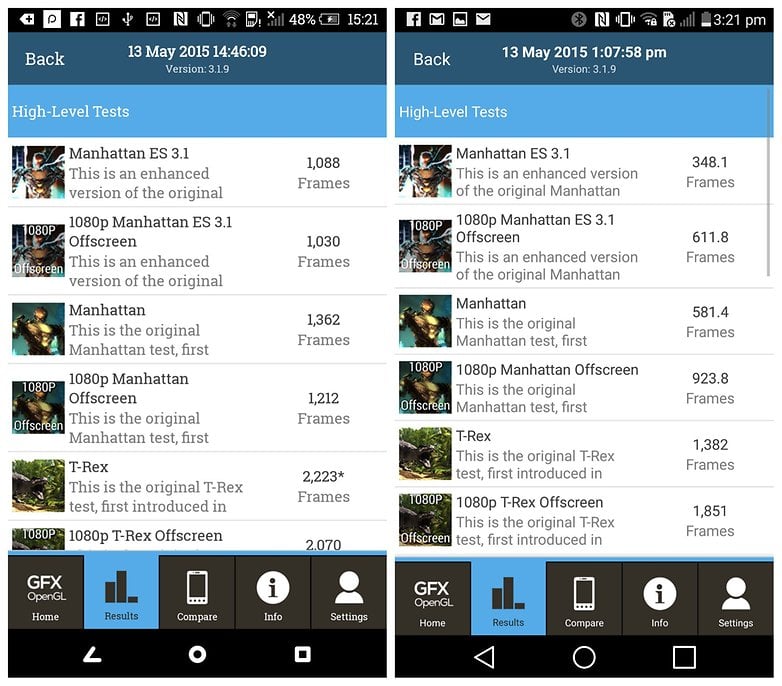
The results were considerably closer in less strenuous tests. In the 1080p T-Rex Offscreen test, for example, the Adreno 418 clocked 31 fps, while the Adreno 430 managed 35 fps. The results didn't fluctuate much when we carried the GFXBench benchmarks out several more times, suggesting that the Snapdragon 810 wasn't suffering from the drastic thermal throttling previously reported on the device.
Snapdragon 810 vs 808 heat test
The app we used to benchmark the graphics of the Snapdragon 808 and 810 GPUs also measured the temperatures of the chipsets. Suffice to say that after running the tests five times on both devices, they both heated up a bit. Yet fears of the HTC One M9 turning into a slab of white-hot aluminum were unfounded. Certainly, five degrees celsius is not a negligible difference, but it looks like earlier problems of the Snapdragon 810 heating up to over fifty degrees celsius have been eradicated.
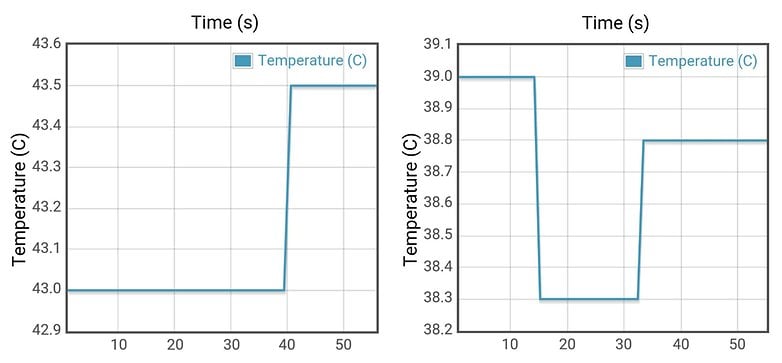
As our graphics test showed, the higher temperatures didn't lead to worse performance for the Snapdragon 810 device.
Snapdragon 810 vs 808 AnTuTu benchmark (x5) test
AnTuTu benchmarks should by no means be treated as gospel, but running them five times in quick succession on both of our test devices gave a good idea on whether the Snapdragon 810 suffers from thermal throttling.
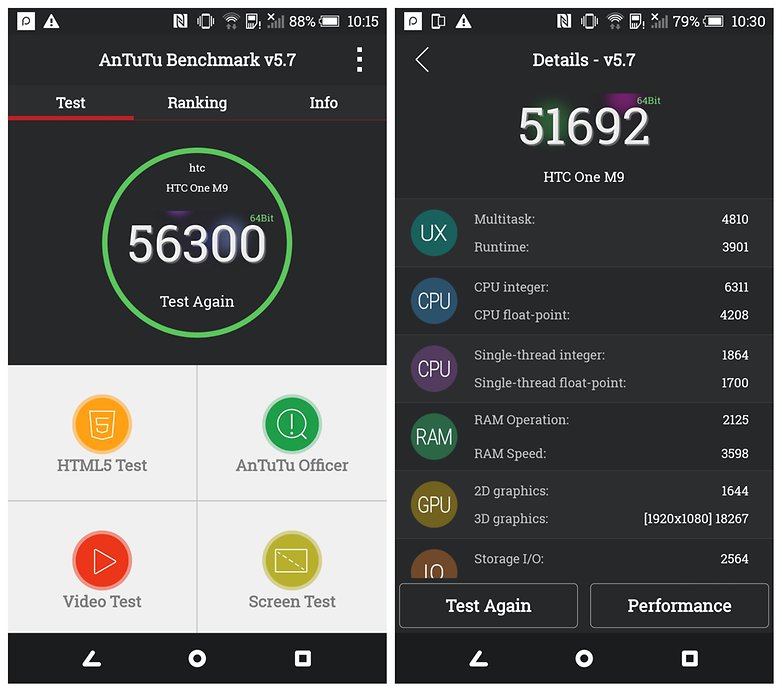
After running the AnTuTu benchmarks five times on the HTC One M9 (Snapdragon 810), the benchmark scores decreased steadily with each successive test, dropping from 56,300 in the first test, to 51,692 in the fifth test.
Running the same benchmark test in quick succession on the LG G4 (Snapdragon 808), it was a similar story, with the first test clocking 49,206 and the final test getting 45,776.
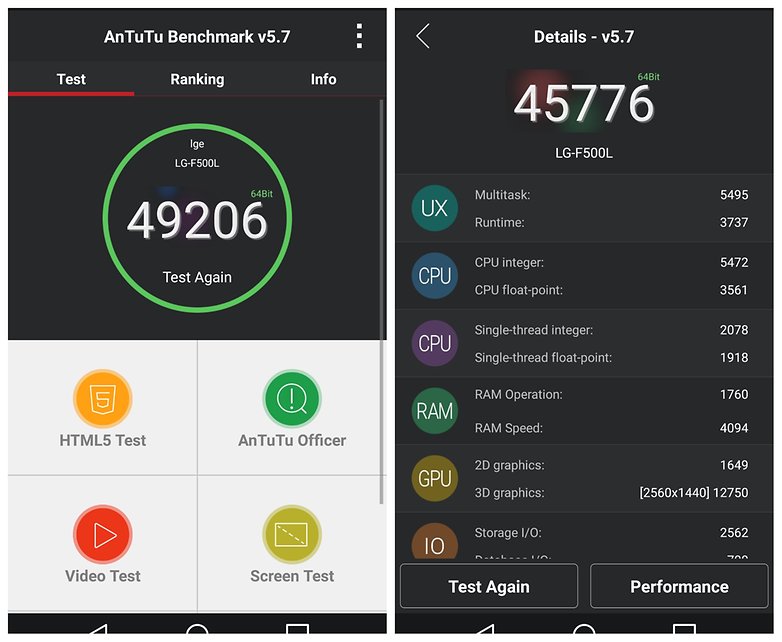
These tests suggest to us that thermal throttling kicks in gently on both 810 and 808 chipsets when put under the moderate strain of AnTuTu benchmarking. We did not find that the Snapdragon 808 was better at keeping up a stable performance than the 810 when put under strain.
Snapdragon 810 vs 808 multi-tasking test
When we reviewed the HTC One M9 and and LG G4, we commended both phones for their flawless multi-tasking. Here, we pushed both devices a bit harder, running the games, Asphalt, Mortal Kombat X and Modern Combat 3 simultaneously, while also having ten tabs open in the Chrome browser.
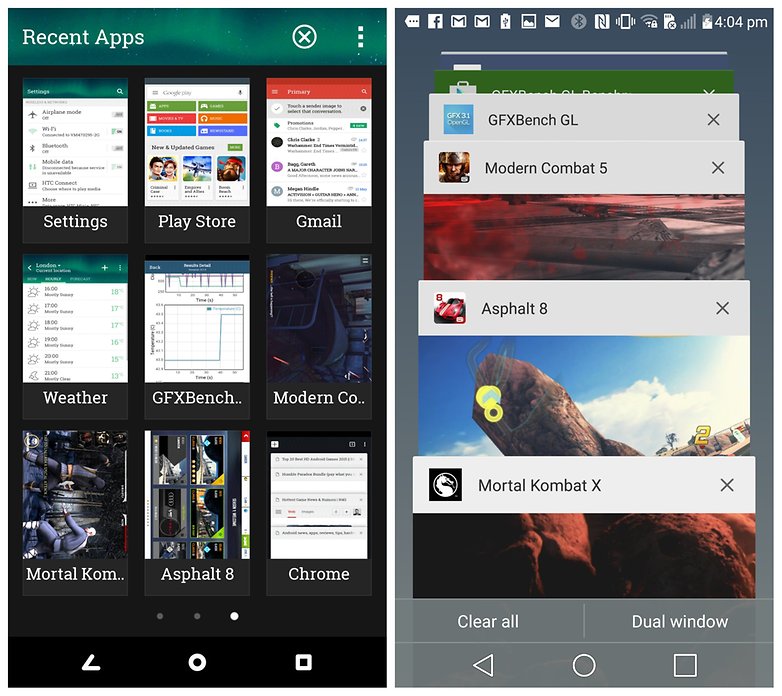
Neither phone took too kindly to having so much strain put on their resources, but the 810 proved itself a bit more of a willing by letting two of the three CPU-intensive games run in the background and then be re-opened from where you left off. The LG G4/Snapdragon 808 would force-close two out of the three games, so re-opening from the Recent Apps menu would result in them opening afresh.
Conclusion
Our tests suggest that the overheating problems that once plagued the Snapdragon 810 have been taken care of (at least on the HTC One M9), allowing the eight-core chipset to perform to its full potential. Of course, it needs to be taken into account that HTC and LG devices use different UIs, which may put less or more strain on their respective chipsets, but the results of our test are in line with what we expected from an octa-core chipset.
So the natural order of things has seemingly been restored. Snapdragon 810 seems to have gotten over its problems and keeps its place as the supreme Qualcomm chipset, for now.
Do you agree with the verdict of our Snapdragon 810 vs 808 showdown? What are your experiences of the chipsets? Let us know!












Lumia 950XL uses the 810 with fluid cooling, runs without breaking a drop of sweat.
Garbage article. Without going into the careless typos and trail off sentences that literally just look unfinished, and are without punctuation, the tests are on phones of completely different resolutions. This is mentioned once or twice, but no work is done to actually equally compare them. Definitely impacting my view of Androidpit as being somewhat reputable.
The AnTuTu test was not correctly analysed. You are comparing results obtained at diferent resolutions and it's is not clear if AnTuTu is resolution dependent of not. The number that really influence the result is 3D graphics, and the 808 working on 2540x1440 is handling 73% more pixels than the 810 at only 1920x1080.
For the sake of the test, similar resolutions should be used, as they are when benchmarking with PC's.
HTC should have tried to spread the heat better using better thermal paste and heatsink instead of lowering the CPU frequency which is just a desperate workaround that sacrifices performance.
Utter garbage article, so bad I'm going to uninstall AndroidPIT app as a protest. The Snapdragon 810's big cores was designed to run at 2.0Ghz. When at that speed benchmark scores are comparable to Samsung Exynos 7420 chip and 2015 level of performance. The chip gets too hot so HTC reduced the performance to 1.5Ghz hence why scores are only moderately better than the lower 808 processor and only marginally better than 2014 Snapdragon 801 processor.
What about battery drain while the tests?
The real question here is,Does the 808 run the G4 any faster than the 801 found in the G3.I presently own the G3 and the 801 does a fine job.Since both have basically the same screen,I would think the 808 in normal day to day use would be more than sufficent.In short was the 808 a huge or minimal improvement over the 801.
still..i prefer nvidia. why no news about them??
because nvidia is too busy in the pc market.