Sorry, but there's really nothing to see here right now. Our server is in maintenance mode – and our
little bot is trying to sort the error messages with its last bit of energy.
Whether it was a data leak, a power outage in the cluster, or just a grumpy bit – we don't know yet.
But what we do know is:
The data drama escalated into a server meltdown. But don't worry: We're on it.
What now?
Everything is surely running smoothly over at our colleagues from inside
digital – why not stop by!
Or you could pass the time by visiting our social media channels – for example Instagram, YouTube or TikTok. At least there are no
server problems there – promised.
Thanks for your patience. Our bot is already rebooting at full speed. 🔧
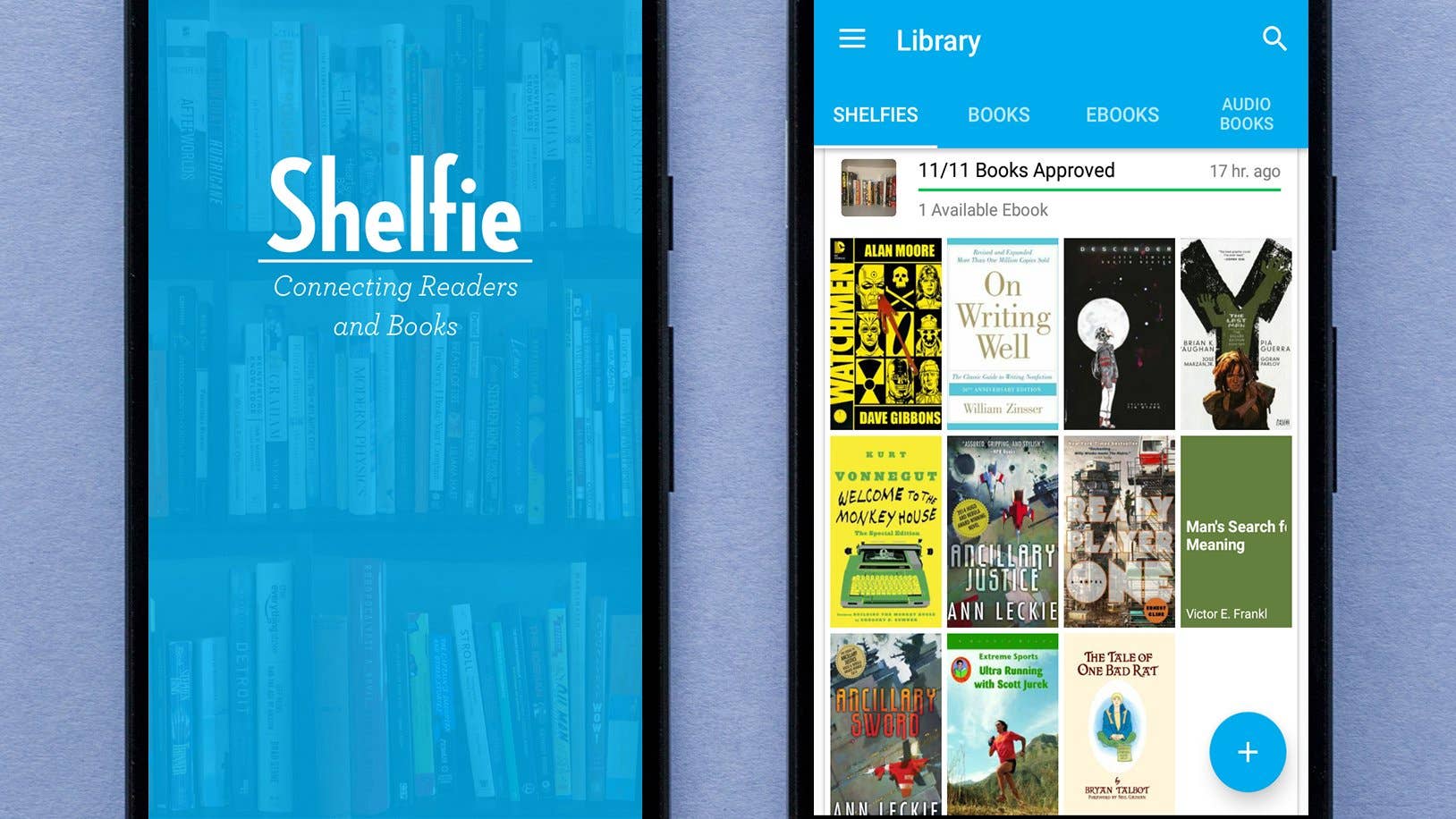
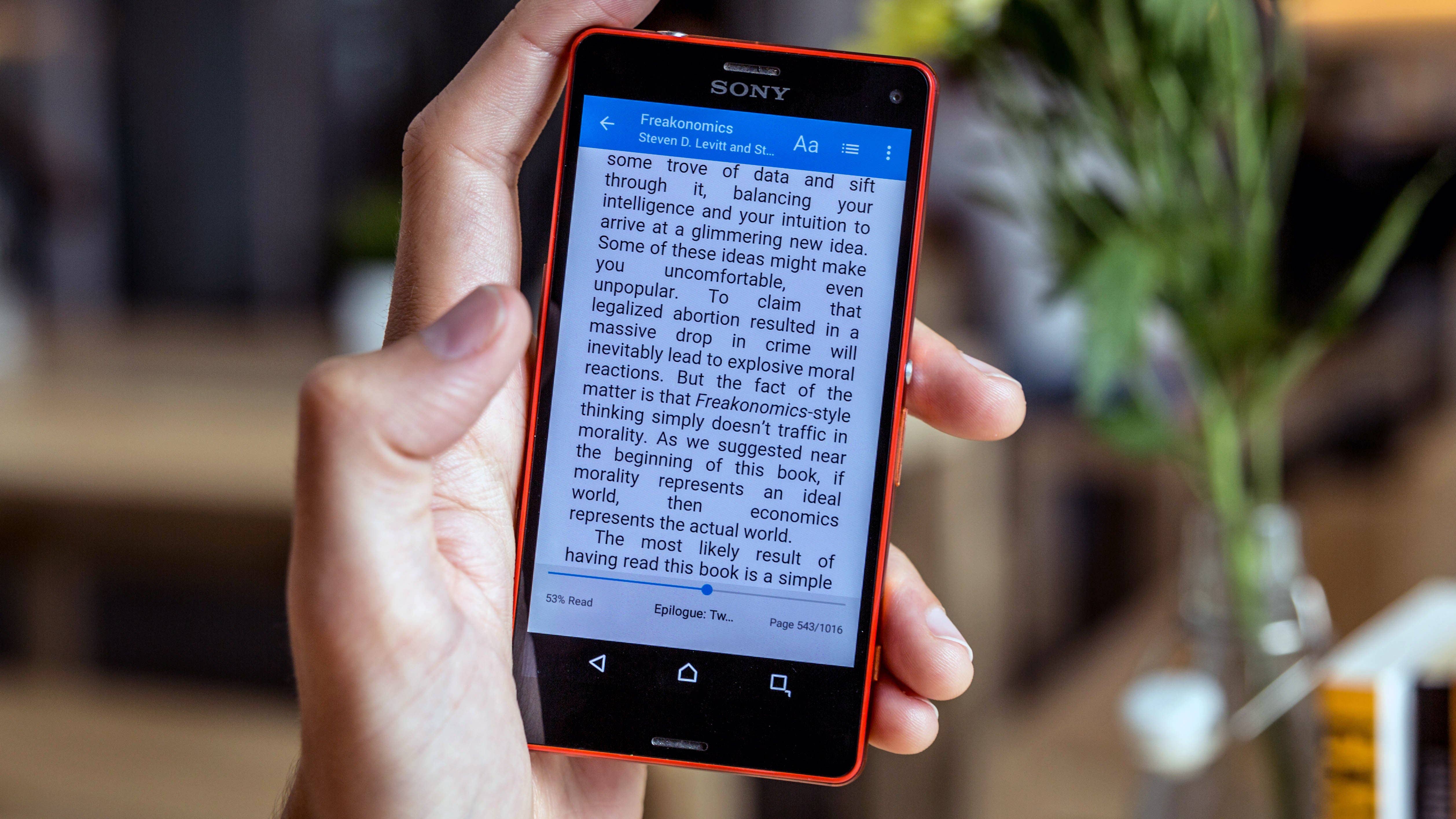
Shelfie is a free app that provides free and heavily discounted e-book versions of your physical books; an attractive prospect for serious readers. Yet it has fewer than 50,000 downloads and an average Google Play review rating of 3.5 stars. Why isn’t this app – which sounds so appealing, ahem, on paper – more popular? We spoke to Shelfie CEO Peter Hudson to find out.
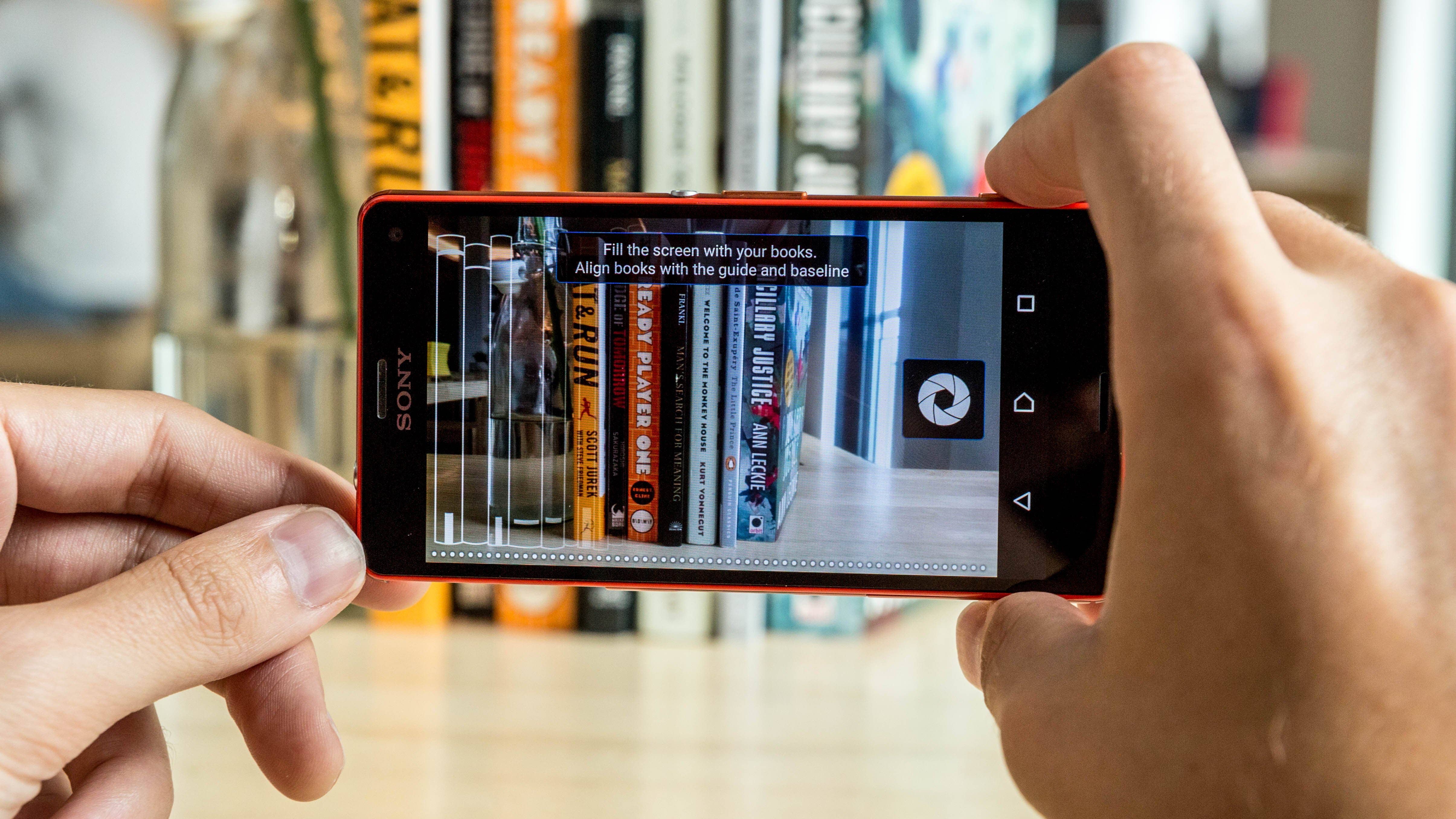
Here’s the situation. You take a photo – or a Shelfie – of your bookshelf and the app will recognize the book spines to create a digital library. However, not all of your books are likely to be recognized. Of those that are, a portion will be available to download as an e-book. A portion of those will be available for free.
If you install this app expecting to simply take a quick snap of your bookshelf and instantaneously receive a free copy of every title, you’re likely going to be disappointed. This expectation, reasonable or not, is a hurdle for Shelfie.
“For today, if you take a picture of your bookshelf, about 22 percent of the books on that shelf will be from publishers that we have deals with,” Hudson told me during our telephone interview. “You can either say 22 percent is awesome, because it’s something, or 22 percent sucks because it’s not 100 percent.” A number of Google Play reviews reflect the latter.
“Of those 22 books,” Hudson continued, “33 percent, probably around seven books, are going to be outright free […] the rest are going to be insanely discounted.”
“You can either say 22 percent is awesome, because it’s something, or 22 percent sucks because it’s not 100 percent.”
That’s the reality of Shelfie right now. In the past five years, Hudson claims he has made 10,000 cold calls to get to this point. The point where three out of the big five book publishers have deals with Shelfie. The point where Shelfie can provide a digital version of 22 percent of the books in a person’s collection for free or at a discount.
“Is that good? Is that bad?” He asked. “I don’t know.”
Hudson believes that if you bought a physical book at full price, you shouldn’t have to pay full price for a digital copy. That’s the vision, but Hudson is challenged with convincing the publishers that this is a good idea as well.
To do so, it’s clear he can’t simply ask them to give away free e-books; there must be an incentive. I suspected that the only truly free books were public domain works, books that are free already, and that the rest would all be paid for. But Hudson said that wasn’t accurate.
“About 30 percent of the books that we offer are absolutely free. This is not public domain stuff, this is under copyright and the publisher has decided absolutely, you bought the book, you get the e-book for free, so you should get a significant amount of your library for free.” He said.
And what kind of discount for the non-free books?
“We won’t even list a book unless it’s a 75 percent off discount,” he said. “The average discount is 85 percent”.
In other words, of the e-books they currently have available, Shelfie can provide users with at least 75 percent off the e-book price, providing they can prove that the book is theirs. So, what’s to stop someone going to a library and scanning all the books?
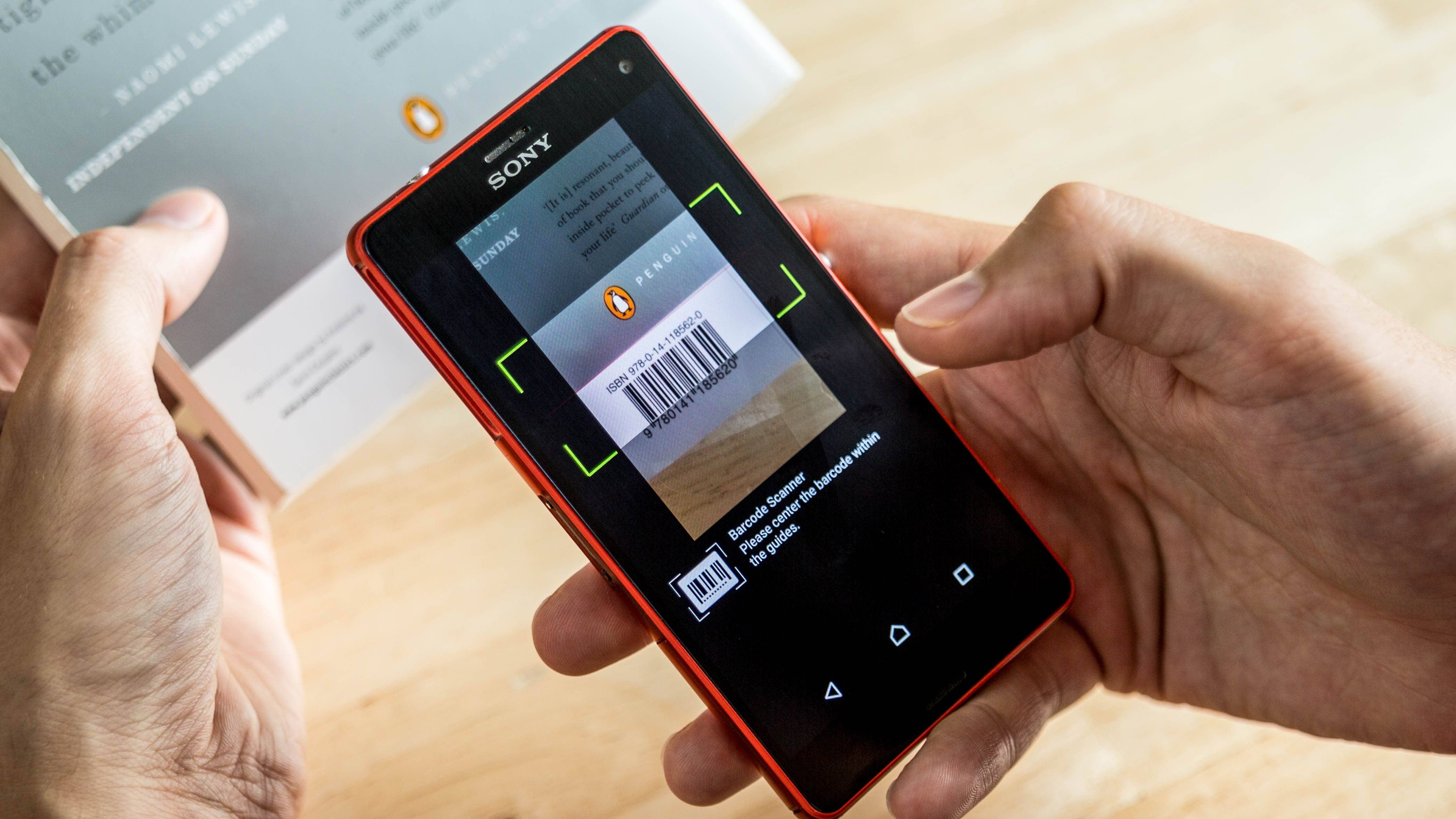
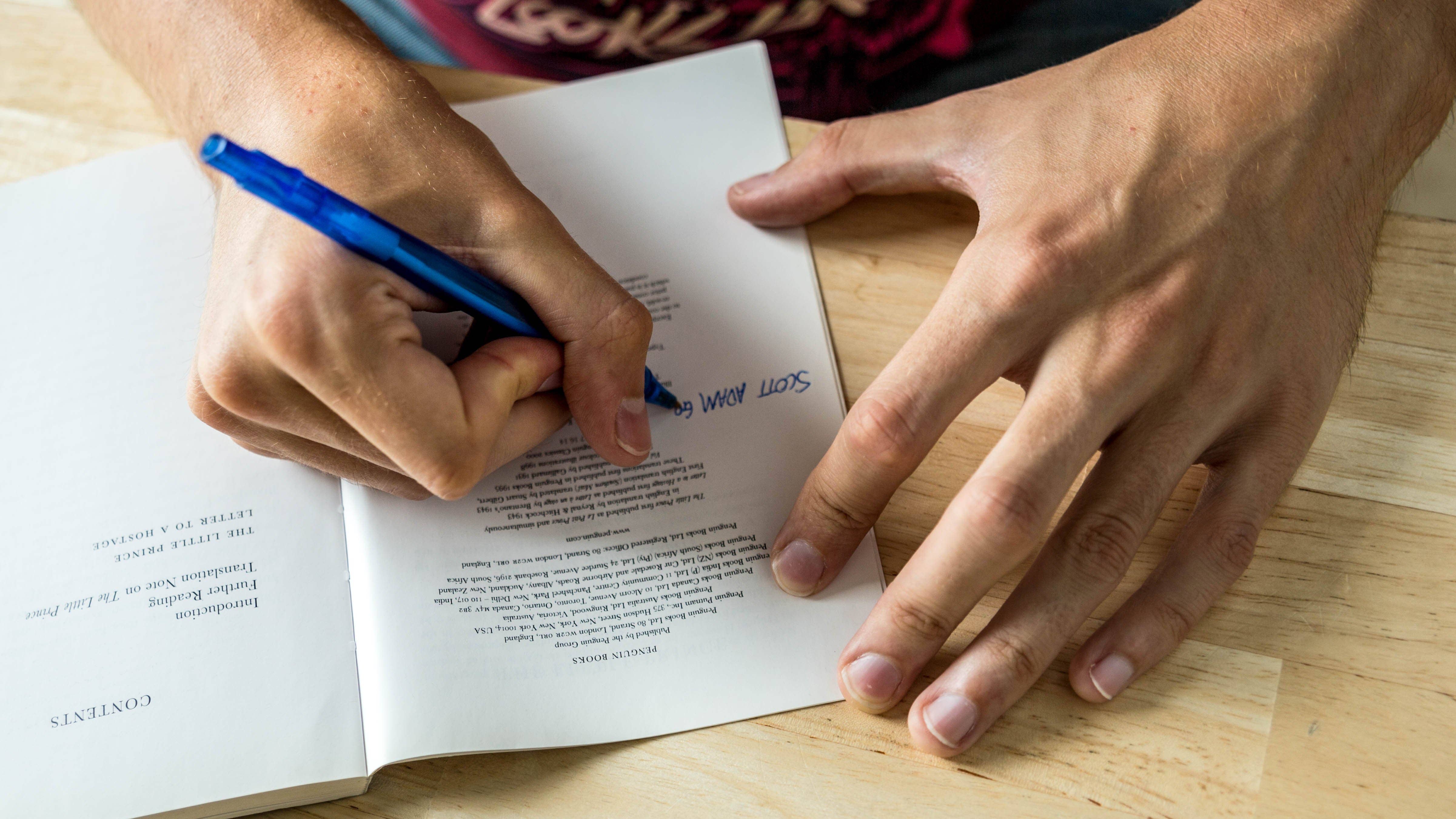
To prove a book is yours, you must scan the barcode, take a picture of the front cover, and write your name inside the book on the copyright page. This is the method which would ultimately convince publishers that a physical book legally belongs to a person.
“It was just so obvious that that was the solution that worked because it meant that the book couldn’t be returned, it meant that the book was identified as yours, it was just such a simple solution [for] validating ownership.”
“We won’t even list a book unless it’s a 75 percent off discount,” says Hudson. “The average discount is 85 percent”.
It sounds good in theory but I asked if Hudson acknowledged the possibility for a person to circumvent this identification process.
“Someone who’s really motivated to get around it could use disappearing ink or could use a dark pencil […] but if you’re really motivated you probably know what The Pirate Bay is anyway,” he said, adding, “We know that you have a physical copy of the book in your hand because it’s on your Shelfie and you scan the barcode of it.”
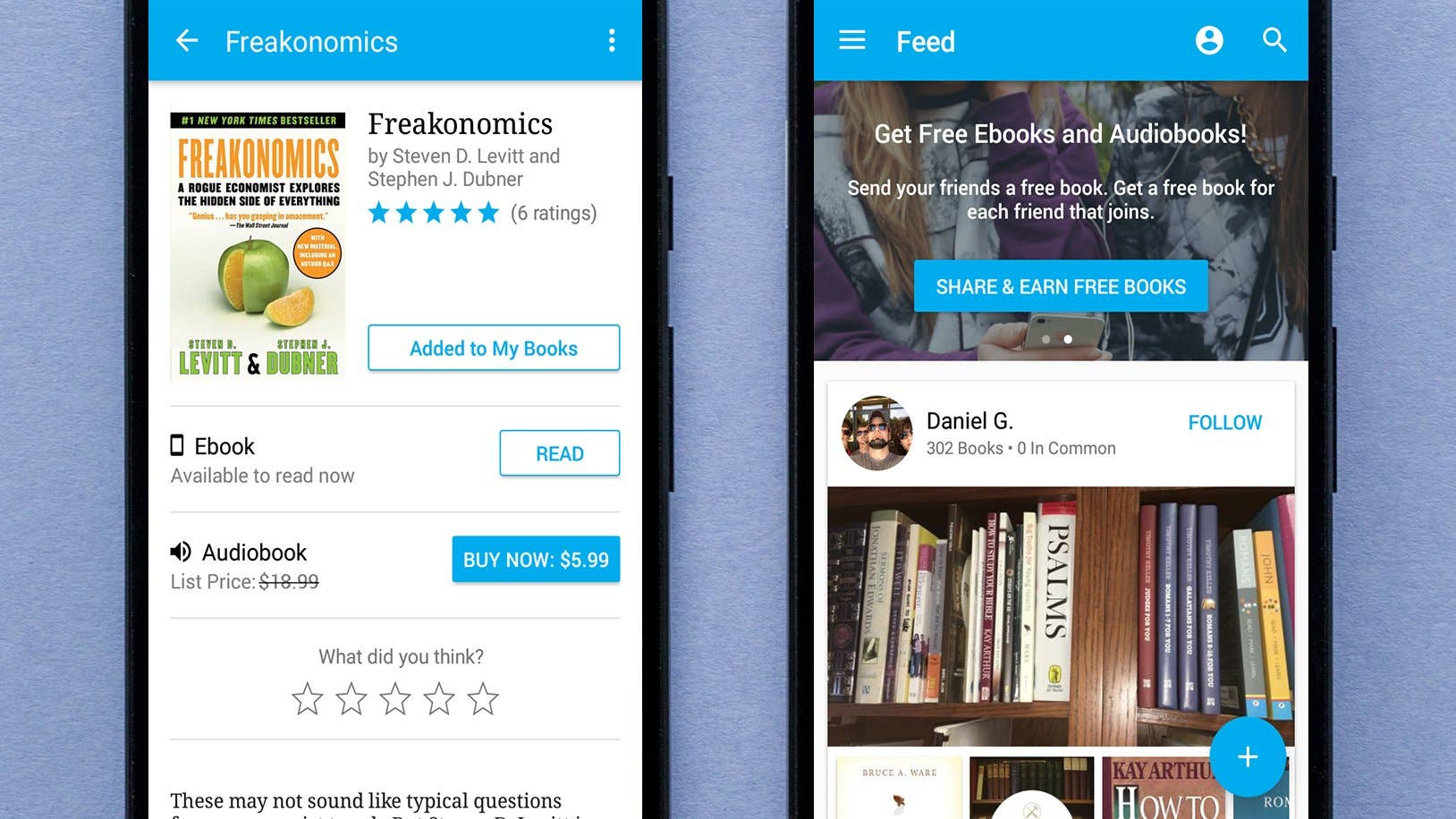
Aside from the obvious benefits of discounted e-books, Shelfie has another unique feature which could appeal to a wide audience: recommendations.
“One of the things that online has never done well is book recommendation,” said Hudson. “If you’re a bookworm, the problem of ‘what book do I read next?’ is a real, persistent problem.”
Hudson discussed Amazon’s ‘customers who bought this also bought’ algorithm for book recommendation, a service which he feels has stagnated. “Literally, that’s as good as online book recommendation has been for twenty years. It literally has not gotten any better.”
What Shelfie decided to do was use all of the images that users were uploading of their shelves to form the basis for its algorithms. Hudson learned that the real user behavior, the position of books next to each other on real shelves, could inform these recommendations, similar to another, popular free media service.
“Spotify lets you make playlists and uses the collective wisdom of all the people who make playlists to [provide] new music you might like […] we use the collective wisdom that’s stored in all of those bookshelves to suggest new books that you might love to read.”
Also like Spotify, the more people making use of this, the better the service should theoretically become.
As it stands, Shelfie is a brilliant idea but it evidently needs further support from users and publishers alike. Of the fifty or so English-language books I have scanned, none are available for free (though two were available for $1.99, as Hudson had suggested).
I asked Hudson if there would ever be a time when Shelfie has enough free and discounted books available to please the masses.
“Some users will never be satisfied,” he told me. “Will I be able to get every book ever published in digital copy for free and DRM free and you know all this sort of stuff? No, I’m never going to be able to do that.
“Am I going to be able to get the rest of the big publishers on board? Yeah, eventually I will.”
Shelfie is available as a free download now from the Google Play Store. Let me know what you think of it in the comments below.
They need to pair up with Book Catalog and Calibre
Log in to Reply
I came across Shelfie awhile back and thought it was a fantastic idea.
I havent personally used it as Ive been hooked on e-readers since the selection grew and havent bought an actual physical book in years. Also the ones I do own if they were that good Ive already reread them…
I still think its an awesome idea though…..
Log in to Reply
Gotta say nice post mate. Awesome thing
Log in to Reply
I have a nice collection of older books, most of them pre-date the bar codes. I have Shakespear’s complete collection in a book from well before bar codes. Hard to photograph something that doesn’t exist & most of my books copy-rights are well before 1940. So proving that I OWN these books would be rather problematic. Though someday I would like to have them in digital form as the tiny print in the actual books is increasingly hard to read as I get older.
Log in to Reply
I suspect that if this idea of discounted replacement of hardcopy with ebooks ever takes off, Amazon will have this little company for breakfast. I don’t think it will succeed because as a practical matter most beloved and reread books are fine in hardcopy, and most popular books are pulp one-offs that are just taking up conspicuous shelf-space for years thereafter. A lot of world "classics" in ebook format are free from Gutenberg and other public domain sources.
My suggestion for a really helpful angle off this concept, with easier customer task and more likely cooperation from publishers, would be to provide a free or radically discounted ebook copy of purchased audiobooks. This would allow for easy rereads and references to certain sections after listening, and for quickly catching up after dozing off in the middle of a chapter (my particular problem). I’ve long thought that Audible and other companies should include an ebook with purchase of the audio file.
Log in to Reply
The best idea if we are talking about worldwide revenue. But isn’t it piracy too?!
Log in to Reply
Nope, they have contracts with the publishers who’s e-books they provide you with. They aren’t pirating anything. 🙂
Log in to Reply
I think this is an excellent idea! I would love to have e-copies of so many of the paperbacks that I’ve kept for re-reading. We don’t buy paper any more; haven’t for over 4 years now. I’d happily take just the 22% for now in hopes that the rest of the publishers would eventually get their heads screwed on straight in dealing with the e-book market instead of treating it as if it were as expensive to run as the paper market.
Sadly, when I tried to add it to my Android 4.3 Nexus 7 (2012 ver) tablet, Google Play said it was not compatible with any of my devices, most of which are 4.x. However, according to the info on the page, OS 4.1 is the minimum required. So what’s up with the incompatibility?
Log in to Reply
yep not a bad idea
Log in to Reply
Thanks! 🙂
Log in to Reply
I’ll ask 🙂
Log in to Reply
I’ve cleaned my datea on my phone I’ve cleaned up my memory on my phone I’ve cleaned junk on my phone then i try to add more apps it still comes back seying i don’t have enough room ?
Log in to Reply
nice concept
Log in to Reply
Hey Sarah, from the Shelfie publicist:
"The Android device needs to have an LED flash and Android 4.1 or higher for the recognition to work. The nexus 7 doesn’t have a flash, that’s why it’s not compatible."
Sorry for the bad news :(, it’s really unfortunate.
Log in to Reply
In the Netherlands it is not available. Got this message as I wanted to download it.






They need to pair up with Book Catalog and Calibre
I came across Shelfie awhile back and thought it was a fantastic idea.
I havent personally used it as Ive been hooked on e-readers since the selection grew and havent bought an actual physical book in years. Also the ones I do own if they were that good Ive already reread them…
I still think its an awesome idea though…..
Gotta say nice post mate. Awesome thing
I have a nice collection of older books, most of them pre-date the bar codes. I have Shakespear’s complete collection in a book from well before bar codes. Hard to photograph something that doesn’t exist & most of my books copy-rights are well before 1940. So proving that I OWN these books would be rather problematic. Though someday I would like to have them in digital form as the tiny print in the actual books is increasingly hard to read as I get older.
I suspect that if this idea of discounted replacement of hardcopy with ebooks ever takes off, Amazon will have this little company for breakfast. I don’t think it will succeed because as a practical matter most beloved and reread books are fine in hardcopy, and most popular books are pulp one-offs that are just taking up conspicuous shelf-space for years thereafter. A lot of world "classics" in ebook format are free from Gutenberg and other public domain sources.
My suggestion for a really helpful angle off this concept, with easier customer task and more likely cooperation from publishers, would be to provide a free or radically discounted ebook copy of purchased audiobooks. This would allow for easy rereads and references to certain sections after listening, and for quickly catching up after dozing off in the middle of a chapter (my particular problem). I’ve long thought that Audible and other companies should include an ebook with purchase of the audio file.
The best idea if we are talking about worldwide revenue. But isn’t it piracy too?!
Nope, they have contracts with the publishers who’s e-books they provide you with. They aren’t pirating anything. 🙂
I think this is an excellent idea! I would love to have e-copies of so many of the paperbacks that I’ve kept for re-reading. We don’t buy paper any more; haven’t for over 4 years now. I’d happily take just the 22% for now in hopes that the rest of the publishers would eventually get their heads screwed on straight in dealing with the e-book market instead of treating it as if it were as expensive to run as the paper market.
Sadly, when I tried to add it to my Android 4.3 Nexus 7 (2012 ver) tablet, Google Play said it was not compatible with any of my devices, most of which are 4.x. However, according to the info on the page, OS 4.1 is the minimum required. So what’s up with the incompatibility?
yep not a bad idea
Thanks! 🙂
I’ll ask 🙂
I’ve cleaned my datea on my phone I’ve cleaned up my memory on my phone I’ve cleaned junk on my phone then i try to add more apps it still comes back seying i don’t have enough room ?
nice concept
Hey Sarah, from the Shelfie publicist:
"The Android device needs to have an LED flash and Android 4.1 or higher for the recognition to work. The nexus 7 doesn’t have a flash, that’s why it’s not compatible."
Sorry for the bad news :(, it’s really unfortunate.
In the Netherlands it is not available. Got this message as I wanted to download it.
Yeah. Out of luck in africa
What are your participating publishers