What's the difference between Exynos and Snapdragon processors on Samsung's flagship phones?

For the past decade or so, Samsung has been doing something very peculiar with its flagship devices. The company typically releases two different variants of the same models for different markets. Ever wondered why is this so? And how similar or different are these different variants from each other? Well, that is what we intend to reveal to you in this article.
Ever since the days of the Samsung Galaxy S2, the Korean smartphone giant has been releasing two different versions of their flagship devices with different processors for different markets. One variant is based on Samsung's own flagship-grade Exynos SoC, while the other variant uses Qualcomm's flagship-grade 8-series SoC. This practice continued until 2023 when Samsung ditched the Exynos line in favor of the Snapdragon 8 Gen 2 "For Galaxy" processor on its latest Galaxy S23 series.
Why does Samsung use two SoCs on the same models?
To be really honest, Samsung hasn't really revealed the exact reasons behind this. However, there are several reasons that range from the very obvious to somewhat speculatory. Let's explore a few of those.
One of the reasons Samsung chose this path, at least during the early days of Android phones, was owing to the fact that Samsung's own Exynos chipsets featured modems that offered wider support for GSM and LTE networks used in European and Asian countries. Qualcomm SoCs, on the other hand, came with modems that offered a wide range of bands while also supporting CDMA networks in the US (which have since then been retired). It was easier for Samsung to use two different SoCs that offered near-similar performance and offered better network support for specific markets.
Makes sense, right?
The other reason is sheer economics.
Even though Samsung 'buys' its Exynos SoCs from its semiconductor subsidiary, getting an SoC in-house is always cheaper than buying it from a third party. Additionally, Qualcomm (to this day) has somewhat of a monopoly in the high-end SoC segment which means it can use its position to leverage for higher prices.
This is one of the reasons that even though the GSM/CDMA issue doesn't exist anymore, Samsung continues its policy of having two variants of the same phones with different SoCs. It makes more economic sense for them and lets Samsung eke out higher margins by selling Exynos variants of its flagship phones.
Then there is another argument pertaining to the supply chain. Samsung is among the largest manufacturers of smartphones in the world by volume, and making chips to satisfy Samsung's demands could easily be the sole focus of a chip-maker. Likewise, dependency plays a part too: if there are problems at Qualcomm, Samsung can step in and equip a market with Exynos chips.
The split also allows Samsung to attack the market on two fronts and establish what works best and why. Not to mention that there is reportedly an existing contract between Samsung and Qualcomm that both sides are still committed to. In any case, it is unlikely that Samsung could produce enough Exynos chips for all of their devices, even if they weren't tied to Qualcomm.
Now that you have sort of understood why Samsung continues with this policy of using different SoCs on its same flagship models let us now come to the burning question.
Which of these two SoCs offers better performance on Samsung flagships
Snapdragon vs Exynos: Which is better?
Many of you might be already aware of the fact that for the past few years, flagship Snapdragon SoCs were miles ahead of their Exynos counterparts in almost every aspect. The difference was so stark in 2020 that frustrated Samsung Exynos users issued an ultimatum to Samsung or face a boycott. Some people even set up online petitions to coerce Samsung to start using Qualcomm SoCs on this year’s flagship phones.
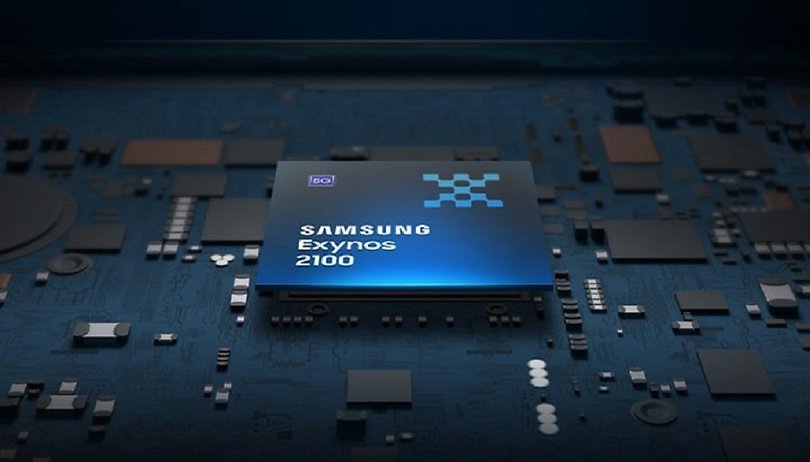
As things stood until standardizing on Qualcomm's chips, Snapdragon-toting Samsung Galaxy S's offered better overall performance compared to its Exynos counterparts. However, Samsung has certainly managed to close the massive gap in performance between Snapdragon and Exynos SoCs from the yesteryears. Perhaps the ultimatum issued by Samsung Exynos users helped. Now, the reason for the massive improvement in performance with the new Exynos 2100 has been explained in somewhat detail by me in this article. Here’s a short explanation anyway.
Essentially, what you need to know is that Samsung, until 2020, used its own custom CPU cores codenamed Mongoose on its flagship SoCs. While this is based on the ARM architecture, the Mongoose core has traditionally lagged behind ARM’s A7X cores in terms of performance. Starting 2021, however, Samsung decided to abandon the Mongoose core and joined the ARM CxC project (for its flagship SoCs), of which Qualcomm too is a beneficiary.
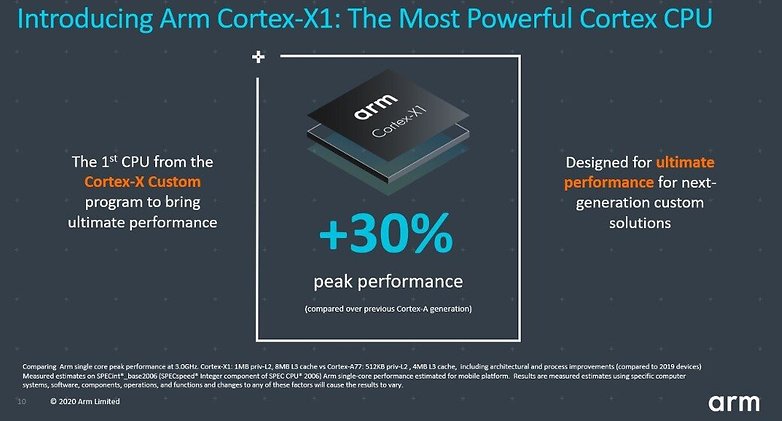
The first performance-oriented CPU to come out of the CxC project is known as the ARM Cortex X1, and both the Snapdragon 888 and the Exynos 2100 use it (with slight customizations). Effectively, the current generation of Exynos and Qualcomm flagship processors have several similarities since they are based on identical microarchitectures. This has resulted in Exynos managing to somewhat catch up with Qualcomm in terms of CPU performance.
However, one area where Samsung continues to lag behind even with the Exynos 2100 is in the graphics department. This is because Exynos uses ARMs Mali G78 GPU for graphics, while Qualcomm uses its own Adreno 660, which is known for its much better performance. But Samsung does have one ace up its sleeve to counter this.
In 2019, Samsung announced a partnership with AMD to bring mobile GPUs to Samsung Exynos chips. In 2021, just before the launch of the Galaxy S21, Samsung announced that the first GPU to come out of the Samsung AMD collaboration is under development. And if leaked performance benchmarks are anything to go by, it might turn out to be a performance monster that could obliterate not just Qualcomm’s Adreno GPU but even Apple’s all-powerful custom GPU that it uses on the A14 Bionic SoC.
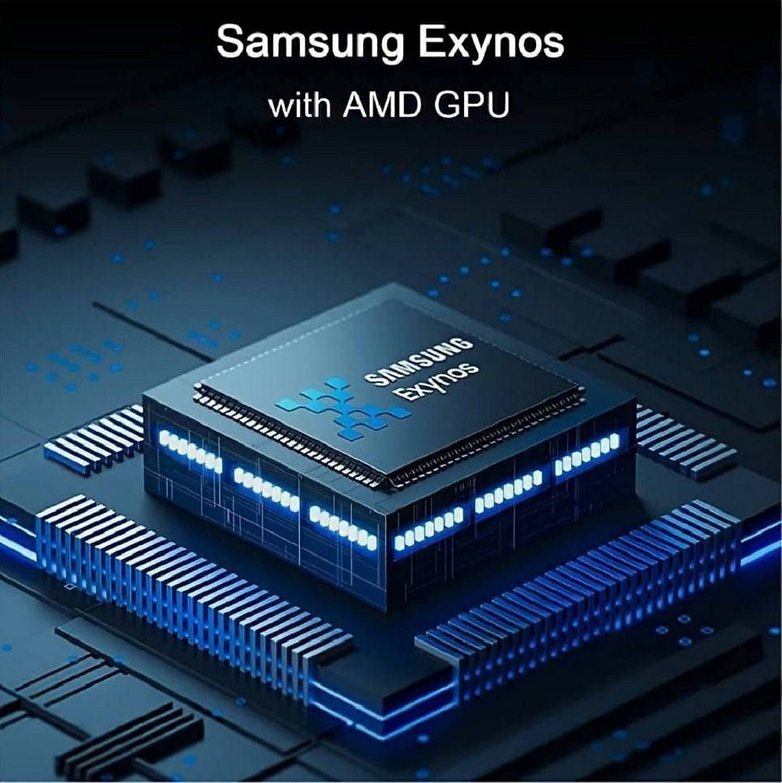
While it is too early to say, there is a good chance that Samsung's next-generation flagship SoCs could match and perhaps even leap ahead of the competing Snapdragon offering in terms of sheer performance.
If this does indeed happen, it would be a massive turnaround for Samsung. It would also be great news for millions of Exynos users who have been forced to put up with an objectively inferior product for several years while knowing that the same company sells an identical device with a much better SoC in another part of the world. And just maybe, we are looking at a future where consumers will not be worried about choosing between Exynos or Snapdragon SoCs on Samsung flagships.
This article was updated in April 2021. Old comments have been retained.








exynos is really awesome, am from sri lanka and have a j7 prime with exynos 7885 which is really awesome...
i play several powerful games like COD , PUBG real racing shadow fight threee and many other .
all of my games are nearly 12-15 gb, and have no lag....goes very smoothly.... it lags only when two games are open at once...... like pubg in recent screen and playing cod then it might lag
all other features are awesome like camera idk wether its 4k but really clear and battery lasts for 6-7 hours of heavy usage even.
Yeah, but is it really awesome?
I am thinking between Samsung Galaxy J4+ and Samsung Galaxy J6. Can you help me decide which one is better because the one has qualcomm snapdragon and the other one has samsung exynos. Please I need any possible answer quickly.
would suggest u to go for a6 or a6+ than the j series
Is I have and devices running on Qualcomm and I download and install a ROM that takes Equinox originally then would that have anything to do or be the reason why I'm not able to place calls from my new custom ROM. The dialer dials correctly but I can't hear the ringing on my end or hear if anyone answers on their end. can anybody help me please.
The south Korean version of the Galaxy S8 has 6gb of ram and 128gb of storage and I think it's an Exynos, I may import one
Hi plz help me and answer my question got me. Samsung A3 2016 with Qualcomm CPU or better CPU with Exynos? Thank
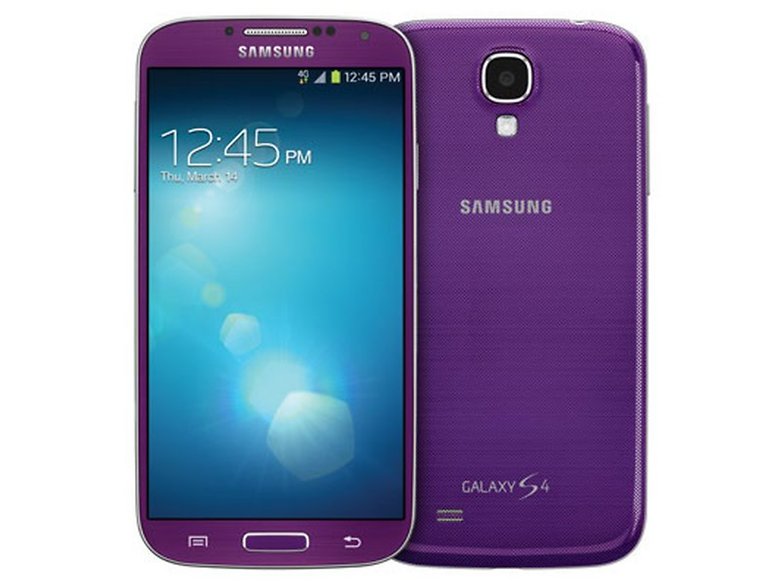
Right now i am using s4 which has exynos in it. I do not play a lot of games but setimes i do but i pirely rely on the phone for performance and speed. Do u think is this the best choice?
With speed and performance the snapdragon can handle it better whereas the exynos cant
PLEASE HELP ! I want to buy a samsung note 4. However, it is difficult to chose since I am living in both countries, France and USA. In USA, I do use at & t NO CONTRACT, but I might change each time I am here. I might also buy a contract with verizon or other, I don't know yet. In France I know the frequency is 900-2100.
Now my question: do I need an LTE for USA ? I am impatient, specially with I browse the Internet. I want it to be fast. I want also the calls to go through easily and everywhere since I travel quite a bit in other countries as well, like Israel, UK, etc.
Fistable, is Samsung's chip reliable ? Somebody told me that the Snapdragon's modem is better, but the Equinox is faster. So, now what ? It's quite expensive so I would like to keep it for a long time. I will prefer to spend 50 dollars, or even 100 more, but buy the best phone.
What do you suggest please ? Thank you.
I need to buy a phone very quickly because my IPHONE is out of order.
Sincerely yours
MICHELE
encyos is better in games and grapics ,the snapdragon is better in speed and performance ...in galaxy s3 i like more snapdragon because have 2 gb ram and it.s great and in s4 i like snapdragon agin cause of roms, 4g ,and battery life
I've uses all Exynos and Snapdragon. All Galaxy products will always be fine regardless.
It doesn't matter for me as I will never own a Samsung device, lol
I am in Albania and I have a Galaxy Note 2 with exynos 4 processor, and I am pretty sure the note 2 is only with exynos.
there is a note 2 LTE (GT-N7105), but maybe it's not available in Albania...
I'd rather have the option. The s3 was also at option between exynos and snappy (s3 lte) here in Germany, same with the note 2.
I would have bought the not3 rather eith the exynos, since power management and performance, while LTE and 4k mean absolutely nothing to me.