Sorry, but there's really nothing to see here right now. Our server is in maintenance mode – and our
little bot is trying to sort the error messages with its last bit of energy.
Whether it was a data leak, a power outage in the cluster, or just a grumpy bit – we don't know yet.
But what we do know is:
The data drama escalated into a server meltdown. But don't worry: We're on it.
What now?
Everything is surely running smoothly over at our colleagues from inside
digital – why not stop by!
Or you could pass the time by visiting our social media channels – for example Instagram, YouTube or TikTok. At least there are no
server problems there – promised.
Thanks for your patience. Our bot is already rebooting at full speed. 🔧
NewsHeadphonesGoogle Now Lets You Translate 70+ Languages Through Your Earbuds
Language barriers may soon be a thing of the past with Google’s new live translation feature, which now supports any headphones. Powered by Gemini, it delivers more accurate and natural translations. Find out how it works.
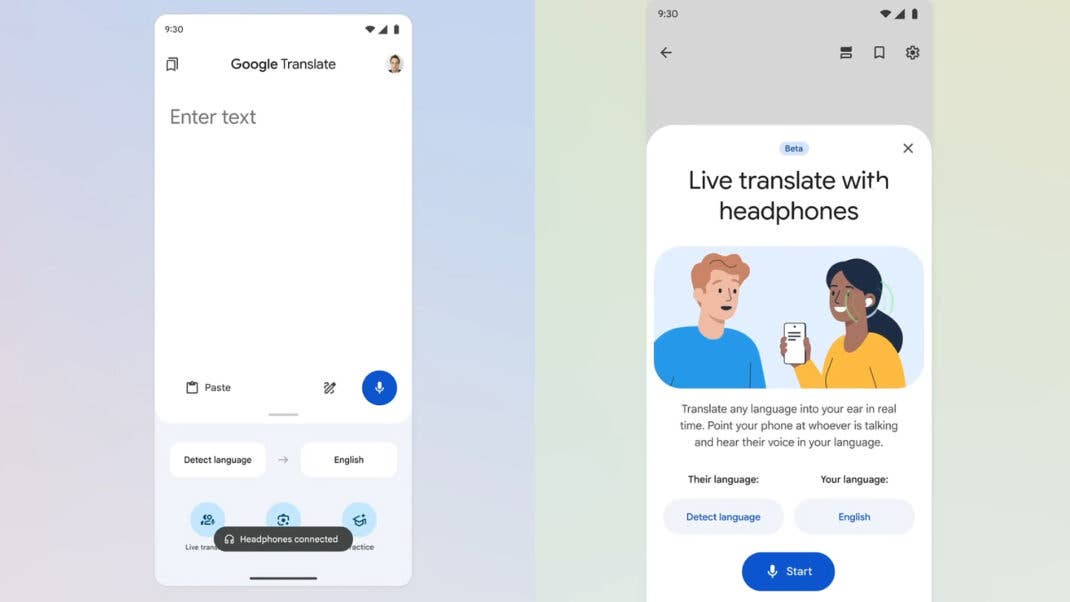
Translation is one of the most practical uses of AI, and Google is taking it further for Android devices. The company has announced that Gemini‑powered real‑time translations are coming to more users, with support for any connected headphones. It is already launching in select countries, and the feature will support over 70 languages.
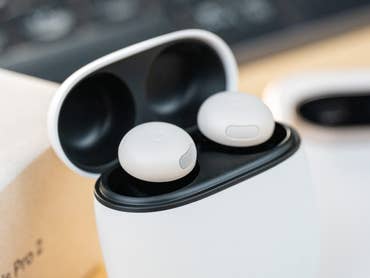
Google’s live translation originally debuted with the Pixel Buds (Buds Pro 2 review). It allows for real‑time language translation when listening to dialogue, speeches, or media such as video and audio tracks. It works by integrating earbuds with the Google Translate app on a smartphone.
The new beta of Google Translate will enable any headphones, including over‑ear and wireless earbuds, to deliver live translation. Previously, this required Pixel Buds, or AirPods with Apple’s own live translation features.
To use the feature, Google says users simply need to connect their headphones to their phone, launch the Google Translate app, select “Live Translate,” and choose the desired language.
According to Google, the neural processing is powered by Gemini, which brings advantages such as more accurate translations and the ability to preserve each speaker’s tone, emphasis, and cadence. This makes translations sound more natural and easier to follow, unlike robotic or monotone outputs.
Google Translate’s real-time translations work with any headphones.
At present, the feature supports one‑way translation. In other words, it translates a language for the listener but does not yet offer full back‑and‑forth conversation support, which remains available on Pixel Buds.
The beta is currently rolling out in the Google Translate app for users in the U.S., India, and Mexico. Google says iPhone and iPad (iOS) support, along with availability in more countries, will arrive in 2026.
Google Translate’s Duolingo‑Like Tool Expands
Alongside live translation, Google is expanding Translate’s practice mode to more countries and languages. This AI‑based tool creates customized learning scenarios for quicker skill building. The expansion includes Germany, India, Sweden, and Taiwan.
Google Translate adds a progress tracker and goals to the practice mode.
A new progress‑tracking feature has also been added, showing daily attendance to encourage consistent practice. All of these Google Translate add‑on features are free, giving users an advantage compared to standalone language learning apps such as Duolingo and Memrise.
Would you try Google Translate’s live‑translate feature once it becomes available on your device? Share your thoughts in the comments.
We mark partner links with this symbol. If you click on one of these links or buttons–or make a purchase through them–we may receive a small commission from the retailer. This doesn’t affect the price you pay, but it helps us keep nextpit free for everyone. Thanks for your support!