

It will be Qualcomm’s first custom ARM core since the original Kryo core back in 2015—since then, all Kryo cores were customized versions of ARM’s reference Cortex cores. With Apple’s M1 line bringing renewed attention to custom ARM cores, especially in the PC space, Qualcomm announced the purchase of fabless designer Nuvia in January 2021.
Nuvia was formed by a team of ex-Apple and Google engineers, including the chief architect of Apple’s performance cores until the A13 SoC. Nuvia’s design originally targeted the server market, but all hints indicate that Qualcomm will repurpose the CPU core as a PC core, possibly powering a next-generation Snapdragon 8cx processor.
Adobe joins Windows on ARM (finally)
With a bigger adoption of Snapdragon processors in Windows devices, Adobe announced that its Creative Cloud apps will be available on ARM binaries for Windows. The move will optimize applications like Photoshop to ARM processors—currently on Windows exclusively Snapdragons—and stop requiring the slow binary translation technique employed for x86 software.
Additionally, both companies announced that Adobe’s CC apps will feature optimizations for Qualcomm-specific cores, including AI processing. Although welcome news, there is still a long list of Windows applications—including Chrome—that still lack ARM binaries and require x86-ARM translation. Besides that, Adobe did not commit to a timeline for releasing ARM versions of its apps.
Snapdragon AR2 promises discreet AR glasses
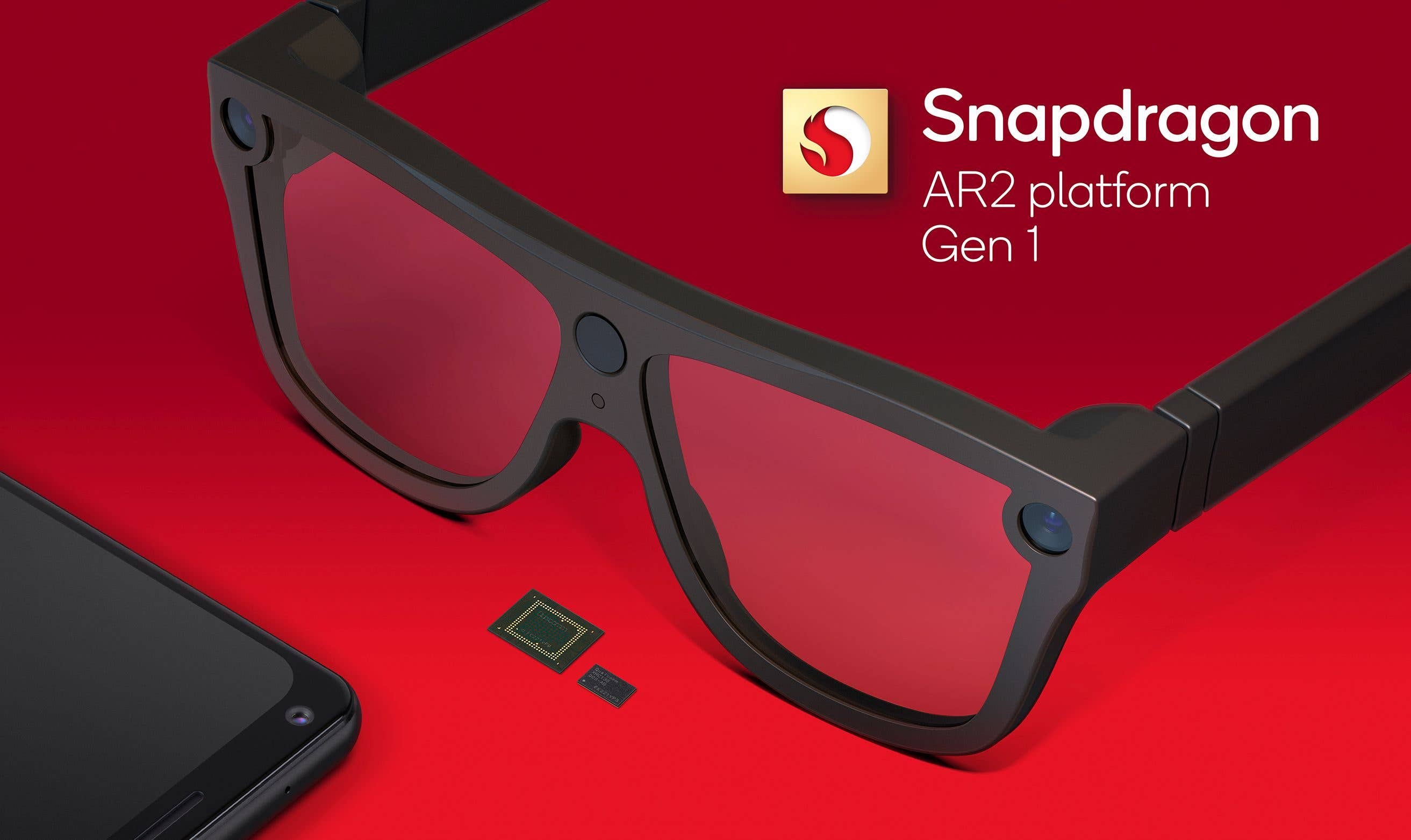
In the segment dedicated to its “extended reality” (XR) initiatives, Qualcomm showcased its Snapdragon AR2 Gen 1 reference platform. Different from the bulky VR glasses in the market, the AR2 platform uses a combination of processors spread around the frame to achieve a thin and sleek design, that could pass as a regular pair of glasses with a few design tweaks.
The design not only saves 40% of PCB area according to Qualcomm but also balances the weight and delegates communication tasks to a FastConnect 7800 chip to share processing duties with the main AR processor.
Qualcomm announced partnerships with Lenovo, Oppo, Xiaomi, LG, TCL, and Niantic (Pokémon Go), among others, with not only a hardware development platform but also the Snapdragon Spaces XR initiative to help developers create AR/VR content and applications optimized for devices powered by Snapdragon.

New Bluetooth audio platforms
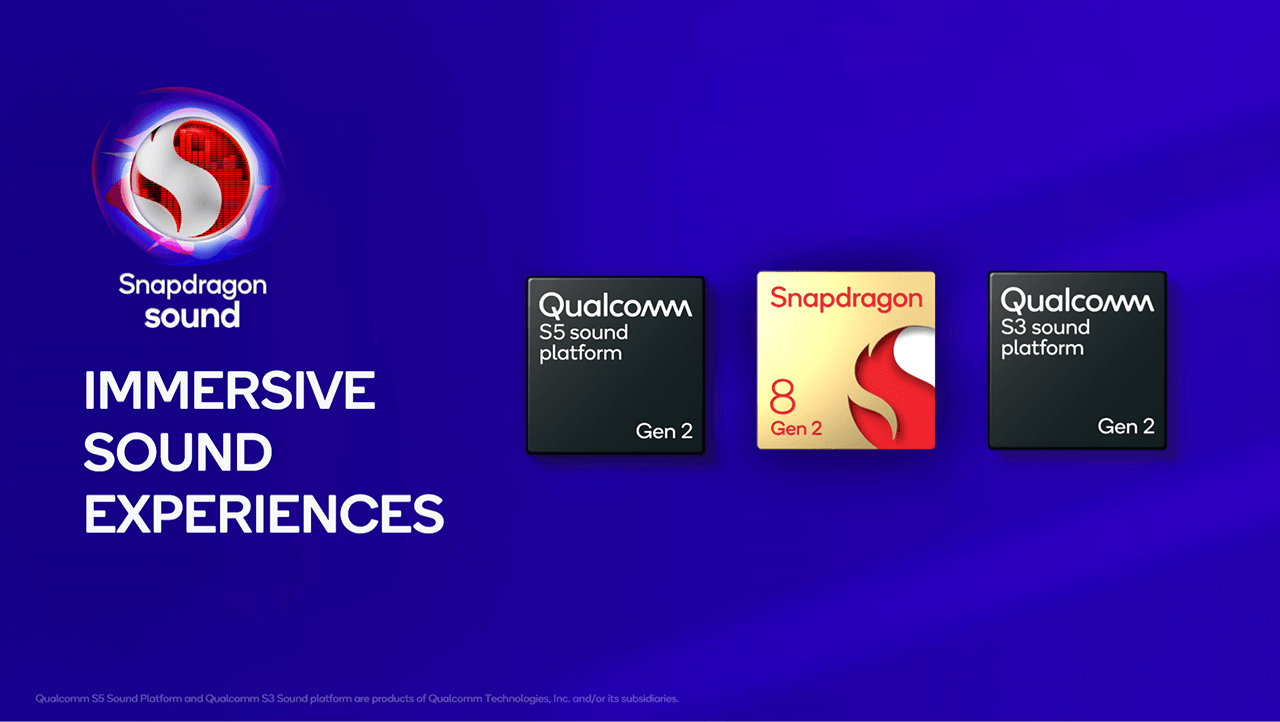
Last but not least, the Snapdragon Sound family got new generations for its mid-tier and flagship platforms, the Snapdragon Sound S3 Gen 2 and S5 Gen 2, respectively. Qualcomm didn’t reveal much about the platform differences but revealed support for spatial audio in both.
Both platforms include head tracking support for immersive audio, lossless streaming even in Bluetooth Low Energy (LE) mode, and promise low latency transmission for the gaming crowd. The company expects to see Gen 2 Snapdragon Sound devices on store shelves in the second half of 2023.
Those were the biggest announcements during the Snapdragon Summit 2022. Which announcement interested you the most?