Sorry, but there's really nothing to see here right now. Our server is in maintenance mode – and our
little bot is trying to sort the error messages with its last bit of energy.
Whether it was a data leak, a power outage in the cluster, or just a grumpy bit – we don't know yet.
But what we do know is:
The data drama escalated into a server meltdown. But don't worry: We're on it.
What now?
Everything is surely running smoothly over at our colleagues from inside
digital – why not stop by!
Or you could pass the time by visiting our social media channels – for example Instagram, YouTube or TikTok. At least there are no
server problems there – promised.
Thanks for your patience. Our bot is already rebooting at full speed. 🔧
NewsTabletMotorola to Enable Satellite Messaging on Phones via a Modular Case
Apart from brands like Apple and Huawei, currently, there are no smartphones that support built-in satellite connectivity. What Motorola decided upon was to introduce a satellite hotspot communicator that is compatible with any phone. Apparently, the company now plans to launch another accessory that will enable satellite communication to more of its devices.
Don’t miss this: How to use iPhone’s emergency SOS via satellite feature
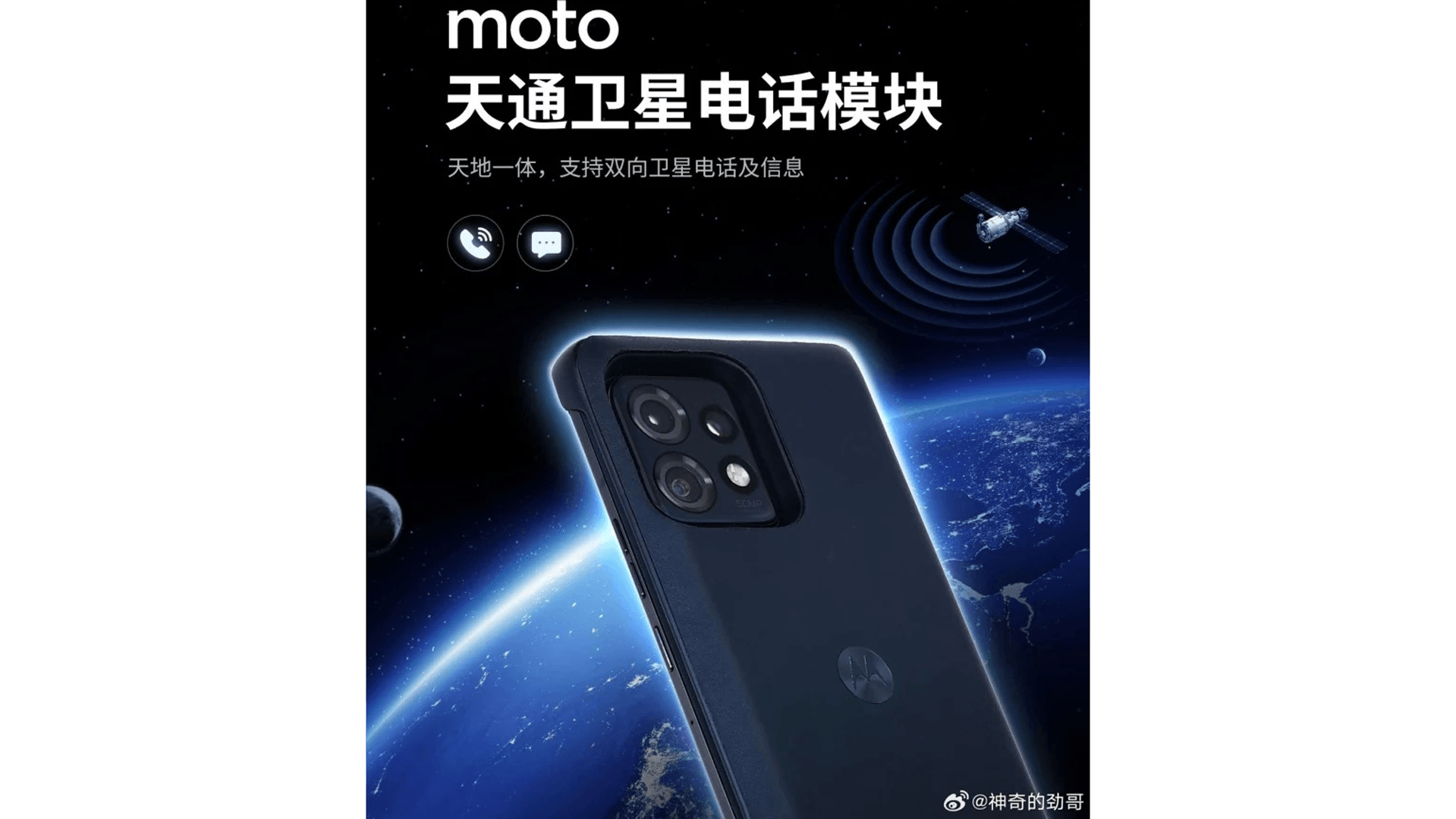
Following the release of the Motorola Defy Satellite Link hotspot, which has been made through a partnership with Bullitt, Motorola has now teased a new modular smartphone accessory in a snap-on case known as the Tiantong satellite phone module. The device is scheduled to be announced in China today.
The name suggests that coverage will be provided by the Tiantong-1, which is a geostationary satellite network that covers China. Once the case is paired to your handset, it should be able to allow two-way satellite calling and messaging on a smartphone. There’s even a dedicated switch on the case to initiate satellite calls.
It remains unclear how much the phone module will cost and its compatibility with Motorola phones or the bundled services that will be offered. At the same time, we could only know more details today whether Motorola will launch a variant of the case that will support other regions besides China.
If your phone lacks satellite connectivity and you have plans to venture to remote places, the most viable option at the moment is the Defy Satellite Link. It costs $149 and comes with a 1-year basic subscription plan and 30 SMS per month. What’s great about this device is that it works in the USA and most parts of Europe.
As for other satellite-ready phones, the upcoming Apple iPhone 15 will get the same emergency SOS via satellite as its predecessor. On the other hand, Samsung confirmed that the Galaxy S24 will come with the said feature via 5G non-terrestrial networks by next year.
Do you find satellite connectivity an essential function in a smartphone? We’d like to hear your thoughts on this matter.
We mark partner links with this symbol. If you click on one of these links or buttons–or make a purchase through them–we may receive a small commission from the retailer. This doesn’t affect the price you pay, but it helps us keep nextpit free for everyone. Thanks for your support!
What is the point to have satellite support across the US and Europe? Those regions have widely 5g support. A satellite support would make sense a cross Africa and Latin America bur there, no compatible satellites. So, this accessories remains not more than a useless toy.
Log in to Reply
5g coverage maps (or 4G, or 3G) show lots of regions without cellular connectivity.
East Germany, Central Spain, the Alps and Pyrenees regions, the entire Balkans… https://www.gsma.com/coverage/#463 Similarly, the US mid-west has tons of spots with no coverage. https://fcc.maps.arcgis.com/apps/webappviewer/index.html?id=6c1b2e73d9d749cdb7bc88a0d1bdd25b







What is the point to have satellite support across the US and Europe? Those regions have widely 5g support. A satellite support would make sense a cross Africa and Latin America bur there, no compatible satellites. So, this accessories remains not more than a useless toy.
5g coverage maps (or 4G, or 3G) show lots of regions without cellular connectivity.
East Germany, Central Spain, the Alps and Pyrenees regions, the entire Balkans…
https://www.gsma.com/coverage/#463
Similarly, the US mid-west has tons of spots with no coverage.
https://fcc.maps.arcgis.com/apps/webappviewer/index.html?id=6c1b2e73d9d749cdb7bc88a0d1bdd25b