


Contents
- 1 How we filmed the videos
- 2 Scene 1: testing the main camera
- 3 Which video do you like the best?
- 4 Scene 2: testing night time performance
- 5 Which video do you like the best?
- 6 Scene 3: testing the ultra-wide-angle
- 7 Which video do you like the best?
- 8 Scene 4: testing the telephoto zoom at 2x
- 9 Which video do you like the best?
- 10 Scene 5: testing the image stabilizer (4K/Full-HD)
- 11 Which video do you like the best?
- 12 Now it’s up to you to decide the winner
The trick, however, is that we won’t tell you which video comes from which smartphone. This way, we want to prevent you from taking a biased approach to the evaluation. You will receive the final result, including the reveal of which video was shot on which phone, next week.
- A $400 smartphone just beat the Pixel 4, iPhone 11 and Note 10 in our camera test
How we filmed the videos
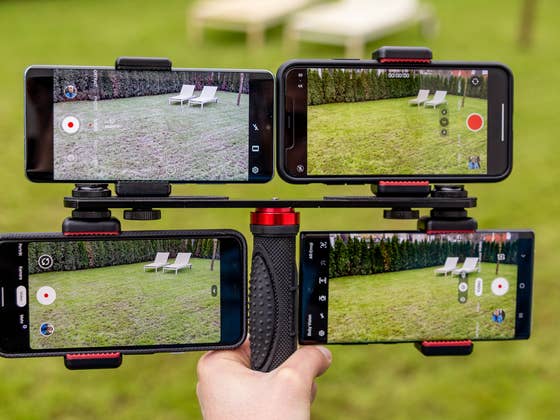
Granted: in our photo blind test about a month ago, the whole process was a bit simpler, so to ensure the best possible comparability, we built a small rig. It allows us to film with all four smartphones simultaneously and from almost identical angles.
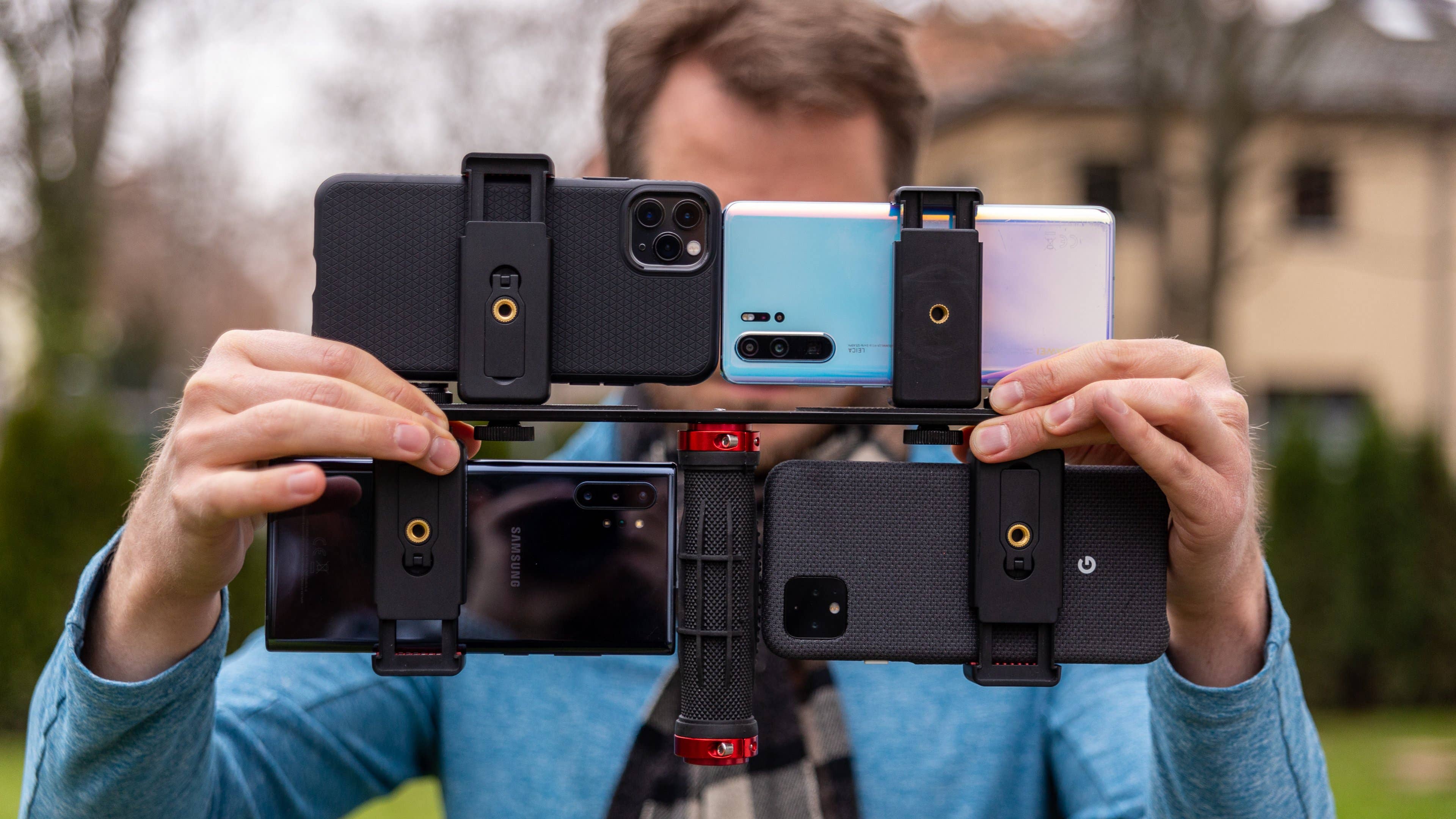
We set the highest possible resolution for all smartphones, namely 4K at a refresh rate of 30 fps. If available, we deactivated HDR recording and recorded with codec H.264. The resulting original clips have been cut to exactly the same length in Adobe Premiere. We show each video first in its original size and then in several enlargements. So you can get an idea of what the video looks like on your TV at home and on a small display on the go.
We then exported it as H.264 MP4 at approx. 40 MBit per second. In the comparison videos below, you can see the clips in 4K resolution on YouTube. Certainly: the videos go through two transcoding cycles by exporting them to Adobe Premiere and uploading them to YouTube. This may not be ideal, but experience has shown that the bottlenecks in image quality are still by far the smallest smartphone sensors.
A hint before you start: due to the slightly different hardware requirements of smartphones, it is often quite easy to determine at least one or the other model based on the image angle. Nevertheless, we would like to ask you at this point to take an unbiased approach to the recordings and not to spoil the guessing game for the other readers in the comments. Thank you very much.
Scene 1: testing the main camera
Let’s start with the main camera – which you will probably use most often in practice. In addition to the choice of the correct exposure in this light backlighting scenario, the reproduction of skin tones is particularly interesting.
Video 1.1
Video 1.2
Video 1.3
Video 1.4
Which video do you like the best?
- Video 1.1: 30%
- Video 1.2: 11%
- Video 1.3: 51%
- Video 1.4: 8%
Votes: 128
Scene 2: testing night time performance
The backdrop for our second night test is – how could it be any different this time of year – a Berlin Christmas market. The high contrasts in the recording are well suited for estimating the dynamic range during recording. And the enlarged repetitions give you a good impression of what the picture noise is like.
Video 2.1
Video 2.2
Video 2.3
Video 2.4
Which video do you like the best?
- Video 2.1: 6%
- Video 2.2: 17%
- Video 2.3: 40%
- Video 2.4: 37%
Votes: 109
Scene 3: testing the ultra-wide-angle
Three out of four participants in our field have a special ultra-wide-angle camera. Those who would like to squeeze a lot of scene into a video will see which phone does the best job here. A participant in the field does not have an ultra-wide-angle module and is therefore somewhat out of the running here.
Video 3.1
Video 3.2
Video 3.3
Video 3.4
Which video do you like the best?
- Video 3.1: 36%
- Video 3.2: 2%
- Video 3.3: 24%
- Video 3.4: 38%
Votes: 85
Scene 4: testing the telephoto zoom at 2x
The participants in our field all have a telephoto camera on board, but with different focal lengths. At this point, we decided on a double magnification, which disadvantages one of the smartphones on paper – but see for yourself how big the differences are in practice.
Video 4.1
Video 4.2
Video 4.3
Video 4.4
Which video do you like the best?
- Video 4.1: 18%
- Video 4.2: 17%
- Video 4.3: 35%
- Video 4.4: 30%
Votes: 88
Scene 5: testing the image stabilizer (4K/Full-HD)
You rarely film from a tripod with a smartphone, and a good image stabilizer is accordingly important. Since image stabilizers work differently depending on the resolution, we filmed this scene both at 2160p and 1080p.
Video 5.1
Video 5.2
Video 5.3
Video 5.4
Which video do you like the best?
- Video 5.1: 42%
- Video 5.2: 24%
- Video 5.3: 21%
- Video 5.4: 13%
Votes: 95
Now it’s up to you to decide the winner
What do you think about the results? Do you think it will be just as unpredictable as our photo blind test about a month ago? Or do smartphones differ even more in terms of video than in photo quality? And do you have any feedback on how we conduct our test scenarios?
We are looking forward to receiving your votes for this blind test and to your constructive feedback in the comments!

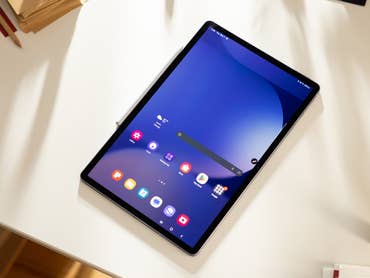
Phone 1
The Galaxy Note 10+ takes fantastic photos, and that quality carries over to video as well. Its triple camera array makes it an incredibly versatile shooter, and it takes ultra-smooth video in 1080p.