Sorry, but there's really nothing to see here right now. Our server is in maintenance mode – and our
little bot is trying to sort the error messages with its last bit of energy.
Whether it was a data leak, a power outage in the cluster, or just a grumpy bit – we don't know yet.
But what we do know is:
The data drama escalated into a server meltdown. But don't worry: We're on it.
What now?
Everything is surely running smoothly over at our colleagues from inside
digital – why not stop by!
Or you could pass the time by visiting our social media channels – for example Instagram, YouTube or TikTok. At least there are no
server problems there – promised.
Thanks for your patience. Our bot is already rebooting at full speed. 🔧
NewsTabletSamsung’s Next-Gen Display Can Measure Your Blood Pressure and Heart Rate
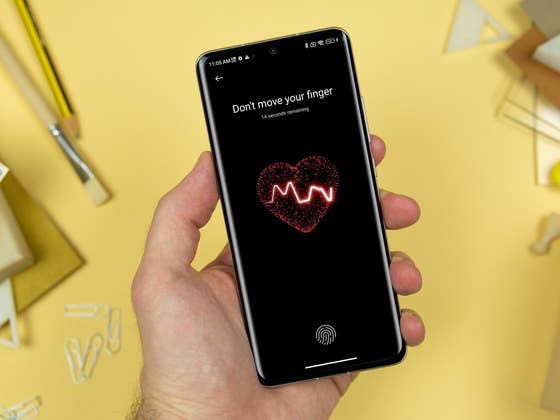
Most of today’s smartphones rely on an ultrasonic fingerprint scanner that is located under the display for security purposes. Samsung, one of the pioneers of the technology, is introducing an advanced panel for future devices that is capable of reading fingerprints in any area of the screen as well as measuring health data such as blood pressure.
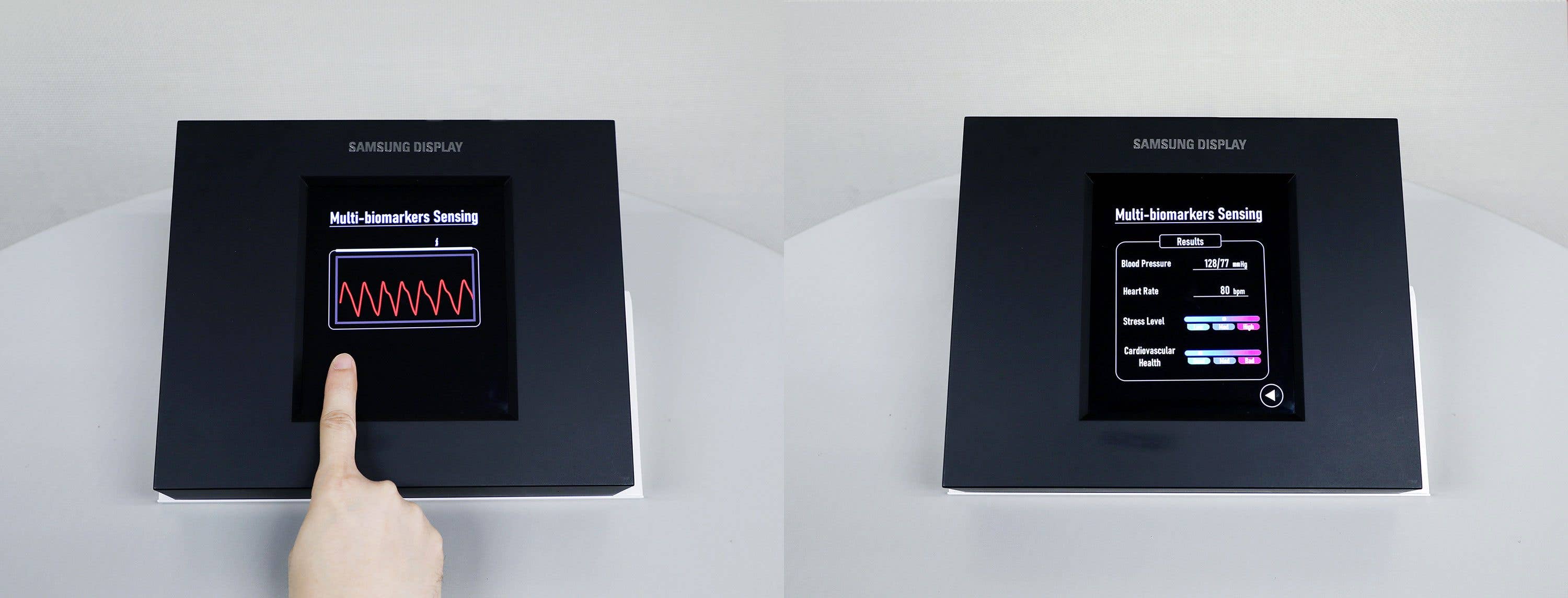
At Samsung’s SID Display Week in Los Angeles, the South Koreans unveiled a new display known as Sensor OLED Display that drastically improves fingerprint recognition and biometrics in smartphones and tablets. It has an embedded light-sensing organic photodiode (OPD) as opposed to having it separate as found in existing solutions.
The use of OPD will enable fingerprint scanning on the whole screen instead of only utilizing a portion or the bottom area as seen on the Samsung Galaxy S23 and Galaxy S23 Ultra. Additionally, these will also improve security by allowing one to input multiple IDs or fingerprints during the authentication process.
How Samsung’s OLED panel with biometric sensing works
However, the most notable feature that the Sensor OLED Display introduces would be support for biometric reading. Samsung claims the panel will take advantage of the OLED light to monitor some health or biometrics data of a user.
Specifically, light will be beamed onto the blood vessels of the user’s fingers when pressed against the display. Furthermore, the variation of reflected and refracted light back to the panel will determine one’s blood pressure level and heart rate. The method is partially similar to how the 3-in-1 BioActive sensor works on Samsung’s Galaxy Watch 5 Pro which we’ve reviewed, which relies on a spectrum of lights and lasers.
Currently, it remains unclear whether we could expect the technology to materialize on an actual Samsung Galaxy smartphone or tablet. Considering how it was already demonstrated at Samsung’s Display Conference, we may see this arrive in a few years’ time.
What are your thoughts on the possibility of a Samsung smartphone having a built-in biometric sensor in the display? Do you think it is a vital feature that you would consider having in the future? We’d like to hear your answers in the comments.
We mark partner links with this symbol. If you click on one of these links or buttons–or make a purchase through them–we may receive a small commission from the retailer. This doesn’t affect the price you pay, but it helps us keep nextpit free for everyone. Thanks for your support!






0 comments