


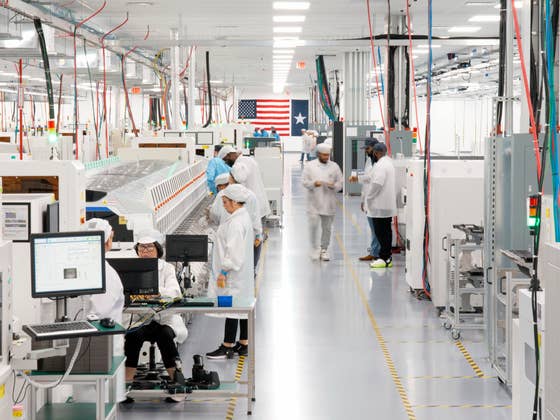
Apple announced it will produce more of its products at home, in the U.S. First mentioned in a report from the Wall Street Journal, the company will move part of its Mac mini production from Asia to Houston, Texas. Foxconn, one of Apple’s usual partners both stateside and abroad, will handle the actual manufacturing in a new facility. Production is scheduled to begin later this year.
Apple and Foxconn will make Mac minis in the U.S.
The Wall Street Journal was led on a public tour through the current buildings in north Houston. Foxconn already uses one of them to assemble AI servers. The on-site production includes the necessary logic boards. Apple then uses these servers in their own data centers around the U.S. Another building, described as a 220,000-square-foot „cavernous warehouse“, will be converted to manufacture the Mac mini. The production stateside is meant to serve local demand.
It’s not the first time that Apple has built Macs in the U.S. Long before the current Mac mini, the company started making the Mac Pro in Texas. That facility opened in 2013. Back in 2019, during President Donald Trump’s first term, the then all-new Mac Pro was once again in the news for its local production.
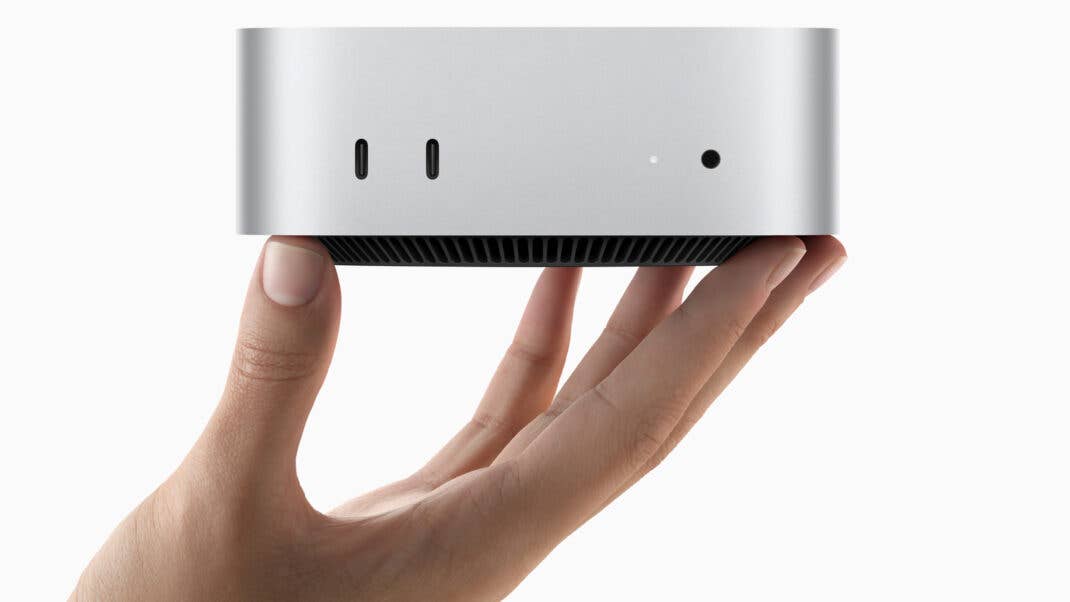
After building its most expensive product in Texas, Apple is now trying to make some headway with one of its cheaper products: the Mac mini. For the company that sells the iPhone, the tiny computer is a niche product. Consumer Intelligence Research Partners estimates that it’s only responsible for 5% of Apple’s Mac sales and less than 1% of total sales.
In today’s so-called „RAMaggedon“, where prices for memory and flash storage have seen extreme price increases in just a few months, Apple’s Mac mini is considered a deal for people looking for a cheap computer. Some recent deals have seen prices below 400 U.S. dollars for the entry-level model. It’s also currently popular among people who want to use OpenClaw, an AI agent that promises to do things for you.
Investments and Their Returns for Apple
The iPhone maker has already promised late last year to invest $600 billion in the U.S. over the next four years. In exchange for such promises, companies like Apple may be treated favorably by the administration. Tariff exemptions are one increasingly important factor these days.
Some observers might also think that it’s telling that Apple’s most recent announcement arrived on February 24. Later today, President Trump will deliver the State of the Union address amid increasing pressure over his tariffs. It might be in the iPhone maker’s interest to hand him a win ahead of the address – if only to once again get exemptions for possible tariffs on more expensive products that are not built on U.S. soil, like that iPhone. If that means assembling a few Mac minis in Houston, it’s a small price to pay.
What the US production of the Mac mini means for future buyers in the U.S. is currently unclear. Production costs are certainly higher in Texas than for the rest of the minis that are still made in Asia. This product could see price increases at some point, but instead of higher wages being the reason, they might be overshadowed by rising costs for storage and memory.
Part of the new facility in Houston is also a new training center. According to Apple, it „will provide hands-on training in advanced manufacturing techniques to students, supplier employees, and American businesses of all sizes“.