


Apple typically announces iOS and iPadOS distribution figures slightly earlier than mid-February. Last year, this was already the case at the end of January. Many observers have so far based their statements about the distribution of iOS 26 on unofficial data collected by third-party providers. The main reason for the heated discussions about the installation figures is the new design. On social media in particular, “Liquid Glass” is often used as an excuse to loudly oppose the update. But now there are official figures – directly from Apple.
iOS 26: Slight loss compared to iOS 18
In a direct comparison with iOS 18, Apple’s latest iPhone operating system is slightly behind. 76 percent of smartphones from the last four years that have communicated with the App Store already use iOS 26, with the cut-off date being February 12, 2026. 20 percent used iOS 18, and 6 percent used an earlier version.
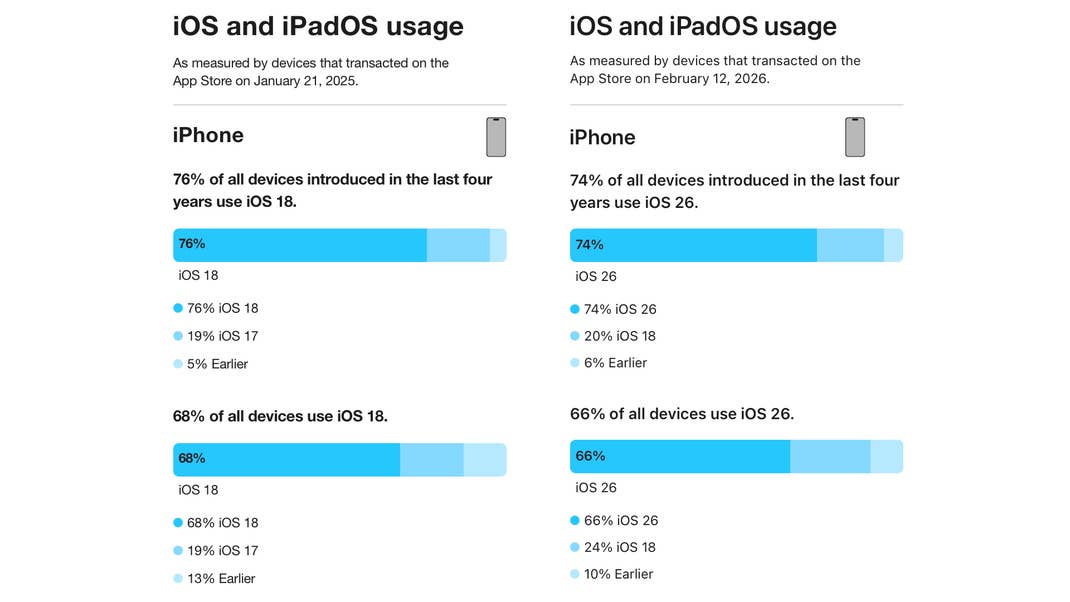
According to figures from the previous year, which Apple announced on January 21, 2025, 76% of iPhone users had also updated to iOS 18. iOS 26 has therefore been available for slightly longer and is also less widespread. The difference is around three weeks. However, the strong criticism of the design has apparently had only a minor impact on overall installation figures.
Overall, iOS 26 is installed on 66 percent of all iPhones. In the previous year, this figure was 68 percent for iOS 18.
Slight lead for iPadOS 26
For the iPad, the pure percentage figures for iPadOS 26 look slightly better than for its predecessor last year. According to Apple’s figures, iPadOS 26 was found on 66 percent of devices from the last four years. 24 percent are still using iPadOS 18, while earlier versions were recorded on 10 percent of tablets. However, the figures apply to February 12, 2026.
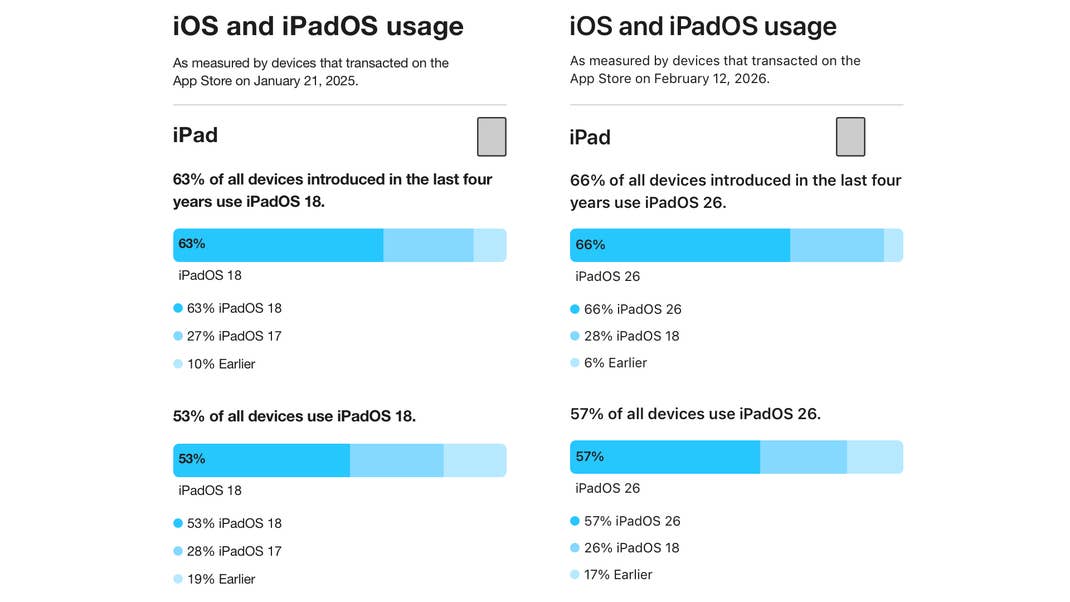
Last year, however, iPadOS 18 was installed on 63 percent of Apple tablets. Slightly less overall, but the figures were published on January 21, 2025. Once again, it is clear that tablet users update their devices more slowly than iPhone users, at least in a direct comparison of the first few months after the launch.