Sorry, but there's really nothing to see here right now. Our server is in maintenance mode – and our
little bot is trying to sort the error messages with its last bit of energy.
Whether it was a data leak, a power outage in the cluster, or just a grumpy bit – we don't know yet.
But what we do know is:
The data drama escalated into a server meltdown. But don't worry: We're on it.
What now?
Everything is surely running smoothly over at our colleagues from inside
digital – why not stop by!
Or you could pass the time by visiting our social media channels – for example Instagram, YouTube or TikTok. At least there are no
server problems there – promised.
Thanks for your patience. Our bot is already rebooting at full speed. 🔧
NewsTabletApple Might Have Found a Better Way to Hide the Notch on iPhones
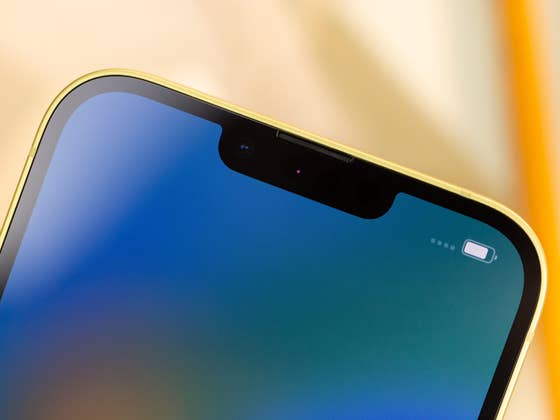
Among smartphone makers, Apple is one of the very few that haven’t explored all-screen design for its iPhones. Notably, they have only fully dropped the notch design from this year’s iPhone 15 and embraced the Dynamic Island on them. And it appears they’re not ditching the current design anytime soon. However, there are new clues on how would this be replaced on future iPhones, even involving tricks to show or hide the sensors.
The idea of Apple working on completely making the Face ID and selfie camera on iPhones hidden is not new. But as discovered by Patently Apple, Apple has been awarded a new patent relating to an Under Display Camera (UDC) system on iPhones by the US Patent and Trademark Office.
In the illustration, the technology is described to utilize a display-equipped apparatus, a camera, and a processor. All these components are then housed behind the device’s main screen.
As for the integrated display apparatus, it is said to be composed of front and back layers with their own pixels and vents concentrated in one region (the size of the notch on iPhones). Additionally, the condensed area of pixels and openings can then beam lights and images between the layers.
Meanwhile, the camera is used with Apple’s TrueDepth sensing feature, where it will cater to scanning faces. The processor determines whether the camera will be enabled or not based on the scene captured by the imaging sensor. If the scene is depicted not to require facial recognition, the camera will be hidden by the apparatus as it will be blended behind the main screen.
You can think of this as similar to Samsung’s UDC technology available on the book-style folding Galaxy Z Fold 5 and older models. However, the difference here is that the camera or set of Face ID sensors are exposed whenever they are active and hidden if not in use.
Interestingly, it was rumored earlier that LG Innotek is already developing a new type of UDC that will be adopted by Apple. The said technology has similarities with the patent by having a camera with a free-form lens that turns invisible when not in use. So far, there is no new information to support this, although it is believed the tech may be ready as early as 2026 or the iPhone 18.
Would you think that Apple is already late in bringing a full-screen iPhone? What is your opinion on this technology? We want to hear your answers in the comments.








0 comments