Sorry, but there's really nothing to see here right now. Our server is in maintenance mode – and our
little bot is trying to sort the error messages with its last bit of energy.
Whether it was a data leak, a power outage in the cluster, or just a grumpy bit – we don't know yet.
But what we do know is:
The data drama escalated into a server meltdown. But don't worry: We're on it.
What now?
Everything is surely running smoothly over at our colleagues from inside
digital – why not stop by!
Or you could pass the time by visiting our social media channels – for example Instagram, YouTube or TikTok. At least there are no
server problems there – promised.
Thanks for your patience. Our bot is already rebooting at full speed. 🔧
NewsTabletM5 MacBook Pro Might Be the First Apple OLED Laptop
After a few years of speculation, Apple will finally adopt OLED displays in its large-screen devices, with the M4 iPad Pro being the first in the tablet range. It is expected this technology will trickle down to Apple’s other large form factor devices, including its laptops. A new forecast narrowed down when the first OLED-fitted MacBook could arrive.
First OLED MacBook laptop
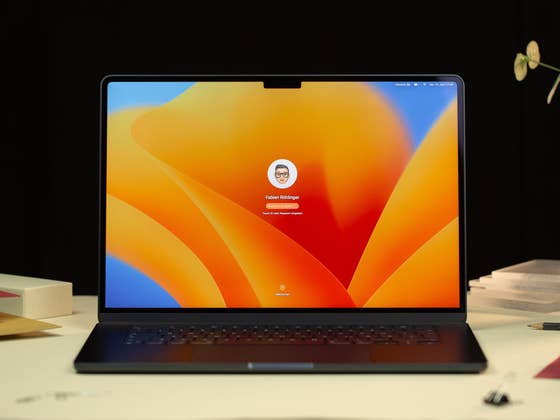
In a new research note of Omdia (via MacRumors), it mentioned Apple is “highly likely” to launch the first MacBook Pro laptop equipped with an advanced OLED display as early as 2026. Such timing would place it a year and a half from the debut of the M3 MacBook Pro, which would align the technology to arrive with the M5 MacBook.
The forecast contradicts the report published by news outlet The Elec earlier this year which tipped the first MacBooks with OLED displays would only arrive in 2027. It was added that Samsung will supply these OLED panels to Apple.
It was not specified why Apple would delay the switch from mini-LED to OLED in its MacBook range, but there might be a few reasons for this. For instance, it is likely display manufacturers such as LG and Samsung have not been able to produce displays that meet Apple’s standards or these larger OLED displays are not yet viable to be mass-produced.
Another reason is Apple could be waiting for tandem OLED to be ready in even larger form factors like laptops. It was noted that the recently launched M4 iPad Pro uses a two-layer OLED panel that provides many advantages like a higher brightness output over a conventional OLED panel.
At present, tandem OLED displays in the iPad Pro produce 1,000 nits of typical brightness and about 1,600 nits in HDR, while the mini-LED in the M3 MacBook Pro only provides 600 nits of typical brightness level.
Apart from the MacBook Pro, Apple was also rumored to be working on adopting OLED to its other tablets, with the iPad Mini slated in 2026 to feature the said panel.
Do you think Apple’s OLED MacBook Pro will be worth the wait? What is your opinion about the use of such technology? Let’s discuss it in the comments.
We mark partner links with this symbol. If you click on one of these links or buttons–or make a purchase through them–we may receive a small commission from the retailer. This doesn’t affect the price you pay, but it helps us keep nextpit free for everyone. Thanks for your support!