



For the uninitiated, Ultra HDR is a custom-developed image format used in taking a more enhanced HDR image format. In addition, it has the advantage of preserving the dynamic range details better which can then be viewed on supported screens and devices.
Currently, manufacturers and developers have only one option — to enable Ultra HDR on apps through the Camera2 API (Application Programming Interface). Since most third-party apps including social media apps use the CameraX API, this excludes Ultra HDR. Now, it’s up to Google as to when it should add the format to the API.
Android’s Ultra HDR to arrive on more apps
As discovered by Mishaal Rahman (via Android Authority), the latest CameraX version 1.4.0 which was released in April has added initial support for Ultra HDR. It is expected the next release will be a stable version of the API, which should include the full deployment of the format that most developers can take advantage of.
Google also confirmed in May at its I/O developers conference that it will make Ultra HDR available to more apps, although it hasn’t confirmed the actual launch window.
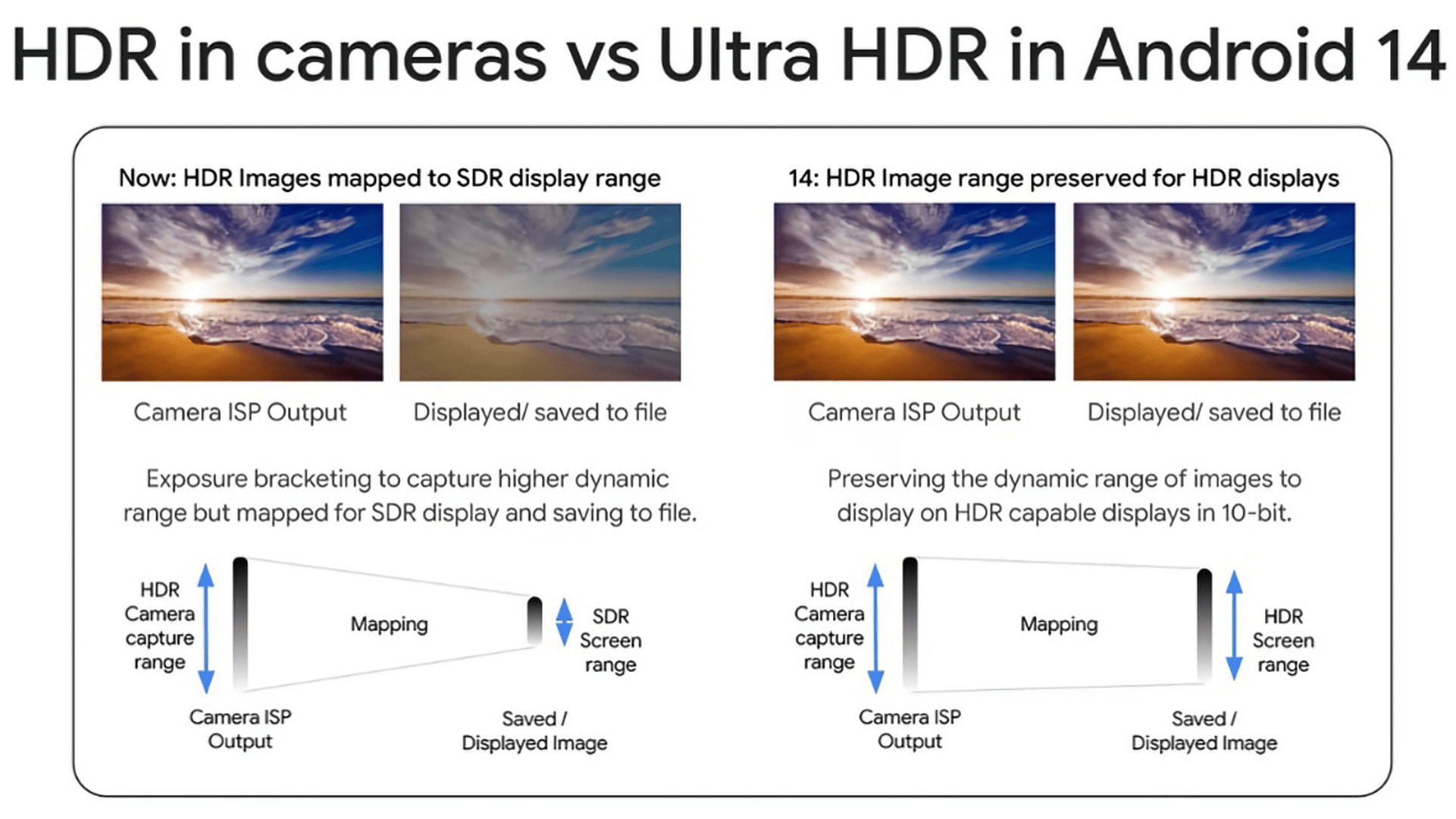
To that end, it is now up to manufacturers and developers when they will add Ultra HDR to their apps once the new API arrives, but it shouldn’t take far too long.
Bear in mind a device should run on Android 14 to take images in the said format. To view Ultra HDR shots, it only needs a capable display, this means it covers other form factors like laptops and monitors.
As for devices that already feature Ultra HDR, Samsung’s Galaxy S24 series (review), the OnePlus 12 and Open foldable (review), and Nothing Phone and CMF smartphones are among those that support Ultra HDR.
Do you have any smartphone that supports Ultra HDR? Have you tried the feature? Share what you think of it.
We mark partner links with this symbol. If you click on one of these links or buttons–or make a purchase through them–we may receive a small commission from the retailer. This doesn’t affect the price you pay, but it helps us keep nextpit free for everyone. Thanks for your support! Prices are based on the date of publication of this article and may be subject to change.