

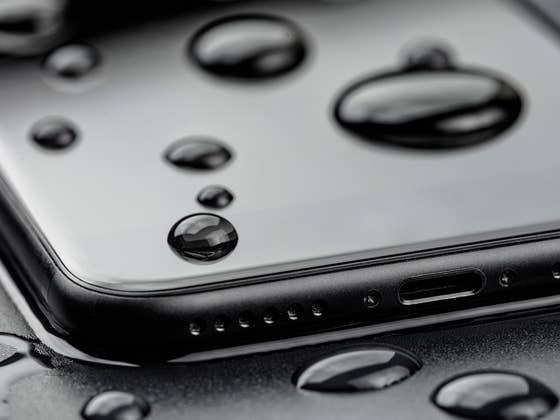
Once exclusive to rugged phones, IP certification can be found on most flagship phones, and even some mid-range models today. The name refers to “Ingress Protection”, and defines how a device is protected against water and dust.
The IP certification is defined by a number of standards, starting with IEC 60529, with further extensions targeting specific use cases that were later incorporated into the IEC (International Electrotechnical Commission) standard. One such example is the IPx9 (or IPx9K) rating for hot, high-pressure water jets, originally designed for vehicles needing high-pressure cleaning.
The IEC 60529 standard specifies not only the requirements for each protection rating but also the required testing procedures. It is important to note that the IP rating is self-reported and (at least in the case of mobiles) not verified by independent testing agencies.
The IP code has two numerical digits, the first one indicates the level of protection against solid objects—e.g. dust—while the second indicates the protection level against water. In both cases, higher numbers represent better protection.
First digit of the IP rating
| First digit | Meaning |
|---|---|
| X | No data available |
| 0 | No protection |
| 1 | Protection against solid objects measuring up to 50 mm³ |
| 2 | Protection against solid bodies measuring up to 12 mm³ |
| 3 | Protection against solid objects measuring up to 2.5 mm³ |
| 4 | Protection against solid objects measuring up to 1 mm³ |
| 5 | Protection against dust, limited ingress of dust (posing no risk to the device) |
| 6 | Complete protection against dust |
Second digit of the IP rating
| Second digit | Meaning |
|---|---|
| X | No data available |
| 0 | No protection |
| 1 | Protection against vertically dripping water (condensation) |
| 2 | Protection against water spray when vertically tilted at 15° |
| 3 | Protection against water projections at any vertical angle up to 60° |
| 4 | Protection against water projections from all directions – minor ingress |
| 5 | Protection against jets of water from all directions – minor ingress |
| 6 | Protection against slight jets of water, limited ingress (under the casing, for example) |
| 7 | Protection against effects from immersion in liquids between 15 cm and 1 m (3 ft 3 in) in depth |
| 8 | Protection against long immersion periods and water pressure |
| 9 | Protection against pressured high-temperature water jets |
Note: IP69 was originally defined as “IP69K” by the ISO 20653 and DIN 40050-9 standards, and is roughly the same in the IEC 60529 rating system.
Another important consideration is that the IP rating is valid only for the original design. Any kind of change to the phone body, including accidental drops, can change the protection rating of the device. Early IP-rated smartphones, notably those from Sony Ericsson, were not clear about this, and their fragile design led to some lawsuits.
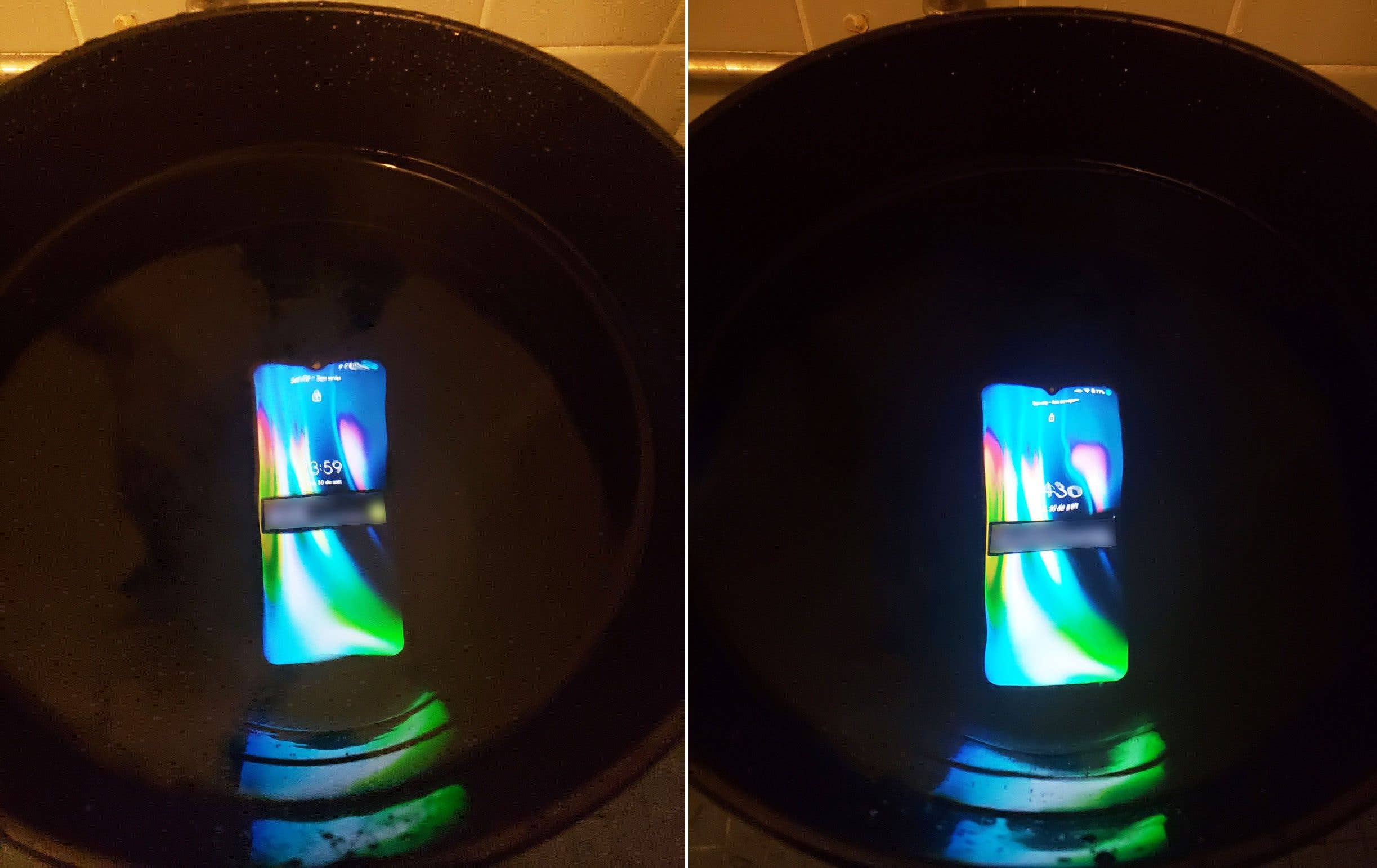
We have come a long way from the time when only niche phones—such as the rugged Motorola Defy—had water and dust protection. Nowadays even mid-range phones are frequently IP-rated, with most flagships being at least IP68 rated, and even some foldable phones having some level of protection.
What about you? Do you think water and/or dust resistance is an important criterion when shopping for a phone? Share your thoughts in the comments below. As for me, with a Defy, Xperia Z1c, Galaxy S7+S9, and some Pixel phones as daily drivers, it is pretty clear what my thoughts are.