

WhatsApp has billions of users. It is therefore a major target for attacks aimed at your personal information, among other things. In some cases, just viewing a photo is enough for attackers to exploit a security vulnerability. Activists, journalists, politicians and public figures in general are particularly affected. This is now being addressed by a new function designed to shut down your Messenger if necessary. However, a look at the features of WhatsApp’s “Strict account settings” shows that it also offers many useful options for normal users.
WhatsApp seals off your account
The strict account settings can be found in WhatsApp under Settings > Privacy > Advanced. According to Meta, the strict security precautions are intended to provide protection against “rare and extremely sophisticated cyber attacks”. Among other things, various features are completely deactivated. Others are only available to your own contacts.
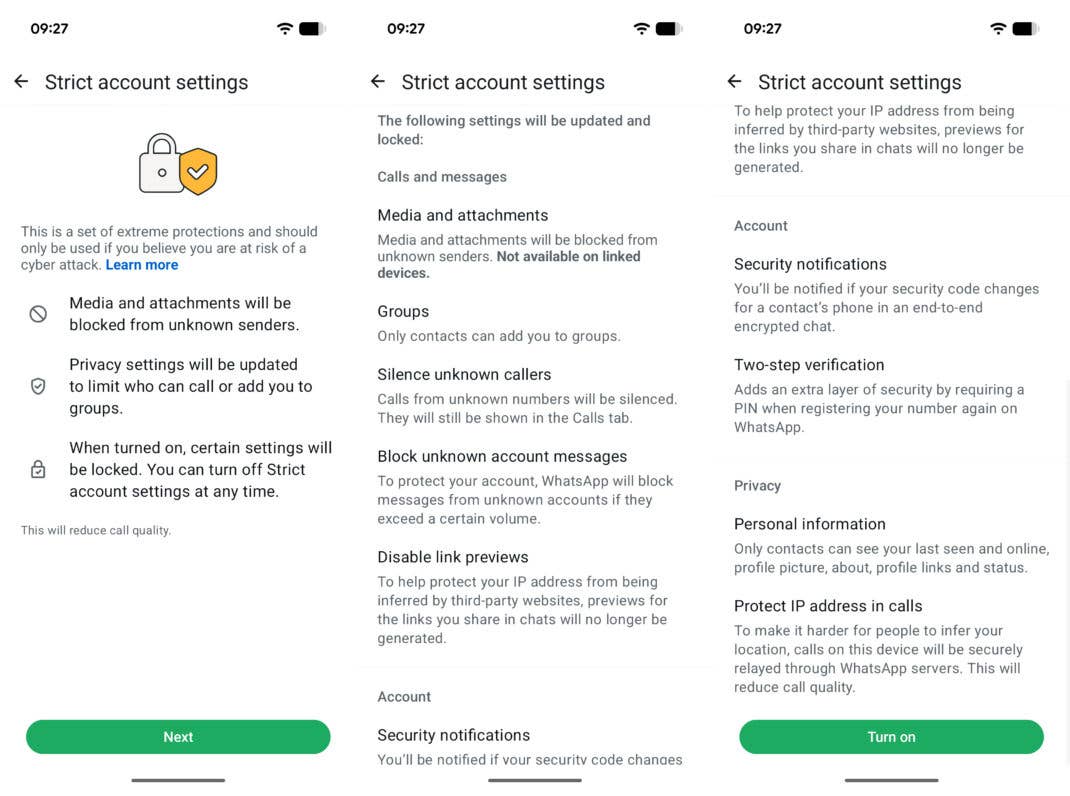
For example, media and attachments from unknown senders will be blocked. Calls from unknown numbers will also be muted. If an unknown contact sends you too many messages, WhatsApp will also block them. Previews of links in conversations will also no longer be generated. If someone wants to invite you to a group, this person must first be a contact.
These options could also be of interest to many regular WhatsApp users. Spam calls, for example, are now a thing of the past. The possibility of ending up in an unwanted group is also significantly reduced.
Better protection for your account and private details
When you activate strict account settings, two-step verification is automatically enabled. This means you have to enter a PIN if you want to register your number with WhatsApp again.
The options for private information will also be changed. This means that only your contacts will be able to see details such as “Last online”, your profile picture and links, your online status and your status.
So while the above-mentioned risk groups in particular should activate the new WhatsApp feature, the strict account settings also help normal users to use the messenger more securely and privately. The function is currently still being distributed by Meta. You may therefore have to wait a little longer for the option to be visible in your app.