


Launched today at CES 2025, the new Snapdragon X Platform was part of a number of AI-related announcements by the chip designer.
Snapdragon X Family Chips
| Family | Model | Oryon cores | Cache | Max dual-core boost | GPU TFLOPS |
|---|---|---|---|---|---|
| X Elite | X1E-00-1DE | 12 @ 3.8 GHz | 42 MB | 4.3 GHz | 4.6 |
| X1E-84-100 | 12 @ 3.8 GHz | 42 MB | 4.2 GHz | 4.6 | |
| X1E-80-100 | 12 @ 3.4 GHz | 42 MB | 4.0 GHz | 3.8 | |
| X1E-78-100 | 12 @ 3.4 GHz | 42 MB | n/a | 3.8 | |
| X Plus | X1P-66-100 | 10 @ 3.4 GHz | 42 MB | (4.0 GHz single core boost) | 3.8 |
| X1P-64-100 | 10 @ 3.4 GHz | 42 MB | n/a | 3.8 | |
| X1P-46-100 | 8 @ 3.4GHz | 30 MB | (4.0 GHz single core boost) | 2.1 | |
| X1P-42-100 | 8 @ 3.2 GHz | 30 MB | (3.4 GHz single core boost) | 1.7 | |
| X | X1-26-100 | 8 @ 3.0 GHz | 30 MB | n/a | 1.7 |
For the entry-level Snapdragon X processor, Qualcomm boasted big improvements over a previous-generation Intel processor but did not supply comparisons versus the latest-generation Intel Core or AMD Ryzen chips.
Despite that, we can expect the same good energy efficiency found on higher-end ARM chips with smaller performance numbers on the CPU and GPU. The entry-level Snapdragon processor features the same 8-core layout as the X Plus models launched on IFA 2024, however with a lower clock speed and no frequency boost for single-core tasks.
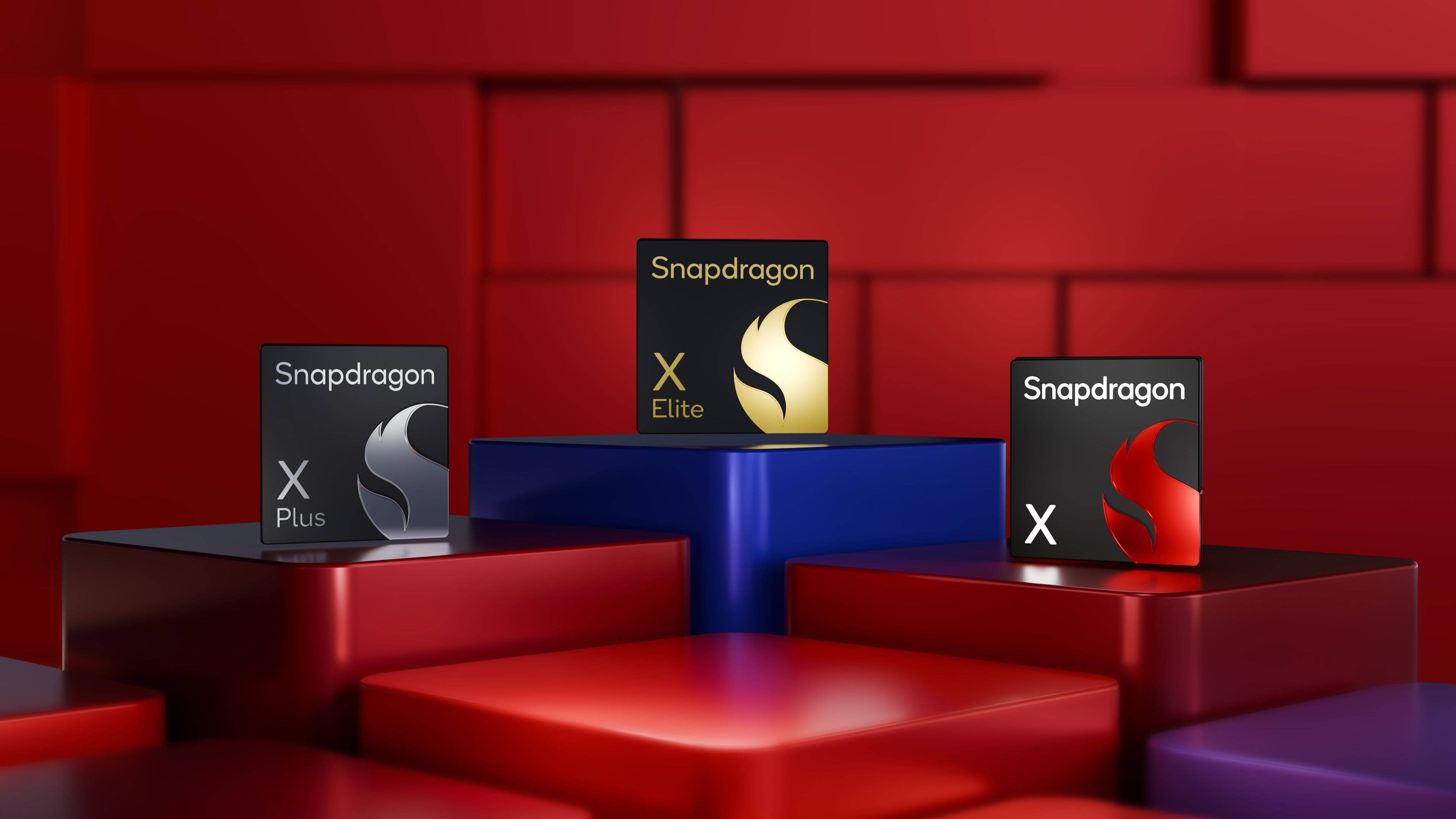
The GPU performance tops at 1.7 TFLOPS, the same level as the lower-end Snapdragon X Plus chip. What is consistent throughout the Snapdragon Windows family is the 45 TOPS performance for AI tasks, in order to receive Microsoft’s “Copilot+” branding.
Qualcomm highlighted that more than 50 apps are accelerated by the onboard NPU (neural processor unit), including professional tools for content creation, plus apps exclusively compatible with the Hexagon NPU used on Snapdragon chips.
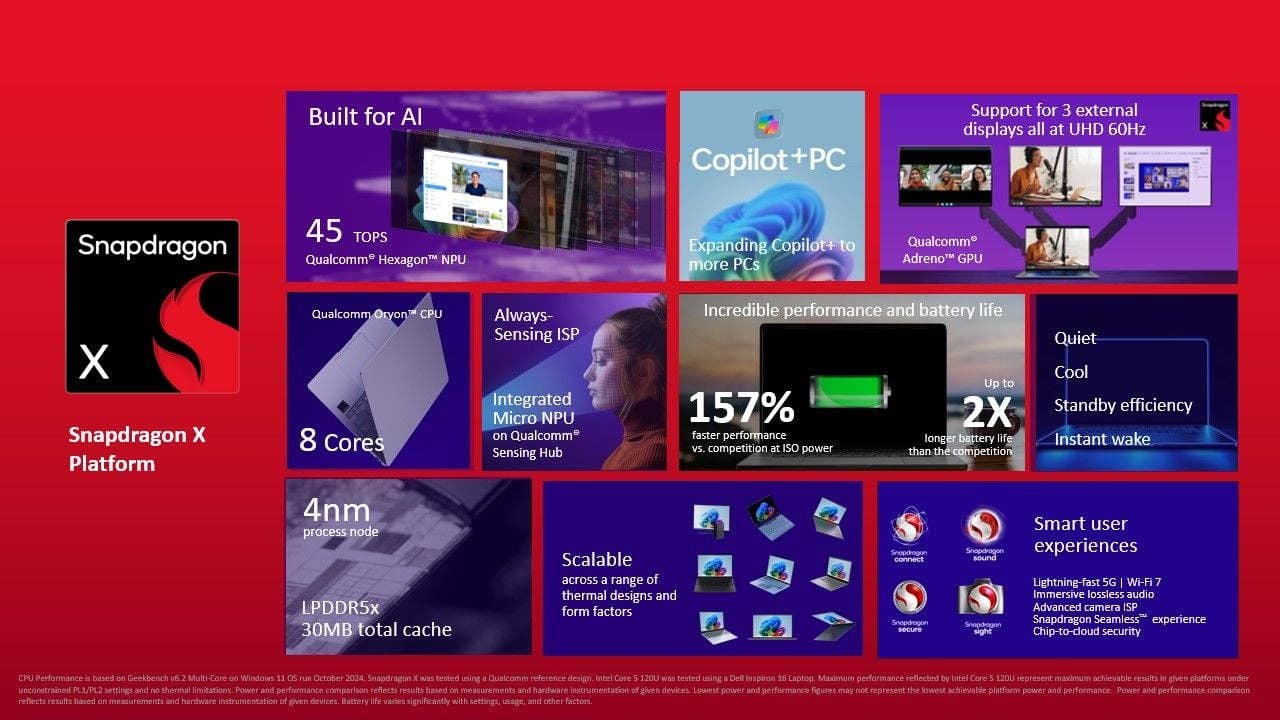
In a first for the Snapdragon X family, Qualcomm also announced that the chips will be powering desktop PCs—if you ignore the canceled development kit. Expect to see ARM-based devices fighting the mini-PC NUC market.
Qualcomm promises that the first batch of laptops and desktops powered by the new processor should be arriving “in early 2025” by brands such as Dell and Lenovo.
AI Everywhere
Besides PCs, Qualcomm also had a number of announcements in other markets, including cars, smart home, and enterprise. In a sign that the main 2024 trend is far from losing steam, they are all AI-related.
For its Digital Chassis platform for connected vehicles and driver assistance (ADAS), Qualcomm announced partnerships with Alpine, Amazon, Leapmotor, Hyundai Mobis, Royal Enfield, and Sony Honda Mobility, expanding the platform to motorbikes. The company also took the CES show floor to demonstrate its latest self-driving tech developed with BMW.
At home, Qualcomm gave hints that it will enter the smart TV market, currently dominated by its Taiwanese rival MediaTek. With similar processing blocks as its mobile Snapdragon chips, the QCS8550 platform promises edge AI processing and fast connectivity for televisions, including support for the AV1 codec.
The company is also positioning its processors for other smart home applications, including on-device AI chatbots, AI-enhancements for image or video display, and even more connected appliances (let’s just hope companies won’t use them to overload us with ads).
What do you think of Qualcomm’s announcements? Are you sold on the AI marketing machine, or are you still skeptical about real-world applications?