

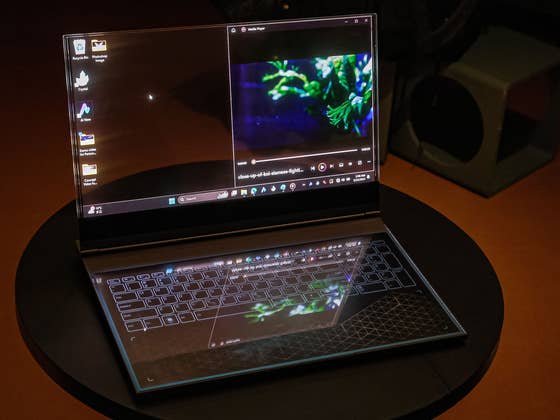
The prototype looks really futuristic. The absolute eye-catcher is the 17.3-inch MicroLED panel that has no bezels. The screen extends to around 1 to 2 mm from the edge and is dazzlingly bright at 1,000 nits, at least in the cellar vault where we were able to test the notebook. The notebook would certainly have struggled more under the bright Spanish sun.
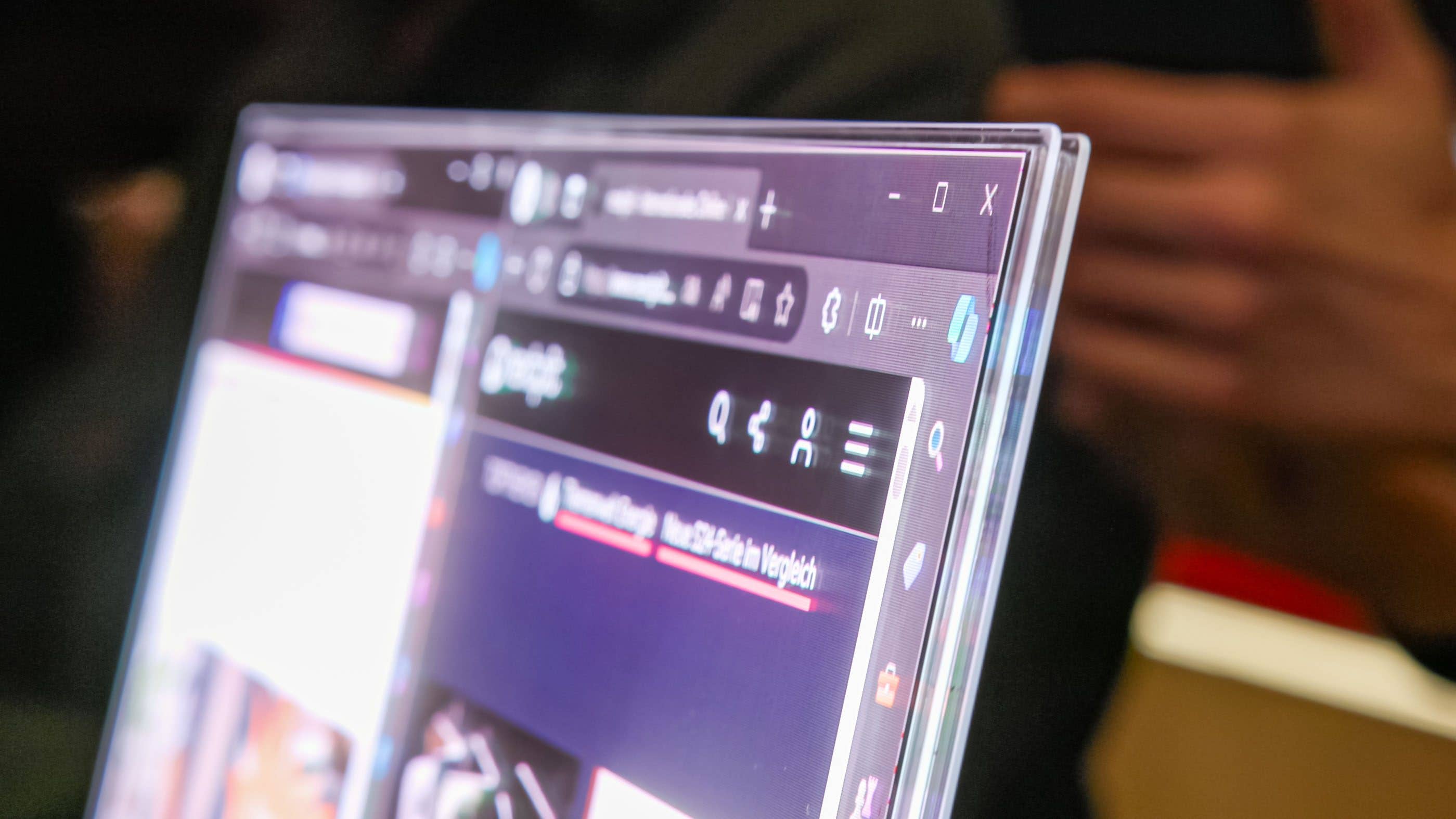
The texts on the display were easy to read, even if the 720p resolution was still quite low considering the diagonal measurement of the display as a proof-of-concept. Lenovo promises the resolution will certainly be higher by the time the product is ready for mass production.
The second exciting part is the notebook’s keyboard, or rather, the non-keyboard. In the place of a normal keyboard, Lenovo installed a smooth touch surface onto which a ‘keyboard’ is projected. When trying it out for the first time, typing on a completely smooth surface is not much fun at all and the prototype does not even offer haptic feedback.
However, the manufacturer also thought of something here: the keyboard can be switched off so that you can draw and design on the notebook with a stylus, just like you do on a Wacom tablet.
- Also interesting: Notebook and smartphone with rollable displays hands-on
A transparent notebook: Why?
So why on earth would you want a notebook with a transparent screen? Lenovo mentioned augmented reality as a specific use case. For example, an architect could design a bridge over a river and see the structure superimposed directly over the actual planned construction site. Or if the transparent display incorporates touch sensitivity in the future, things placed behind the notebook could be directly traced with a stylus.
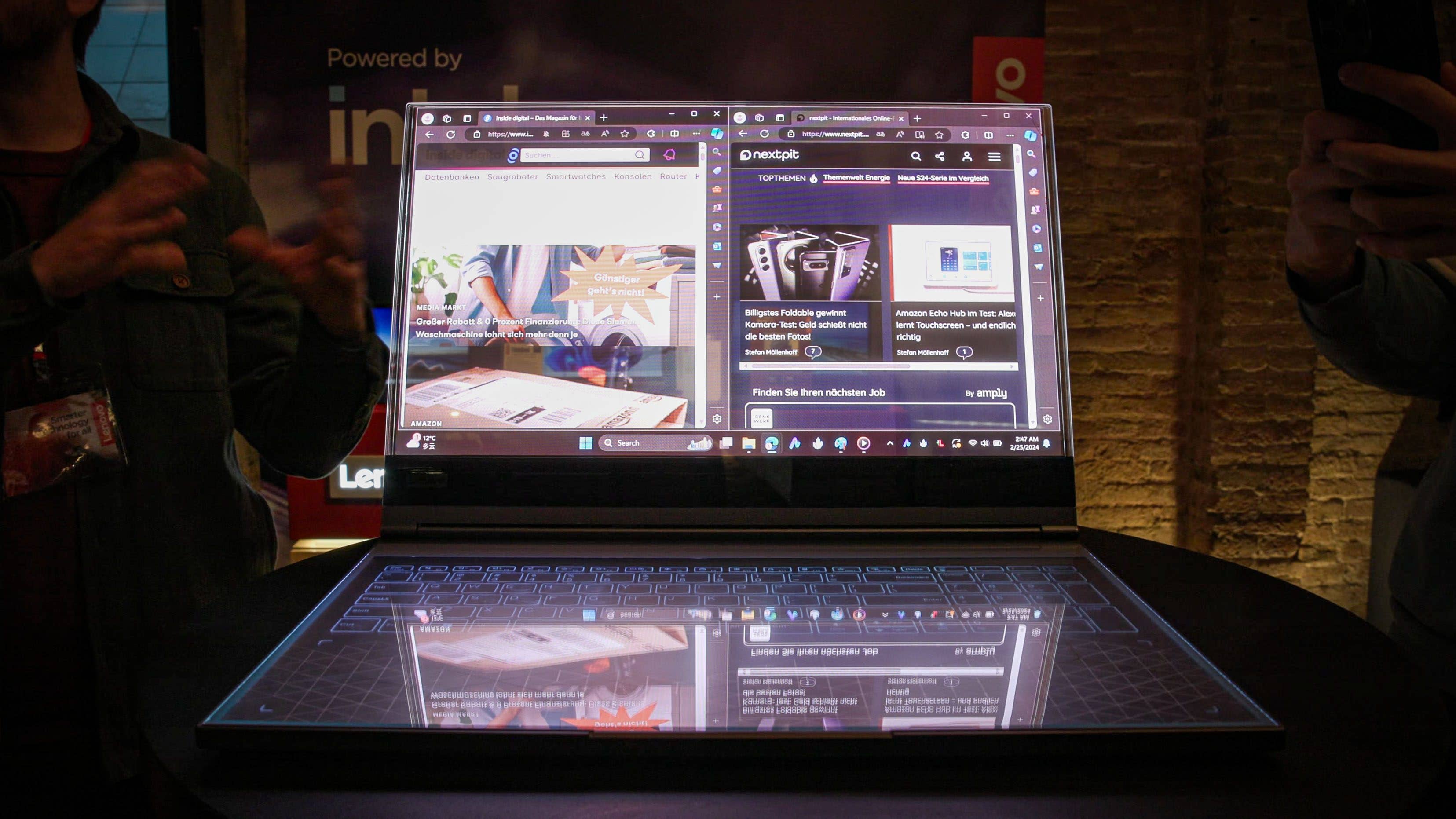
Admittedly, all these use cases are rather niche and specific. Hence, the primary answer to the question “Why?” is above all, “Simply because it works!”. However, Lenovo is optimistic that this screen technology will be integrated into an actual device within the next five years.
Can you imagine working with a notebook that sports a transparent display? How about woking with just a large touch surface instead of a keyboard? I look forward to hearing your opinion in the comments!