


Contents
A nuclear strike or a nuclear attack is a massive crisis, no matter which way you look at it. Even if we all hope it never happens, knowledge is your most important insurance right now. In the initial phase, minutes are often the difference between life and death. If you are prepared, you will panic less and help ease the burden on emergency services. The following steps are not just tips; they are vital rules to follow in the event of an emergency.
The First Few Minutes: The Right Reaction is Crucial
You will feel the effects of a nuclear explosion or nuclear attack immediately. First comes an extremely bright flash of light, followed by the heat wave, and finally, the pressure wave. As light travels faster than sound, the flash is your warning signal — you only have seconds to react.
What You Must Do Immediately in the Event of a Detonation When Outdoors:
- Don’t look at the light! Never look at the light source; it can blind you. Lie flat on the ground immediately, preferably in a hollow or depression.
- Lie face down, close your eyes, and cover your head with your hands. Leave your mouth slightly agape — this will protect your eardrum from the enormous pressure. Stay in this position until the pressure wave has passed.
- Seek shelter in solid concrete or stone houses. Basements are your best chance of survival in the event of a nearby nuclear explosion or nuclear attack. Cars or garden sheds are not safe places; the blast can blow them away like toys.
After the explosion, you have about 10 minutes before the dangerous radioactive dust (the so-called fallout) sinks to the ground. Use this time to find a safe, solid shelter such as a concrete cellar or underground parking garage. From that point onward, you should not leave the room.
What To Do if You Are Indoors:
But what if you are indoors? If the flash of light catches you while you’re inside, you won’t have time to leave the building. Every second counts to protect yourself from shattered glass and debris:
- Get away from windows — this is the most important rule. The shock wave shatters windows and hurls splinters into the room at enormous speed.
- Find a room without windows immediately, preferably inside the building. The bathroom is ideal, as the walls there are often solid and the pipes can provide additional stability.
- If a windowless room is unavailable, lie down under a sturdy table or bed, away from areas with glass and heavy cupboards that could tip over.
- Even when indoors, lie flat on the floor immediately, protect your head, and open your mouth slightly to equalize the pressure.
- If you are already safe (and only then!!) and the immediate danger (pressure wave, debris) has passed, use the first two to five minutes to secure water in the bathtub, pots, and closed containers. However, never prioritize collecting water over taking cover immediately.
Protection From Radioactive Dust: The First Hour
Radioactive fallout consists of tiny, invisible particles. If you keep these particles away from your body, you will reduce the risk of radioactive poisoning enormously.
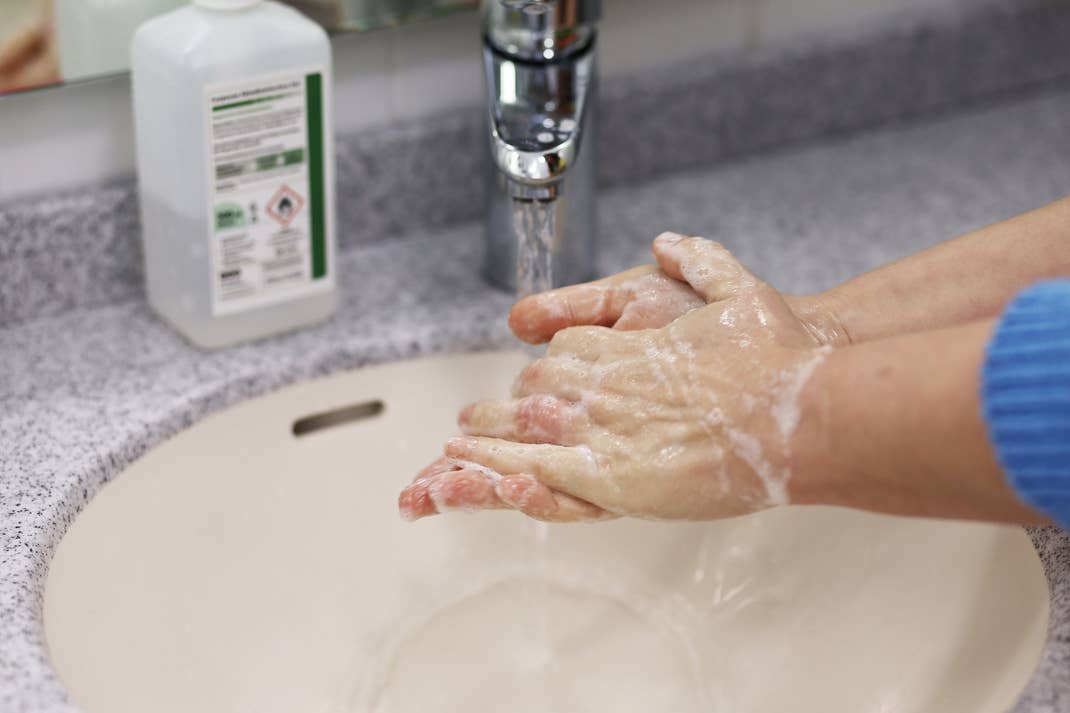
Important steps for keeping clean (decontamination):
- Remove the necessary clothing: Before entering your shelter, remove outer clothing (jacket, shoes). Pack everything in plastic bags and seal them tightly. This will remove around 80 percent of the radioactive material from your body.
- Wash up properly: First, wash your hands and face thoroughly so that no dust gets into your eyes or mouth. Carefully rinse your body after. It is important not to scrub too hard so the radioactive particles are not rubbed into your skin.
- Seal everything: Close all windows and doors. Air conditioning and ventilation systems must be turned off immediately to prevent outside air from getting in. Seal cracks in windows and doors with adhesive tape.
- Protect your pets: Place animals in a separate area, brush their fur thoroughly, and bathe them so they don’t spread dangerous radioactive dust around the house.
The First 24 Hours After a Nuclear Attack: Rules of Conduct in the Shelter
In the first 24 hours, discipline is your most important companion. You should know exactly what to do and what you should definitely avoid. We have listed the most important rules here:
- The safest place in the house
- ✅ Do: Stay in the basement or in the middle of a solid building. The more stone and concrete between you and the outside world, the better the shielding.
- ❌ Don’t: Never stay near windows or outside walls. Never go outside.
- Communication and information
- ✅ Do: Use a battery-operated radio. This is often the only connection to the outside world in an emergency. In the event of a nuclear attack, an electromagnetic pulse (EMP) can suddenly paralyze power grids, mobile communications, and the internet — and possibly vehicles and medical equipment as well. Anyone who relies on vital electrical equipment should bear this in mind when preparing.
- ❌ Don’t: Don’t rely on the internet or your smartphone.
- Ventilation and breathing
- ✅ Do: Remain indoors and make sure that all openings to the outside (cracks, keyholes) are sealed.
- ❌ Don’t: Do not use fans or air conditioners that draw outside air in. This would introduce radioactive dust to your surroundings.
- Food and drink
- ✅ Do: Only eat food from sealed packages or canned food. Only drink water from sealed bottles.
- ❌ Don’t: Stay away from fresh fruit or vegetables from the garden or milk from animals that have been outside.
- Cleanliness and hygiene
- ✅ Do: Only wipe dust in the room with a damp cloth to bind it. Always wash your hands thoroughly before eating.
- ❌ Don’t: Never sweep a place when it is dry or use a vacuum cleaner. This will only spread the radioactive dust into the air you breathe.
Long-Term Strategy: What Next in a Nuclear Attack?
After the first day, it’s all about being smart with your supplies and being patient.
- Only leave your shelter when the authorities explicitly allow you to do so via the radio. Going out on your own can lead you directly into contaminated areas.
- Take care of your health. Signs such as nausea or vomiting can be symptoms of radiation sickness. Seek medical help as soon as it is safe to do so.
- Ration your supplies well. Allow 2 liters of drinking water per person per day. Ration extra water for hygiene purposes. The crisis can last for weeks, so ensure proper food rationing is in place.
- Mentally prepare yourself for a difficult time and protect your supplies. In an emergency, you must be able to secure your resources.
Checklist: What To Prepare Indoors
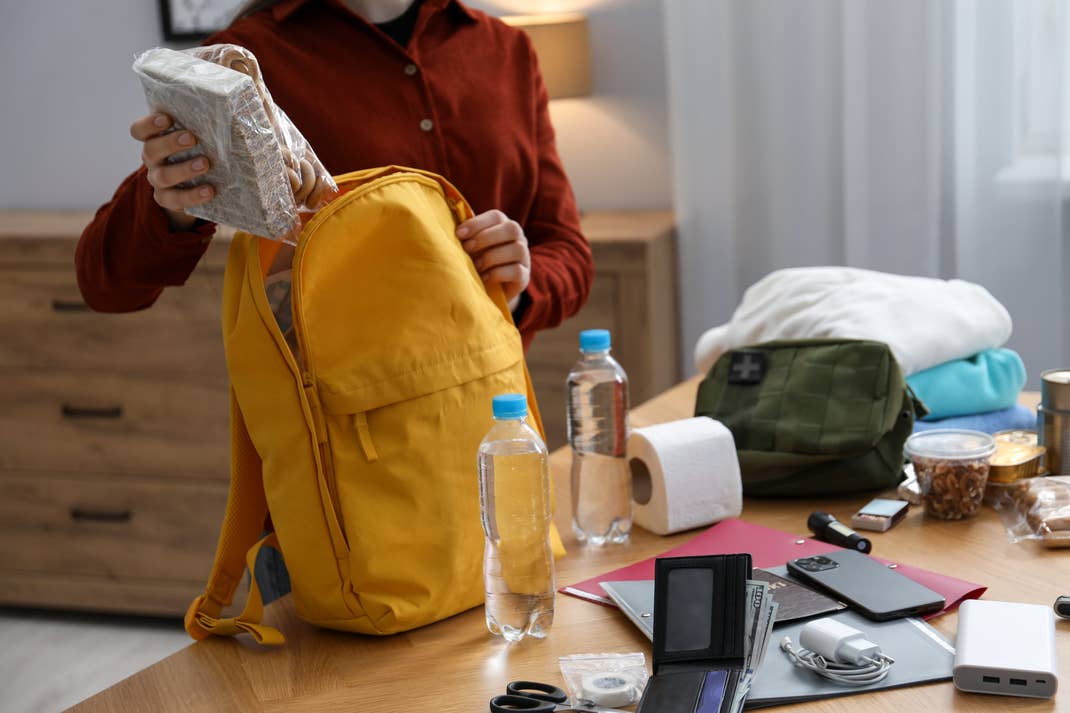
If you have the following items ready, you will dramatically increase your chances of survival.
Food & Drink
- [ ] Drinking water for 2 weeks (approx. 4-6 liters per person/day for everything).
- [ ] Food with long shelf life (cans, chocolate bars, pasta).
- [ ] Baby food or food for pets.
Technology & Tools
- [ ] Radio-powered battery with spare batteries.
- [ ] Flashlight and power banks.
- [ ] Duct tape and strong foil for sealing.
- [ ] Knives, hammers, and other tools.
Medicine & First Aid
- [ ] First aid kit (especially for burns).
- [ ] Disinfectant.
- [ ] Potassium iodide tablets (only consume according to official instructions!).
- [ ] Your personal medication for several weeks.
Clothing & Protection
- [ ] Rubber boots and waterproof ponchos (can be easily washed off).
- [ ] FFP3 masks (protection against dust inhalation).
- [ ] Disposable protective suits or old clothing that can be disposed of.
Plans
- [ ] Know fixed protection locations (own cellar, underground garages).
- [ ] An emergency plan for the whole family.
Potassium Iodide Tablets in a Nuclear Attack: What They Are and What They’re Not
You will find potassium iodide tablets in the checklist. It is important to note that many people misunderstandwhat these are. These tablets are not a panacea against radiation. They only protect the thyroid gland from absorbing radioactive iodine — and only if they are taken within the proper time window, i.e., prior to or shortly after exposure. They are ineffective against all other forms of radiation. Therefore, only consume them if expressly instructed to do so by the authorities — consuming them incorrectly or too early can be harmful, especially for people with thyroid disorders or iodine allergies.
Please Remember! Talk to Your Family Beforehand (!)
Preparation is the only thing you can control in such a situation. That’s why the “Planning” point in the checklist is so important.
Clarify in advance which room in the house you will retreat to if things turn south in a nuclear attack. Bear in mind that the internet will most probably be inaccessible, and you may not be able to contact anyone for days. Therefore, arrange a specific meeting point with your most important contacts now — to prepare for the moment when the authorities give the all-clear.
Also Read:
Also, discuss clear rules beforehand: Children at school are to seek shelter and remain there — they don’t run home. Everyone should know in advance where they can find shelter at work or on the road. Nobody should attempt to rescue another during the fallout.
As soon as the authorities give the all-clear (usually after 24 to 72 hours), can you leave the house again in relative safety and meet at the agreed rendezvous point?
What Do I Do if a Relative is At the Door?
First things first: this should remain the absolute exception. Every time the door is opened, everyone in the shelter is at risk. The more often the door is opened, the more radioactive particles get in. Weigh your options very carefully before you act.
If it is unavoidable, ask the person to remove their outer clothing outside and shake it off. If possible, hose them down with a garden hose. Open the door briefly to let the person enter and close it immediately. It sounds harsh, but it protects everyone in the room from serious and further radiation contamination.
The best protection against exactly this difficult decision is a pre-arranged plan — to ensure nobody gets the funny idea of running around during the fallout.
Let’s hope that this guide remains the most unnecessary thing you’ve ever read. But if the worst does happen and a nuclear attack is the result, you now know what to do. Perhaps even more importantly, you can let others know. After all, preparation does more than just protect you.