Sorry, but there's really nothing to see here right now. Our server is in maintenance mode – and our
little bot is trying to sort the error messages with its last bit of energy.
Whether it was a data leak, a power outage in the cluster, or just a grumpy bit – we don't know yet.
But what we do know is:
The data drama escalated into a server meltdown. But don't worry: We're on it.
What now?
Everything is surely running smoothly over at our colleagues from inside
digital – why not stop by!
Or you could pass the time by visiting our social media channels – for example Instagram, YouTube or TikTok. At least there are no
server problems there – promised.
Thanks for your patience. Our bot is already rebooting at full speed. 🔧
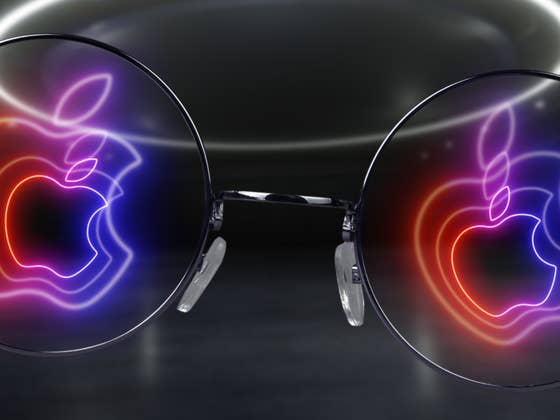
Throughout the year, we review various devices and report on the most interesting things that happen in the world of technology. A few days before the end of the year, however, it is inevitable to also remember what did not happen. One particular matter that stood out like a sore thumb for us was the Apple Glasses. Apple has been investing in Augmented Reality since 2017, when it launched the AR Kit, but it is already 2022, and once again, rumors and predictions have proven to be nothing more but pure speculation. This made me wonder: why hasn’t Apple Glass become reality yet?
On October 21, 2019, Bloomberg published an article suggesting that “Apple’s Smart Glasses could make 2020 the year of AR.” Since then, the publication has been feeding us a lot of insider information about the Cupertino giant’s entry into the Virtual, Augmented, and Mixed Reality device market. However, 2020 was not the year of AR for Apple, and neither was 2021 nor 2022…
Of course, this bred frustration. After all, Apple has an asset in hand that companies like Meta, Pico, and Microsoft don’t have: the iPhone. This device has enough power to power augmented reality glasses and ultimately function as a useful tool for the end consumer. Taking into consideration the development track record of products like the Apple Watch, the company seems to me one of the few ones with a real chance of presenting truly functional stand-alone smart goggles.
More than that, Apple is possibly the company that develops the most consumer AR apps or markets third-party AR apps on its devices. Because of that, it has an ecosystem of apps that is ready to run with its AR devices out of the box. Also, high prices have never limited Apple from announcing a device—even when it should.
Finally, the company is led by a person who has already made it clear that AR is the next big thing. In September this year, Apple CEO Tim Cook said that augmented reality is a “profound technology” capable of impacting everything. More than that, it should even replace the iPhone in 10 years.
So: Why hasn’t the Apple Glass happened yet?
According to industry reports, Apple has been working on its Mixed Reality device since 2015. Since then, the company has gathered around 2,000 employees as part of a team known as the Technology Development Group (TDG). Bloomberg’s Apple expert Mark Gurman revealed in May that the TDG is working on two specific glasses devices: one stand-alone for AR (codenamed N421), and an Extended Reality device (codenamed N301).
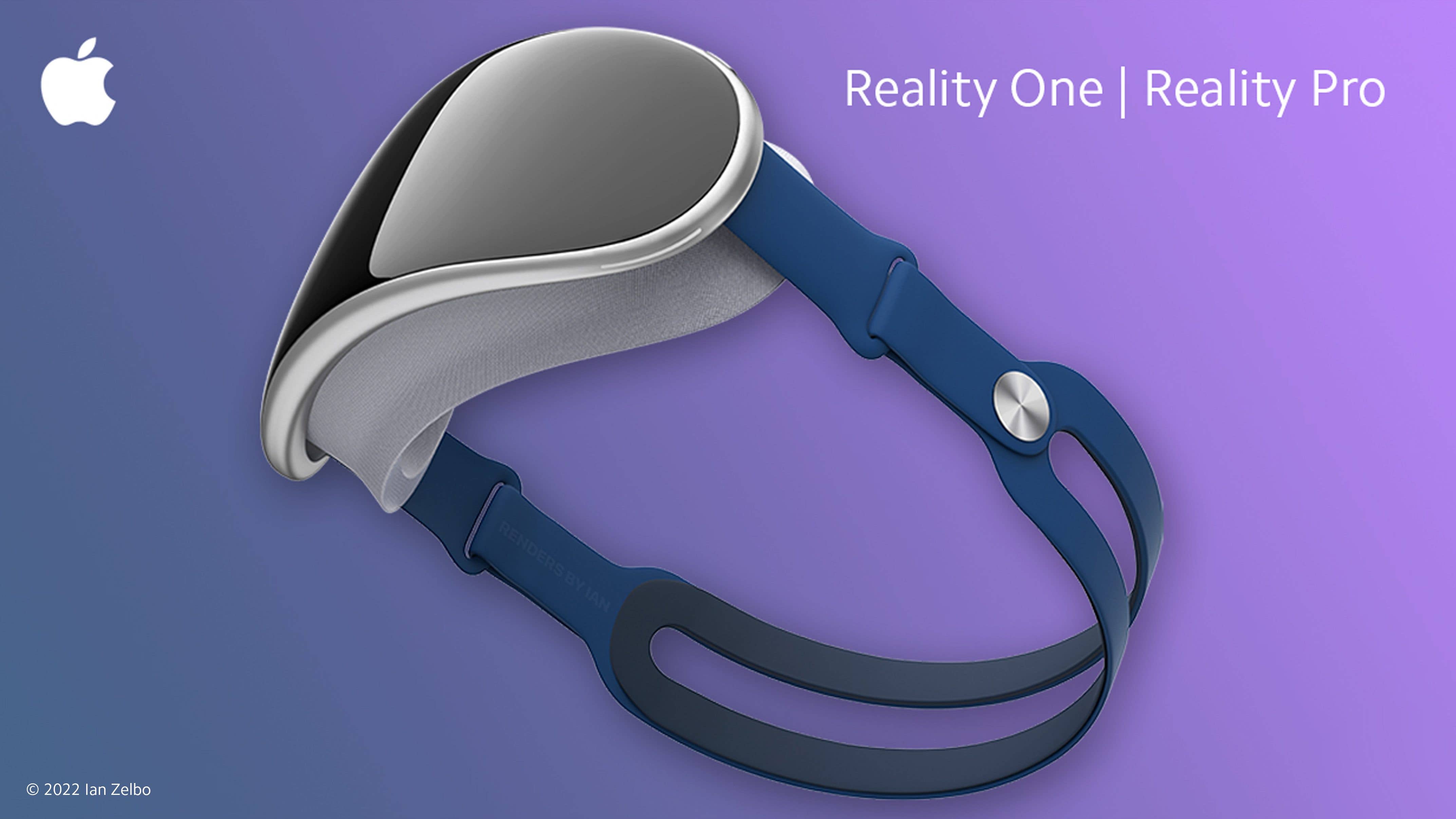
While this is nothing new, the point is, one depends on the release of the other to happen. In this case, Apple Glasses won’t become a reality until a few years after the release of the Reality One and Reality Pro—as Apple’s Mixed Reality or Extended Reality devices will be called. At the end of the day, it is a case of which came first – the chicken or the egg?
According to TDG inside sources, engineers are encountering three major challenges that would be making it impossible to launch Apple’s XR Goggles: content, camera refinement, and hardware overheating.
To better understand the implication of these problems, I talked to Anna Carolina Queiroz, a researcher at Stanford University’s Virtual Human Interaction Lab. According to her, despite the advances in the area in recent years, there is still a lot to evolve to achieve more comfortable and user-friendly MR devices. Even for companies like Apple, reaching high standards in design, ergonomics, and usability may take time:
There are still limitations regarding the field of view of the lenses, image recognition without markers, and latency time (often relying on an internet connection). Most likely, Apple will launch its devices when it finds a balance between these factors that bring an easy-to-use experience linked to daily habits for the user.
As though the challenges in the area of hardware development were not already worrying factors, the subject of “content” has been debated for some time when we talk about devices such as VR, AR, and MR. In this sense, one of the most interesting observations on the subject in my opinion came from Paolo Pescatore, a technology analyst at PP Foresight. In an interview for MarketWatch, he states that the market for VR and AR “still feels like a solution looking for a problem. In other words, despite the various use cases around the technology, it still lacks real appeal.
So we need more than a new product to use FaceTime. While some experts refer to the absence of the so-called “killer app”, Anna Carolina believes that the solution lies far beyond just a disruptive application to get around the Mixed Reality content problem. In the researcher’s opinion, communication devices, such as VR, AR, and MR, need to be easy to use and have multiple uses to maintain constant usage and justify the investment:
What happens is that the development of good quality apps for VR, AR, MR is costly and time-consuming. A multidisciplinary team is needed, from VR programmers, 3D designers, screenwriters, video editors, and video, sound, and interaction producers, among others. Although the VR/AR/MR app market has grown substantially over the last 2 years, it still needs to mature further to promote consistent use and adoption.
In short: When will the Apple Glasses be released?
Having been on the market since 2015, the Apple Watch accounted for 9% of Apple’s product sales in the last fiscal year—that’s in conjunction with smart home devices. After being announced, the device soon became one of the best-selling smartwatches on the market. iPhones are now the majority in the US market, for example, and iPads appear as the world’s best-selling tablets. Anyway, Apple has a very solid track record in the area of products and software, and the company’s entry into the AR/VR device industry is eagerly awaited.
However, unlike some companies in the industry, Apple does not usually develop products “on the fly”. Therefore, even with the hype, which Queiroz believed at first, the company will solve some challenges in optics, design, and usability before the official launch of the XR headsets:
The expectation is that Apple will leap forward in these aspects’ evolution. In addition, a more solid integration is expected between AR/VR/MR devices and other devices we use daily, such as computers, smartphones, and smartwatches. This integration is still weak, and Apple is expected to strengthen this integration, transforming MR devices as an extension of what we already use every day, intuitively and simply.
Furthermore, although Apple has not commented on the topic, market analysts and VR experts expect the Reality One and Reality Pro devices to be officially announced during WWDC 2023 in June. The idea is that the models will be produced in the first half of next year and be available for purchase soon after launch.
However, contrary to any expectations that were birthed in 2019, Make Gurman mentioned that Apple Glasses may not be announced until later this decade. The Stanford University researcher supports this hypothesis, as she believes that even if the development of those devices can occur independently, it is expected the devices to merge into one later in the development, as we are seeing happen with Meta’s products:
Meta Quest Pro is an attempt to do this using the see-through color system-meaning you can quickly switch from VR to AR. However, the Meta Quest Pro integration resulted in downsides to the VR and AR experiences. As the device does not entirely block peripheral vision, there is some discomfort when used in VR mode. Because you see the world through cameras in the AR mode, the latency between body movement and displayed image causes discomfort. Apple is likely working on solving these problems and will probably release a mixed-reality device that merges AR and VR. But Apple will likely do so only when it reaches a level of comfort and usability corresponding to other Apple products.
Quite obviously, Apple’s Augmented Reality devices haven’t happened yet because they’re not suitable for use…no matter how long they last apparently. Even if that has not been a problem so far for companies investing in the technology: Google did it in 2013, Microsoft has been doing it for seven years, and Meta is the latest member of this group.
In short, even though I consider myself an early adopter, when reading reviews of the Meta Quest Pro like the one by Alan Truly at Digitaltrends, I understand in a clear way why Apple is taking its time to enter this market. If a device designed to help with everyday tasks such as Meta Quest Pro does not natively offer features as basic as downloading an image, we have a serious problem with the concept of this product, don’t you think so?
Ich habe 15 Jahre Erfahrung in der Bewertung von Smartphones und Wearables und vereine technisches Know-how mit einer echten Leidenschaft für Innovation. Ich habe bekannte Tech-Websites wie AndroidPIT und Canaltech in Brasilien geleitet und möchte jetzt meine Expertise mit einem Publikum auf der ganzen Welt – unter anderem in den USA, Deutschland, Frankreich, Spanien und Brasilien – durch ehrliche, praxisnahe Tests teilen.
Kürzlich habe ich meinen Fokus auf digitale Gesundheit verlagert, mit einem besonderen Augenmerk auf Geschlechtergerechtigkeit und dem Ziel den geschlechtsspezifischen Datengraben zu überwinden. Ich brenne dafür, durch einfache, klare Texte Frauen in den Bereichen Technik und Gesundheit eine stärkere Stimme zu geben. Ob ich nun die neuesten Gadgets teste oder neue Trends im Bereich der digitalen Gesundheit erkunde – ich bemühe mich stets, komplexe Themen verständlich aufzubereiten.
Persönlich bin ich ein begeisterter Läufer – ich habe 2024 den Berlin-Marathon absolviert – und bereite mich auf eine lange Radtour von Deutschland nach Österreich vor, die im Jahr 2025 in nur vier Tagen schaffen will.
AR is harder than VR, not simpler as many thought. In VR, you are in control of the environment and what you see and can do.
AR has to contend with many more variables: real-time object identification where the potential objects are essentially random. This is especially so, say for travelers. They’re not seeing their routine daily items. Most anything could be what they’re actually looking for, or be what they would like to know more about. So now it’s not just object identification, it’s what does that object carry with it. Language tranlsation, where context has to be figured out to give a meaningful translation? Context? Does AI even do context yet? Does it need a matching timetable if its a bus stop or travel feature?
Oh crap, I just lost GPS and data.–they were near a subway so they probably went in there, but I cant’ load the schedule now because the data is gone….
Life is too hard for AR yet. We need far greater connectivity, branching prediction, and recognition than we actually have.





AR is harder than VR, not simpler as many thought. In VR, you are in control of the environment and what you see and can do.
AR has to contend with many more variables:
real-time object identification where the potential objects are essentially random. This is especially so, say for travelers. They’re not seeing their routine daily items. Most anything could be what they’re actually looking for, or be what they would like to know more about. So now it’s not just object identification, it’s what does that object carry with it. Language tranlsation, where context has to be figured out to give a meaningful translation? Context? Does AI even do context yet? Does it need a matching timetable if its a bus stop or travel feature?
Oh crap, I just lost GPS and data.–they were near a subway so they probably went in there, but I cant’ load the schedule now because the data is gone….
Life is too hard for AR yet. We need far greater connectivity, branching prediction, and recognition than we actually have.