

Contents
What Is Bluetooth LE Audio?
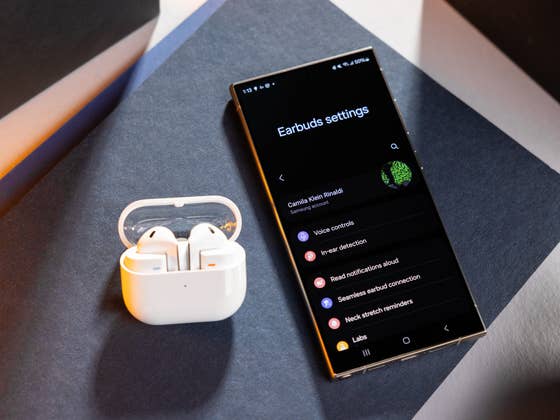
Bluetooth LE Audio is a new wireless audio technology built on Bluetooth Low Energy (LE), a standard introduced over a decade ago. While Bluetooth LE itself focuses on power efficiency, LE Audio extends its capabilities, introducing features specifically designed for superior audio performance.
Officially announced in 2022, the technology is already supported by a variety of devices, including headphones, hearing aids, smartphones, and laptops.
Key Advantages of Bluetooth LE Audio
The Bluetooth Special Interest Group (SIG), which oversees the standard, developed LE Audio with “audio in mind.” It offers significant enhancements in usability, audio quality, and energy efficiency compared to previous Bluetooth versions. Below are some of its standout features.
Improved Audio Quality and Reduced Latency with the LC3 Codec
Bluetooth LE Audio employs the Low Complexity Communication Codec (LC3), a more efficient compression format than the classic SBC codec used in older Bluetooth versions. LC3 delivers superior audio quality at lower bitrates, supporting up to a 48 kHz sample rate, 345 kbps bitrate, and 32-bit depth.
For gamers, the LC3 codec offers dramatically reduced latency, with Bluetooth SIG citing delays as low as 20–30 ms—significantly faster than SBC, enabling smoother, more responsive gaming and media experiences. Additionally, the LC3 codec optimizes power consumption, resulting in extended battery life for headphones, earbuds, and smartphones.
Curious about bitrates and how they impact your listening experience? Take a look at our guide for an in-depth explanation about audio quality.
Multi-Stream Audio and Auracast
Two other major innovations in Bluetooth LE Audio are multi-streaming and Auracast. Specifically, multi-stream Audio allows multiple audio devices—such as wireless earbuds or headphones—to connect to a single source, enabling synchronized playback across devices.
Auracast takes this concept further, enabling multiple users to connect to a single audio broadcast. For example, in a public setting like an airport, you could connect your smartphone to an Auracast-enabled system to receive announcements directly through your headphones. Auracast works much like connecting to Wi-Fi networks on smartphones, making it intuitive and accessible.
On a more personal level, Auracast allows you to stream audio to multiple speakers or headphones simultaneously. However, the source device retains control over the playback, much like a TV or radio broadcast.
New Features Announced by Google
Beyond the core features, manufacturers are starting to leverage the underlying technology of Bluetooth LE Audio. For instance, Google recently introduced hearing aid management for GN ReSound and Oticon devices, starting with the Galaxy S25 Series. This feature enables hearing aid users to enjoy hands-free calling, adjust settings and presets, and benefit from the low-latency performance of LE Audio.
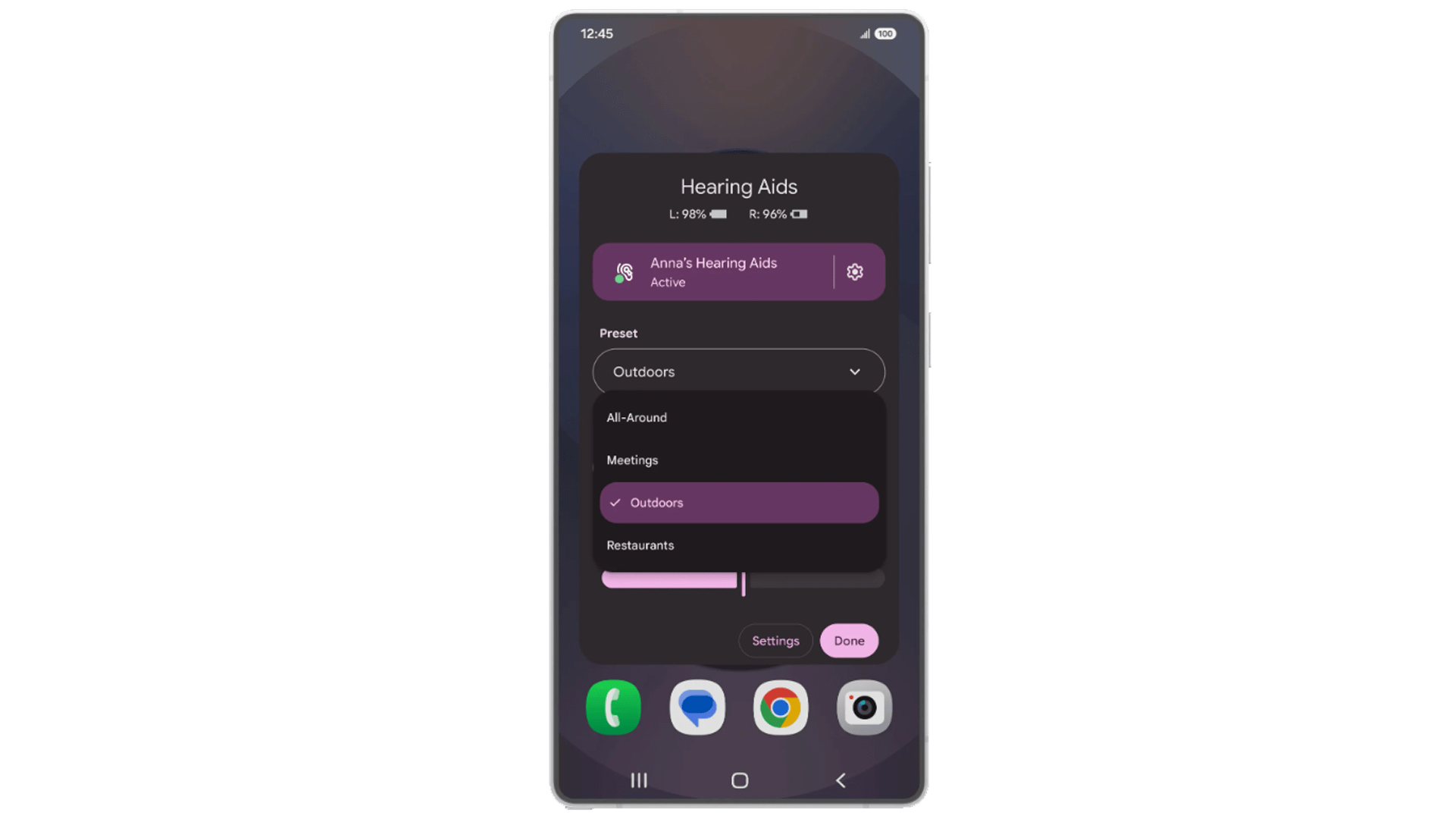
Google has also announced plans to expand hearing aid management to other devices, including the Google Pixel 9 (review) and Galaxy S24 (review), later this year.
List of devices with Bluetooth LE Audio
Although Bluetooth LE Audio is still relatively new, the list of compatible devices is growing rapidly. To support LE Audio, devices need Bluetooth 5.2 or newer, along with specific hardware components and system updates to enable the feature.
Major brands like Samsung, Google, and OnePlus already support Bluetooth LE Audio across their flagship smartphones, tablets, and earbuds. Below is a comprehensive list of compatible devices:
Smartphones with Bluetooth LE Audio and Auracast
Samsung Galaxy smartphones and tablets
- Samsung Galaxy S23 / S23+ / S23 Ultra
- Samsung Galaxy S24 / S24+ / S24 Ultra
- Samsung Galaxy S25 / S25+ / S25 Ultra / S25 Edge
- Samsung Galaxy Tab S9 / Tab S9+ / Tab S9 Ultra
- Samsung Galaxy Tab S10+ / Tab S10 Ultra
- Samsung Galaxy Z Fold 4 (Only listen to Auracast)
- Samsung Galaxy Z Fold 5
- Samsung Galaxy Z Fold 6
- Samsung Galaxy Z Flip 4 (Only listen to Auracast)
- Samsung Galaxy Z Flip 5
- Samsung Galaxy Z Flip 6
- Samsung Galaxy Z Fold 7
- Samsung Galaxy Z Flip 7
- Samsung Galaxy A54 5G (Only listen to Auracast)
- Samsung Galaxy A55 (Only listen to Auracast)
- Samsung Galaxy A56 (Auracast)
- Samsung Galaxy M54 5G (Only listen to Auracast)
- Samsung Galaxy Tab 5 Active (Only listen to Auracast)
Google Pixel smartphones
- Google Pixel 7 / 7 Pro (Only listen to Auracast)
- Google Pixel 8 / 8 Pro
- Google Pixel 8a (Single Auracast)
- Google Pixel 9 / 9 Pro / 9 Pro XL / 9 Pro Fold
- Google Pixel 9a
- Google Pixel 10 / 10 Pro / 10 Pro XL / 10 Pro Fold
One Plus smartphones
- OnePlus 11
- OnePlus 12
- OnePlus 13
Wireless Earbuds and Headphones with Bluetooth LE Audio
- Samsung Galaxy Buds 2 Pro
- Samsung Galaxy Buds 3 Pro
- Samsung Galaxy Buds 3 FE
- Sony WF-1000XM5
- Sony LinkBuds S
- Sony LinkBuds Open
- Sony LinkBuds Fit
- Sony Inzone Buds
- Google Pixel Buds Pro 2
- OnePlus Bud Pro 2
- OnePlus Buds Pro 3
- JLab Epic Lab Edition Earbuds
- Huawei Freebuds 5
- Creative Aurvana Ace/Ace 2
- Creative Zen Air Pro / Air Plus
- Moondrop Golden Ages
- Cleer Audio Arc II
- GN ReSound Nexia (hearing aids)
- Oticon Intent (hearing aids)
Have we missed any devices in this list? Please let us know in the comments below if your smartphone or earbuds support Bluetooth LE Audio, and help us keep this list up to date!