

When Samsung calls, the tech world listens. This year, the South Koreans are less concernned with the hundredth new smartphone feature and more focused on the big picture. The message? Hardware, software, and AI are merging. Is this marketing speak or genuine innovation? Let’s take a look at the new features.
Power in Numbers: Doubling to 800 Million AI Devices
At the heart of the announcements was a really impressive figure that underlined the company’s ambitions. In an interview with Reuters, co-CEO TM Roh confirmed the intention to double the number of mobile devices equipped with Google’s Gemini to 800 million units this year. This represents a massive leap compared to last year’s figure of around 400 million devices. This quantitative leap is more than just a statistical side note. It signals the transition from the experimental phase of AI to mass market penetration. Samsung is thus creating a new reality for the global user base in the Android ecosystem — and for Samsung’s competitors.
The Connected Home: AI Beyond the Smartphone
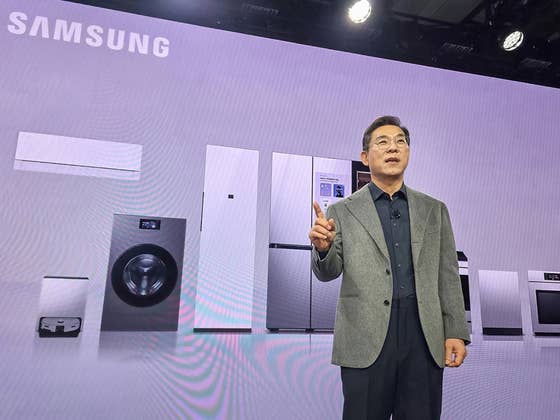
Samsung’s AI offensive is by no means limited to smartphones and tablets. The true strength of the strategy lies in its consistent expansion across the entire product portfolio, including the smart home. Specific examples from CES 2026 demonstrated this comprehensive integration:
- The Bespoke AI Jet Bot Steam Ultra robot vacuum cleaner comes with an “Active Stereo 3D Sensor” that can detect and avoid transparent liquids such as spilled water.
- Home entertainment: The new Vision AI Companion (VAC), integrated into the TV line-up, acts as a personal assistant. It provides personalized content, recipe suggestions, and adjusts the picture and sound dynamically. This year’s TV portfolio is led by the world’s first 130-inch TV with new micro RGB technology.
- The “Bespoke AI Family Hub” refrigerator uses “AI Vision built with Google Gemini”. In this synergy, the camera recognizes food, while Gemini provides context for management and meal suggestions.
- The “Bespoke AI Laundry Combo” combines washing and drying functions, while the Bespoke AI AirDresser with “Auto Wrinkle Care” automatically smooths clothes, proactively making everyday life easier.
- The Freestyle+ portable projector is the product update of last year’s device. It uses “AI OptiScreen” to automatically optimize the image on uneven surfaces such as curtains or corners, proving that AI is not only tied to stationary devices in the smart home.

Classification: Has Samsung Already Won the AI Battle?
Samsung is not waiting, it is creating facts: 800 million mobile AI devices is not an announcement, it is a demonstration of power. Samsung is not waiting for the “perfect moment”, but is redefining the rules of the game. It is not theoretical technical superiority that counts, but absolute market penetration.
Samsung’s Numbers vs. Apple’s Hesitation
By the time Apple rolls out its highly polished Siri experience globally, the Samsung/Google alliance will have already learned from billions of real interactions and built an unassailable (?) lead. In this case, Samsung’s ace is not just the smartphone, but also the refrigerator, the TV, and the robot vacuum cleaner. Samsung understood that in 2026, AI must not remain a luxury item for the latest $1,500 flagship phone, but must be the invisible infrastructure for everything.
Siri might be able to tell me what the weather will be like. Samsung’s AI can theoretically see what’s missing in my fridge and suggest a recipe on the TV while I’m enjoying a TV series on my couch.
Samsung has long been collecting massive amounts of data and real experiences from consumers and has long had both feet firmly planted concerning the market. That strategy, combined with Google’s ever-improving AI and outstanding hardware form a triad that even a tech powerhouse like Apple has to stretch itself thin to keep up.
As competitors slowly get their AI strategies sorted out, they will have to realize that Samsung is already there. In every room, in every pocket. The war may not be officially over, but Samsung has deployed the largest army on the field.