


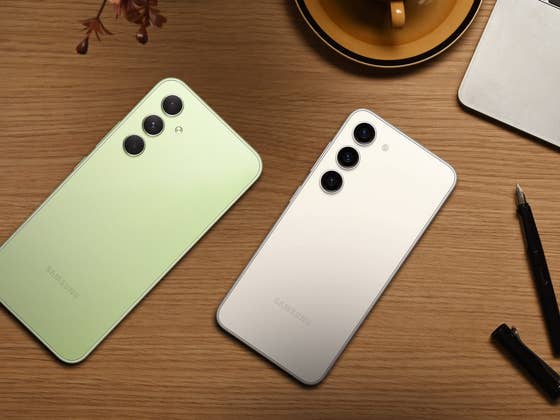
| 2024 flagship | 2024 Plus model | 2024 compact model | 2023 Fan Edition | Premium intermediate | Basic mid-range | Basic mid-range | Entry level | |
|---|---|---|---|---|---|---|---|---|
| Product | ||||||||
| Review |
|
|
|
|
|
|
|
|
| Display |
|
|
|
|
|
|
|
|
| SoC |
|
|
|
|
|
|
|
|
| Memory |
|
|
|
|
|
|
|
|
| OS |
|
|
|
|
|
|
|
|
| Camera |
|
|
|
|
|
|
|
|
| Front-camera |
|
|
|
|
|
|
|
|
| Battery |
|
|
|
|
|
|
|
|
| Connectivity |
|
|
|
|
|
|
|
|
| IP Certification |
|
|
|
|
|
|
|
|
| Dimensions and weight |
|
|
|
|
|
|
|
|
| Offer* |
|
|
|
|
|
|
|
|
Samsung started 2024 with its annual update of its flagship Galaxy S family with three S24 models: S24, S24+, and S24 Ultra. With the recent launch of the S23 FE smartphone and a refresh of the mid-range Galaxy A series, the question in shoppers’ minds is which phone model to buy. Is it worth going for the high-end S line or is the A range good enough? Keep reading to find a general overview of the two phone families and see if you should go “A or S”.
Even though Samsung is moving its mid-range more and more into the upper class in terms of specs, there are definitely reasons why the manufacturer keeps its smartphone series separate. Therefore, we will start by looking at the differences between the two smartphone series.
Table of contents:
- Galaxy A and Galaxy S: What are the differences?
- These models were released in 2022 and 2023
- What do “A” and “S” really stand for
- Differences between A and S also apply to tablets
These are the differences between “A” and “S”
The smartphone market is divided into segments such as “flagship”, “mid-range”, or “entry-level” models. Samsung’s flagship range has always been the S series, while it also produces mid-range models in the form of the A-series. New technologies like the powerful quad-camera setup in the Galaxy S24 Ultra are usually found in the more expensive models.
The S Pen is also compatible with Samsung’s most expensive smartphones alone. Since 2022, the manufacturer also decided to reintegrate the stylus into the housing of one of the Galaxy models. The Galaxy S24 Ultra is thus the official replacement of the Galaxy Note series. As with Samsung’s legendary phablets, you can store the S Pen at the bottom of the housing.
In terms of build quality, you can also expect higher-quality materials like metal frames and glass elements in the S series. Samsung uses shatterproof Gorilla Glass Victus 2 in all S23 and basic S24 models, with Gorilla Armor on the S24 Ultra, and thus offers a particularly high-quality look and feel.
- Read also
When you think about the Galaxy S lineup, build quality is consistently higher compared to the current A-series models. While the Galaxy A models are built with a plast polycarbonate housing, the Galaxy S series integrates Corning’s Gorilla Glass also in the back, promising more resistance.

In addition to new technologies and build quality, you can also expect better performance with the S series handsets. Expect faster processing speeds and gaming performance on the Galaxy S models, with the S24 generation back to the split between Snapdragon 8 Gen 3 and Samsung Exynos 2400 chips in different regions for the basic and plus models.
In the mid-range, Samsung traditionally uses its own processors. Recent Galaxy A phones used a number of Exynos chips like the Exynos 1280, 1380, and 1480 models. Contrary to what usually happens in the flagship arena, mid-range Exynos processors offer a good balance between performance and battery consumption, performing well in nextpit’s reviews.
- Check the best premium smartphones you can buy for less than $600
- See our selection of the best phones under $400 on the market
Compared with the S-series, however, Samsung’s new A models offer significantly larger batteries. While the Galaxy S24 offers a battery with just 4,000 milliamp hours, the manufacturer packs a hefty 5,000 milliamp hours into both the A53/A54/A55 and A33/A34/A35. Another advantage is the option to expand the internal storage with a micro-SD card in the Galaxy A models.
However, you have to make allowances for the cameras in the mid-range models. Both A53 and A33 come with a quad-camera, which contains rather useless sensors for macro photography and depth information, thankfully, the latter was dropped in the A34/A54 and A35/A55 duos. Samsung now offers setups with wide-angle, ultra-wide-angle, and telephoto cameras across the board in the S-series.
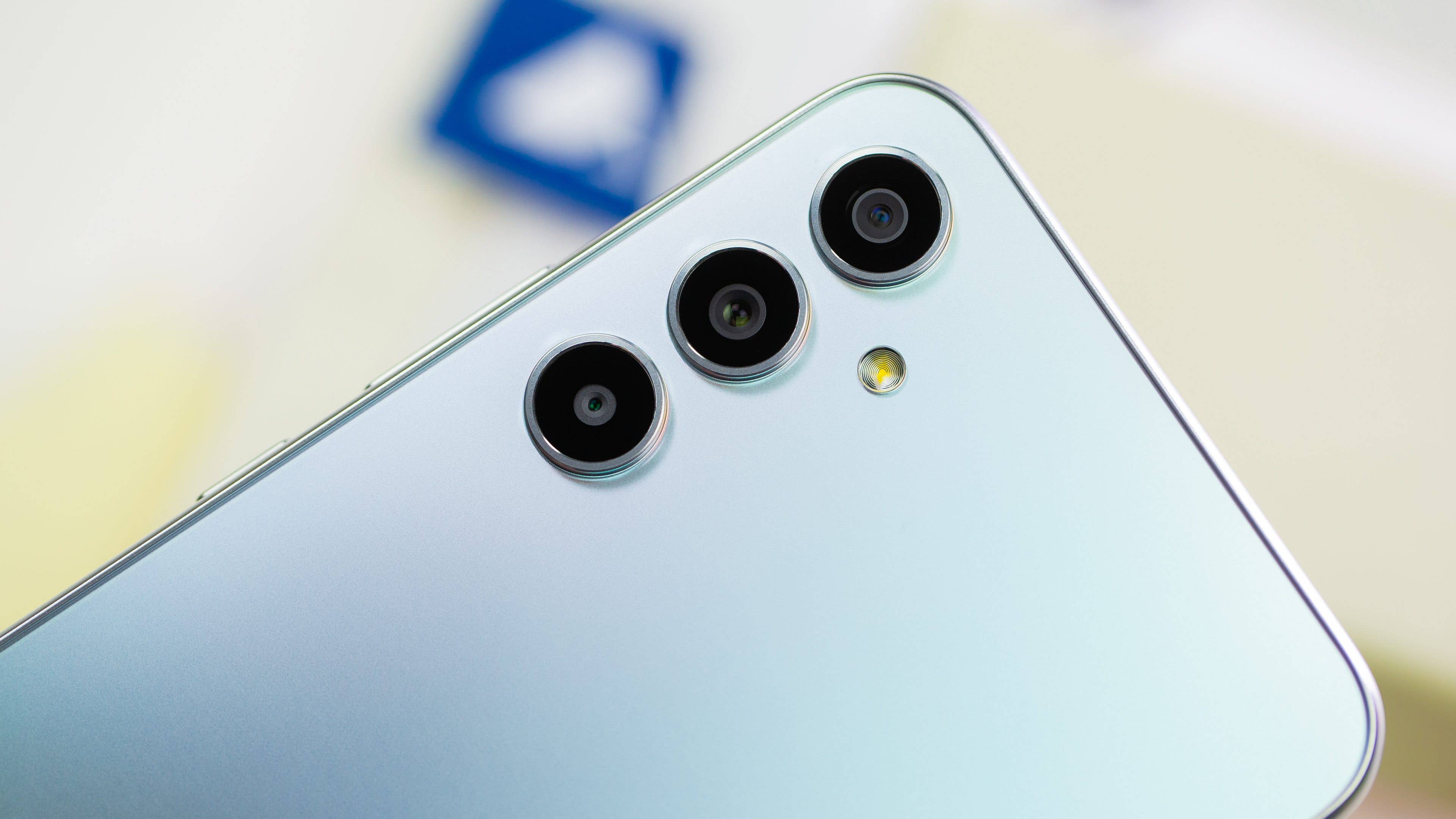
The Galaxy A line briefly had a telephoto (optical zoom) option on 2021’s A72 model, but not only it was dropped on the next year’s Galaxy A73, that model wasn’t even launched in North America or most European countries.
If you value long-term software support for both operating system versions and general security updates, all Galaxy S models and the premium A models (A55 and A35 ranges) promise four major Android upgrades and five years of security patches. However, entry-level Galaxy A models usually receive up to two system upgrades and four years of security updates.
When it comes to water and dust protection, the flagship S series is rated for better resistance with an IP68 certification, while the upper A series models (e.g. A55 and A35) are rated as IP67. Lower-end Galaxy A (e.g. A25, A15, A05) are not dust or water-resistant.
These models were released in 2023 and 2024
Five models from the Galaxy S and Galaxy A series have already been released in 2024. Beyond that, older models from 2023 are still worth considering since they are available as new devices with a warranty and sufficient update policy. You can find an overview of all models in the following table.
Galaxy A and Galaxy S recent releases
With a click on the respective device model, you will be able to obtain more information about that handset. These are links to our reviews, or—if not yet tested by us—to the overview pages of the models.
This is what the letters “A” and “S” stand for in reality
Of course, Samsung’s two device classes are a part of the company’s marketing strategy that the company has been pursuing for a few years now. The first S model, which was simply called the Galaxy S, was released in 2010. Here, the “S” does not stand for the “Super AMOLED” display which it used before and as many have assumed, but rather, it stands for “Super Smart”.
Were you aware of Samsung’s smartphone naming convention?
- Yes, it’s old hat by now!: 8%
- I was today year’s old when I discovered the truth: 92%
Votes: 678
The “A” in “Galaxy A,” on the other hand, stands for a somewhat less spectacular “Alpha”. Other Samsung designations include “Y” for “Young”, “C” for “China”, “M” for “Magic”, and “J” for “Joy”. Well, aren’t those fun facts to remember as trivia?
Differences between A and S also apply to tablets
If you are not only interested in Samsung’s small-screen devices, you should take a look at Samsung’s tablets. As you can read in our Samsung tablet buying guide, there is also a difference between the Galaxy S and Galaxy A. Along with the Galaxy Z updates in mid-2023, Samsung also launched the new Samsung Galaxy Tab S9 with the Tab S9+ and Tab S9 Ultra models.

And just like on the smartphone line-up, the Galaxy Tab family offers a similar level of differentiation between the premium Tab S and the entry-level Tab A series: Better build quality, faster processors, stylus support, and even water resistance on the newer Galaxy Tab S9 tablets. There are even Fan Edition tablets (which basically replace the older “Lite” alternatives).
Which Samsung device series do you find to be more exciting? Do you prefer the A-series or the new S-series that was released this year?
Article updated in April 2024. Older comments were kept and may appear out of context.
We mark partner links with this symbol. If you click on one of these links or buttons–or make a purchase through them–we may receive a small commission from the retailer. This doesn’t affect the price you pay, but it helps us keep nextpit free for everyone. Thanks for your support! Prices are based on the date of publication of this article and may be subject to change.
Let me just say that after i purchased the A-53 3 days after it’s release last year because it was of the software updates, and because i lost my S-21 and needed something quick, and a little cheaper for a while, until i was able to get it paid off, and then purchase a S-23 but after owning it for a year i will absolutely never buy another S series device ever again. The only thing the S-23 can do better is take photos…. PERIOD…. and unless you’re a professional photographer, or have a YouTube show there’s no way in my mind that i can justify paying well over 1200 dollars for a "phone" while i paid just around 400 from T-Mobile that can do anything that any S-Series device can do, and yeah there may be a milli second faster with some things, but honestly i haven’t noticed a difference at all. And after it learned how i used it, it just optimized it to my habits using it. That i fell in love with it. And now, after leaving my A-53 on top of my car and jumping on the freeway, lol. i just purchased the A-54 and keep smiling all the way to the bank. So unless you just have to keep up with the Jones’s, there’s no reason for me to ever spend that type of money ever again on a "phone"..
Thanks for that feedback. I’m always breaking my phones. You just sold me on the A54 that I was contemplating