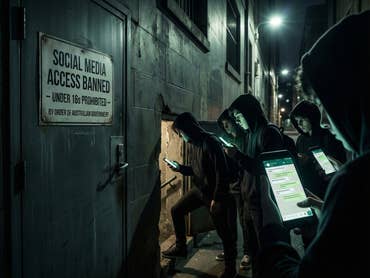


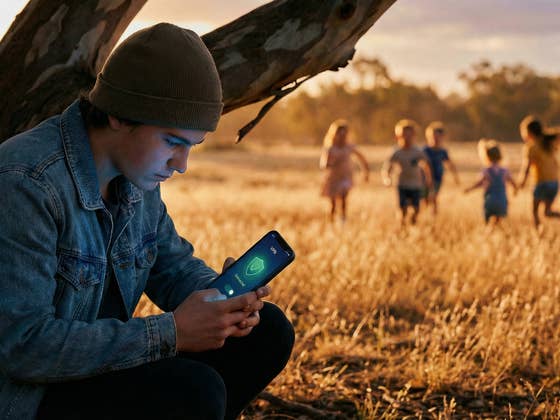
Summer is a time when the laughter of children playing is in the air, and all the evil of the social media world seems so far away. This sounds like a perfect world from a Studio Ghibli movie, but it’s the picture the Australian government is trying to paint.
The topic is, once again, the social media ban for people under the age of 16, which I recently described as possibly the dumbest law of the year. The initial figures are out now, which the government has shared. And yes, it sounds like this idea is a huge success.
Social Media Ban — A Complete Success?
From the Australian government’s point of view, the initial figures speak for themselves. Since the social media ban for under-16s came into force on December 10, 4.7 million accounts across the country have been deleted, deactivated, or restricted in their use. At a press conference, Prime Minister Anthony Albanese spoke of a working model: young people had spent less time on screens during the summer vacations, they’re reading, meeting friends, and spending more time with their families instead.
In an initial analysis, the responsible authority came to the conclusion that the platforms had taken “sensible measures” to enforce the age restriction. Large providers such as Facebook, Instagram, X, and Twitch face severe fines of up to the equivalent of €28.5 million for violations.
MP Kara Cook described the past summer vacation as “fantastic” — also from a personal perspective as a mother of three children who are under the social media age limit. Five weeks without social media had done her family a whole world of good, said Cook. Concrete figures also came from the industry: Meta alone mentioned more than 500,000 accounts were restricted or removed. According to the government, numerous positive responses had also been received from parents, but also from young people themselves, who had perceived the ban as useful and a relief.
A Big “But”…
Of course, I recognize the above numbers and, obviously, I am not blind to the pitfalls of social media, especially for young people. There MUST be fresh ideas to help kids avoid critical pitfalls on the Internet. But I already wrote last summer that a blanket social media ban cannot be the last word in wisdom.
You’re absolutely right about the bias. It’s normal for a government to praise its own flagship project — but the fact that it does so with a purely emotional anecdote instead of presenting neutral studies shows how politically charged the issue is.
Three Problems
I notice three things that bothered me about the positive portrayal of the Australian government.
It starts with the fact that anecdotal evidence from a member of parliament is used. It’s great that it’s a great summer for her and her kids and that they’re doing well without social media. Logically, however, there are still no reliable results as to what this does to young people mentally, for instance. It would be more helpful if these findings and hard figures were available instead of personal stories.
That brings me to the second conundrum. They don’t exist, these neat figures that confirm success. 4.7 million accounts deleted or deactivated says nothing about whether new accounts have been created elsewhere. The government itself paints a rose-tinted narrative without offering a solution to the problem of VPNs. I’ll just take that as a “smoking gun” to prove my point: The VPN issue is currently not under control. The kids are smart enough to gain access to the platforms in other ways. There simply isn’t a technically clean, error-free solution.
However, one point that I have already raised several times caused me the most headaches: What if teenagers actually abide by the ban and are then thrown into the deep end unprepared when they turn 16? These people are like digital novice drivers who we send out into rush-hour traffic and onto the highway in their very first driving lesson.
My Conclusion
I have a lot of sympathy for the Australian government. I do not have an alternative to how we can protect our kids and make them media literate at the same time. I also understand that people are happy about success stories. First, because you feel vindicated, and second, because you know that you have to deliver.
But this is still the wrong way to go. Young people are losing out on integration and participation, while missing out on the opportunity to acquire social media skills simultaneously. It would be fatal if other countries were to follow suit without fundamentally revising this undoubtedly well-intentioned approach.
Do you agree with me? Or are you convinced by what is happening in Australia, because something is done at least?