

The AI industry is consuming more and more resources. In recent months, the price of RAM in particular has risen noticeably. However, SSD prices have also been affected. TrendForce analysts have now presented new figures. In their new forecast, they have significantly raised their already drastic first-quarter 2026 forecast. However, the rapidly rising prices are not just a problem for PC manufacturers or those who simply want to buy an external SSD.
Memory is getting more and more expensive
In its report, TrendForce first looks back to the fourth quarter of 2025. PC deliveries were significantly higher than expected. This, in turn, means that even the largest manufacturers are struggling with shrinking inventories – despite guaranteed delivery quantities. This is driving up prices.
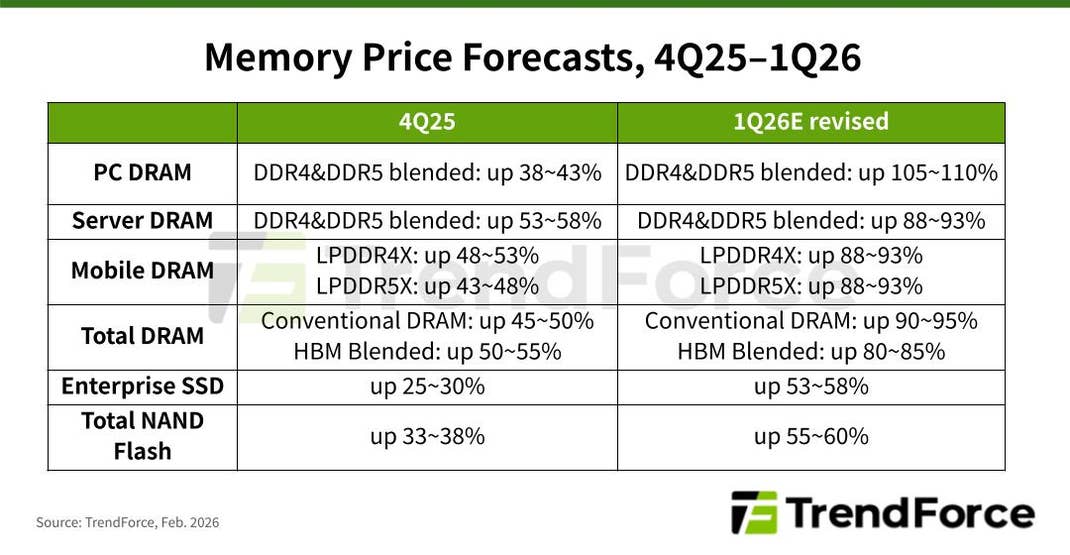
Specifically, TrendForce now projects that DRAM prices will increase by 90-95% in the first quarter of 2026, rather than by 55-60%. A more detailed forecast for DDR4 and DDR5 modules in the PC market is even 105 to 110 percent.
In the same breath, TrendForce also mentions NAND flash memory, which is used in SSDs. Here, the analysts expect growth of 55-60%. Earlier predictions were 33 to 38 percent. The price shock of recent months is therefore not only continuing; it is actually worsening.
Effects not only for PC manufacturers
So far, it has mainly been end customers who have noticed the enormous price increases, for example, those who have bought a new PC or built one themselves in recent weeks. Some manufacturers have even gone so far as to offer their finished PCs without RAM. Reason: Perhaps buyers still have RAM from old devices that they can continue to use – or they want to buy it separately.
In the future, however, the rising costs are also likely to affect other sectors, which will pass them on to their customers. This is evident in the table above, where the predictions for LPDDR4X/5X memory, used in smartphones and tablets, are shown. In the past few days, for example, there have been frequent discussions about whether Apple will raise the prices for the new iPhones in the fall. There are similar reports about Samsung’s upcoming S26 series. Ultimately, smartphone manufacturers must also pay for the memory they use, which is becoming increasingly expensive.
Whether and when the components will become cheaper again is unclear. As noted, the primary driver remains the AI industry, which seeks to equip its data centers with new hardware.