


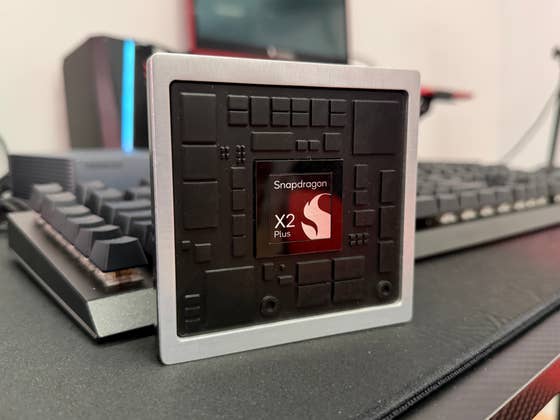
Qualcomm, the company behind the Snapdragon chips you find in countless smartphones from Samsung, Xiaomi, and others, invited us to Las Vegas to check out its latest processor. However, this processor is not intended for smartphones, but will be used in notebooks instead.
Notebooks Powered by “Smartphone Chips”
Processors in smartphones and computers are fundamentally different. While PCs traditionally use so-called x86 chips that boast high performance, but also high energy consumption and heat generation, smartphones rely on so-called ARM chips. These require significantly less energy and therefore, release less heat as well.
For some years now, however, these ARM chips have grown so powerful that they can also be used effortlessly in notebooks. Apple switched to ARM chips in-house developed for its MacBooks in 2020 completely. And Qualcomm was even a little earlier to the party by offering its chips for various Windows notebooks since 2018. For Microsoft’s Surface notebooks are one such example.
Snapdragon X2 Plus Unveiled
To date, most laptops powered by ARM processors can be found in the high-end segment. Here, buyers expect the solid performance, extremely long battery life, and partially fanless operation that ARM chips offer. However, with the new Snapdragon X2 Plus, the processors will also be used in more affordable notebooks that fall within the €500 to €800 price range.
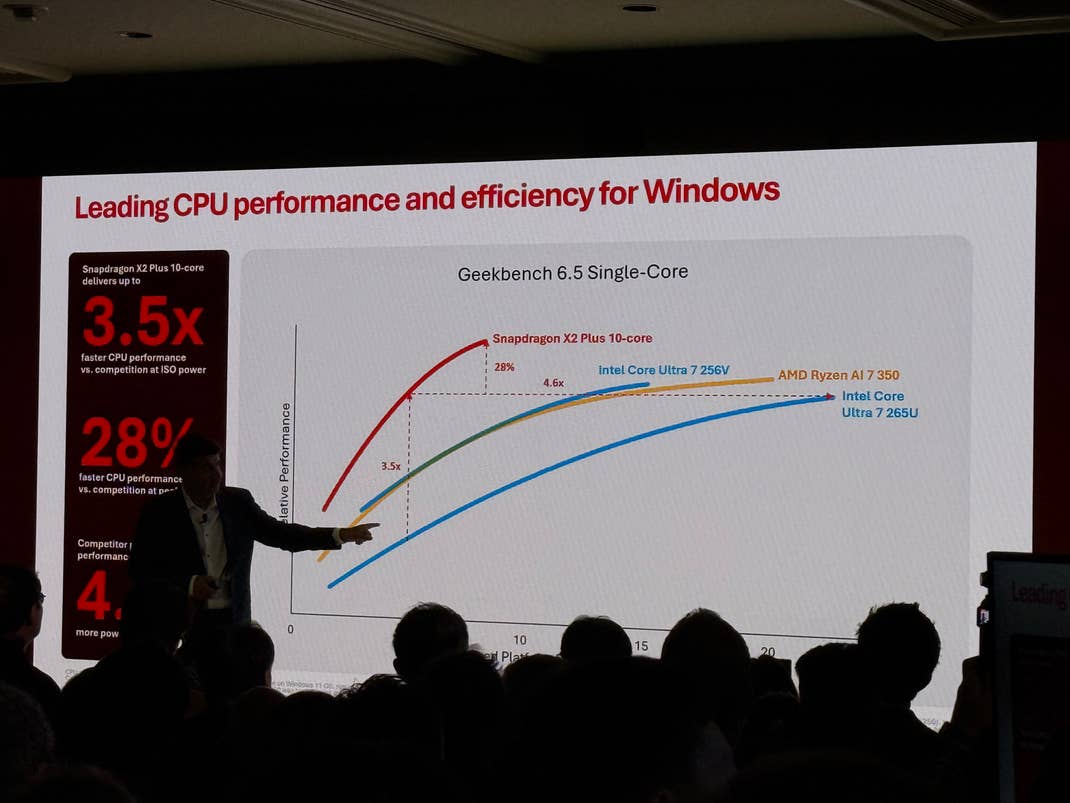
In terms of performance per watt, the Snapdragon X2 Plus should leave the competition from Intel and AMD behind in the dust. New notebooks with this chip should therefore be able to boast a particularly long battery life.
Qualcomm only provides the processor, while these notebooks are manufactured by the “established” manufacturers. Acer, Asus, HP, Dell, Lenovo, Samsung, and Microsoft have already announced that they will be unveiling corresponding products at the event. These are set to come onto the market in the first half of 2026. Are you excited for this new development?